 …
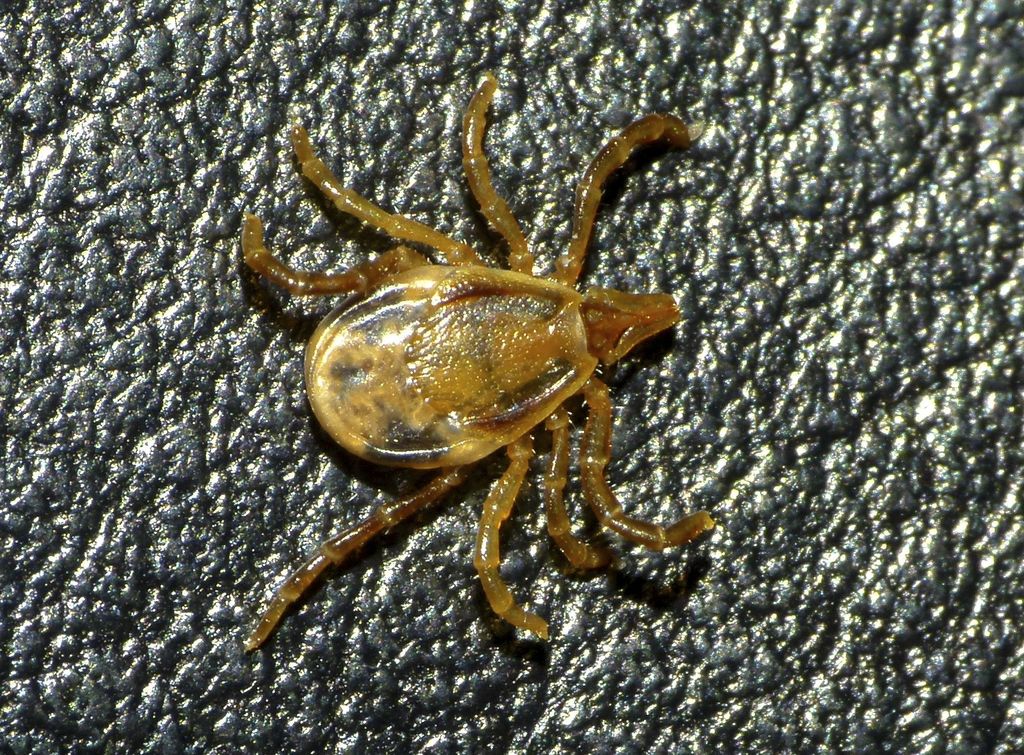
Australian Paralysis Tick
Ixodes holocyclus
Arachnidstrong against insects, birds
Common
Venom
While active with another arachnid in play, its target loses 4 HP at the start of each of its turns, as long as it stays active (7 with two others).
41

28
Australian Paralysis Tick
Ixodes holocyclus
Arachnidstrong against insects, birds
Common
While active with another arachnid in play, its target loses 4 HP at the start of each of its turns, as long as it stays active (7 with two others).
Ixodes holocyclus
Photo: © Steve Kerr (original photo) · CC BY 4.0 (licence text) · cropped
Strong against: it deals 20% more damage to them. Weak against: these types deal 20% more damage to it.
Ixodes holocyclus, commonly known as the Australian paralysis tick, is one of about 75 species in the Australian tick fauna and is considered the most medically important. It can cause paralysis by injecting neurotoxins into its host. It is usually found in a 20-kilometre wide band following the eastern coastline of Australia. Within that range, Ixodes holocyclus is the tick most frequently encountered by humans and their pets. Because the same area includes Australia's most densely populated regions, bites on people, pets and livestock are relatively common.
Paralysis ticks are found in many types of habitat, particularly areas of high rainfall such as wet sclerophyll forest and temperate rainforest. The natural hosts for the paralysis tick include koalas, bandicoots, possums and kangaroos.
Excerpt from the Wikipedia article Ixodes holocyclus, by its authors, under the CC BY-SA 4.0 licence.
No global status on the IUCN Red List: that’s what makes this card Common.
Every Common card has 100 points, shared between HP, ATK and DEF:
How they’re shared out:

 DEF 28