 …
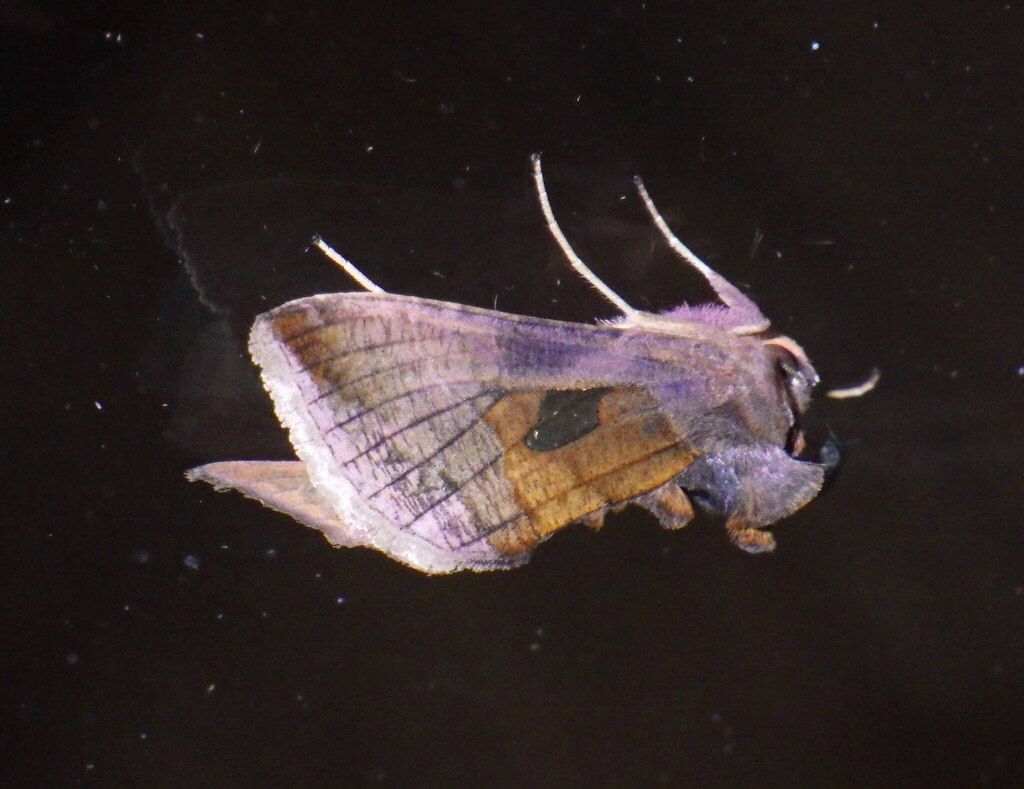
Gold Spangle
Autographa bractea
Insectstrong against fungi, fish
Common
Swarm
While active with another insect in play, each of its attacks also hits the opposing bench for 10, without knocking them out (20 with two others).
38

40
Gold Spangle
Autographa bractea
Insectstrong against fungi, fish
Common
While active with another insect in play, each of its attacks also hits the opposing bench for 10, without knocking them out (20 with two others).
Autographa bractea
Photo: iNaturalist (original photo) · CC0 (licence text) · cropped
Strong against: it deals 20% more damage to them. Weak against: these types deal 20% more damage to it.
The gold spangle (Autographa bractea) is a moth of the family Noctuidae. The species was first described by Michael Denis and Ignaz Schiffermüller in 1775. It is found in Europe, across western Siberia and the Altai Mountains, the northern Caucasus, northern Turkey and northern Iran.
P. bractea F. ( = securis Vill.) Forewing purplish fuscous with many fine dark strigulae; the lines finely dark but indistinct, inwardly oblique; the inner line below middle finely golden, the outer golden at inner margin only; median area below middle ferruginous brown, containing at base of vein 2 a large irregular somewhat sinuous shining golden blotch (the golden blotch varies from a subquadrate, somewhat anvil-shaped mark to an elongate, sinuous, tongue-shaped one); a deeper diffuse shade from apex to middle; hindwing dull bronzy yellowish tinged with fuscous; the terminal area diffusely deep fuscous. Larva pale green; dorsal and spiracular lines white; head pale green marked with brown. Its wingspan is 42–50 mm.
Excerpt from the Wikipedia article Gold spangle, by its authors, under the CC BY-SA 4.0 licence.
No global status on the IUCN Red List: that’s what makes this card Common.
Every Common card has 100 points, shared between HP, ATK and DEF:
How they’re shared out:

 DEF 40