 …
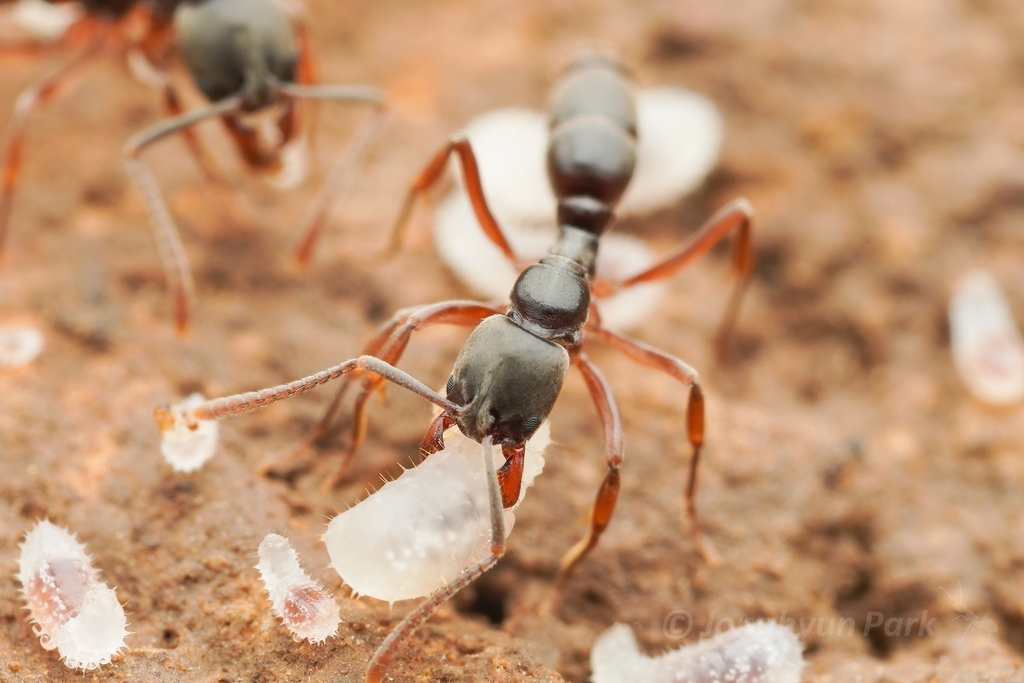
Asian Needle Ant
Brachyponera chinensis
Insectstrong against fungi, fish
Common
Swarm
While active with another insect in play, each of its attacks also hits the opposing bench for 10, without knocking them out (20 with two others).
30

40
Asian Needle Ant
Brachyponera chinensis
Insectstrong against fungi, fish
Common
While active with another insect in play, each of its attacks also hits the opposing bench for 10, without knocking them out (20 with two others).
Brachyponera chinensis
Photo: © Jonghyun Park (original photo) · CC BY 4.0 (licence text) · cropped
Strong against: it deals 20% more damage to them. Weak against: these types deal 20% more damage to it.
Brachyponera chinensis, the Asian needle ant, is a stinging ponerine ant native to areas of Japan and mainland Asia. It was known as Pachycondyla chinensis, a name used in many scientific publications until 2014. The Asian needle ant was introduced to the United States in the 1930s, where it is considered an adventive and possibly invasive species. Since then, the Asian needle ant and the Argentine ant (Linepithema humile) have been competing for territory in the U.S. Brachyponera chinensis is found primarily in the American South, where the ants prefer to nest beneath or near hardwood trees. They are also found along the U.S. East Coast, from Florida to Massachusetts. The range of Asian needle ant then extends westward to Kentucky, Tennessee, and Arkansas. Sightings have also been confirmed in Washington and Wisconsin, where outlier populations have been established. This invasive species is of growing concern due to ecological impacts on biodiversity and medical risks to human health, via sting-induced anaphylaxis.
Excerpt from the Wikipedia article Brachyponera chinensis, by its authors, under the CC BY-SA 4.0 licence.
No global status on the IUCN Red List: that’s what makes this card Common.
Every Common card has 100 points, shared between HP, ATK and DEF:
How they’re shared out:

 DEF 40