 …
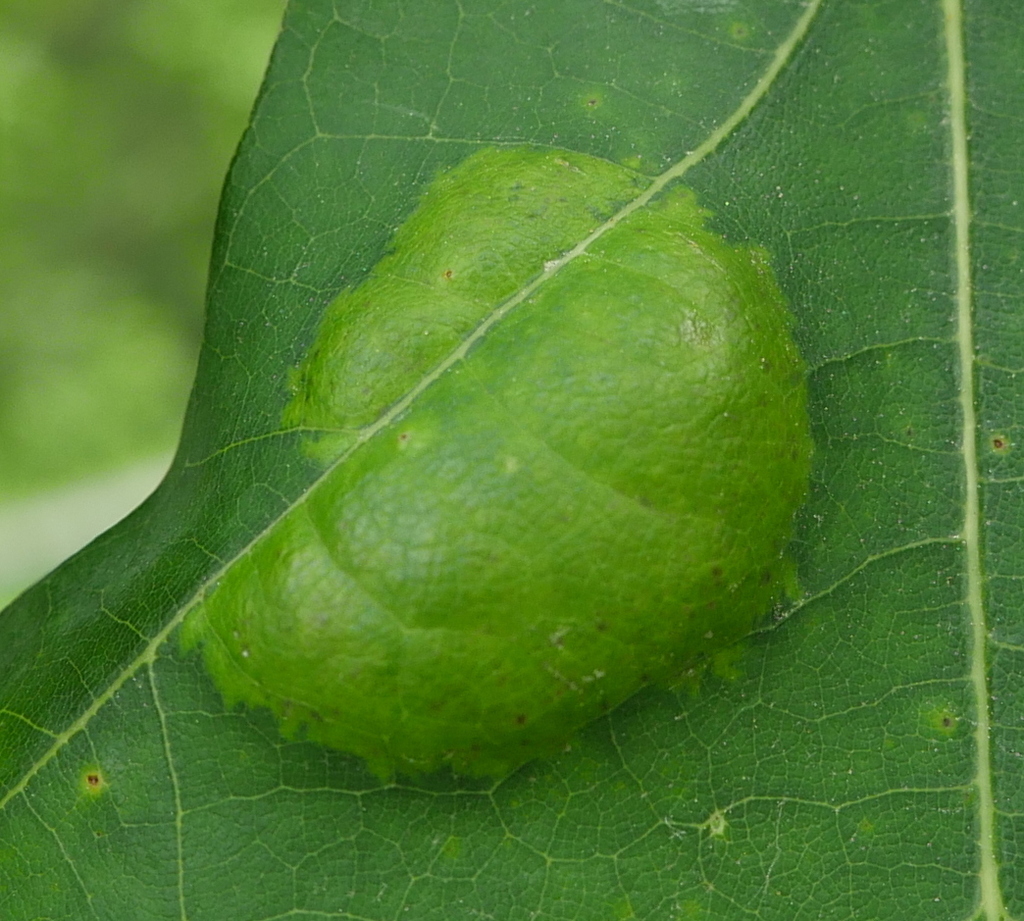
Oak Leaf Blister
Taphrina caerulescens
Fungusstrong against amphibians, reptiles
Common
Mycelium
While active with another fungus in play, it regains 5 HP at the start of your turn (8 with two others).
39

28
Oak Leaf Blister
Taphrina caerulescens
Fungusstrong against amphibians, reptiles
Common
While active with another fungus in play, it regains 5 HP at the start of your turn (8 with two others).
Taphrina caerulescens
Photo: Adam Kranz (original photo) · CC0 (licence text) · cropped
Strong against: it deals 20% more damage to them. Weak against: these types deal 20% more damage to it.
Taphrina caerulescens is a species of fungus in the family Taphrinaceae. It is a pathogenic Ascomycete fungus that causes oak leaf blister disease on various species of oak trees (Quercus spp.). The associated anamorph species is Lalaria coccinea, described in 1990. This disease causes lesions and blisters on Oak leaves. Effects of the disease are mostly cosmetic. Although not taxonomically defined, strains of T. caerulescens have been shown to be host specific with varying ¬ascus morphology between strains. There are differences in strains' abilities to metabolize various carbon and nitrogen compounds. This has been proposed as a method of taxonomically defining subspecies within T. caerulescens.
Taphrina caerulescens is very closely related to Taphrina deformans, which causes peach leaf curl. These two pathogens have indistinguishable asci. However, T. deformans infects peach tree species while T. caerulescens infects Oak tree species only.
Excerpt from the Wikipedia article Taphrina caerulescens, by its authors, under the CC BY-SA 4.0 licence.
No global status on the IUCN Red List: that’s what makes this card Common.
Every Common card has 100 points, shared between HP, ATK and DEF:
How they’re shared out:

 DEF 28