 …
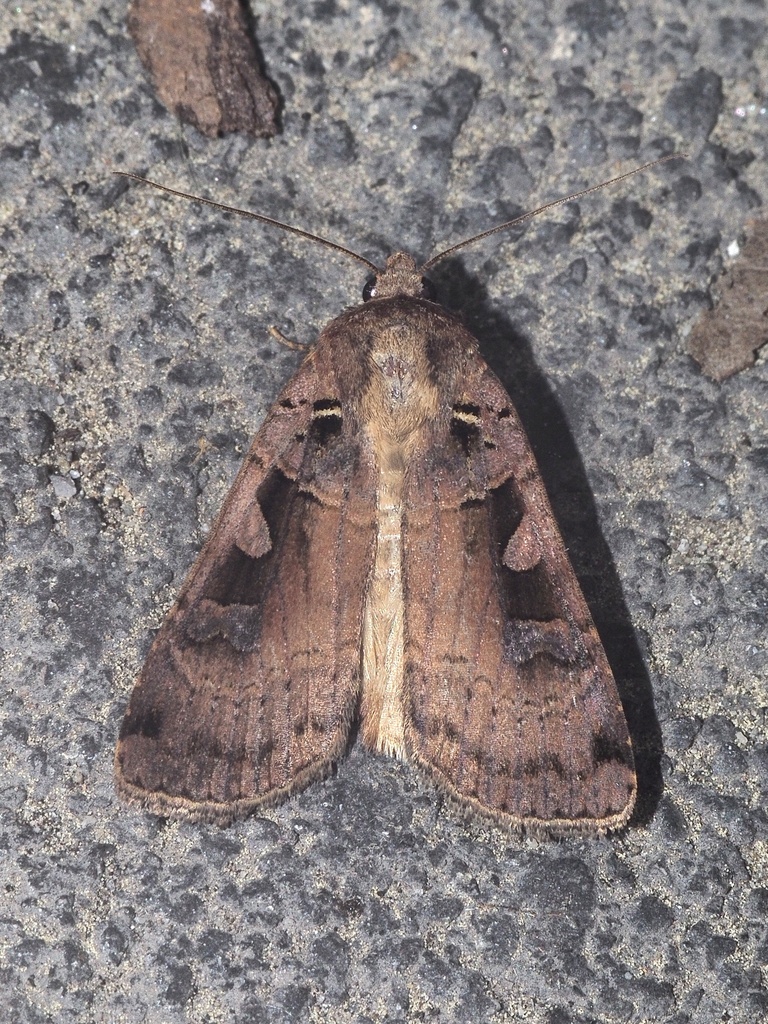
Triple-spotted Clay
Xestia ditrapezium
Insectstrong against fungi, fish
Common
Swarm
While active with another insect in play, each of its attacks also hits the opposing bench for 10, without knocking them out (20 with two others).
39

38
Triple-spotted Clay
Xestia ditrapezium
Insectstrong against fungi, fish
Common
While active with another insect in play, each of its attacks also hits the opposing bench for 10, without knocking them out (20 with two others).
Xestia ditrapezium
Photo: © Cosimo Costanzia di Costigliole (original photo) · CC BY 4.0 (licence text) · cropped
Strong against: it deals 20% more damage to them. Weak against: these types deal 20% more damage to it.
Xestia ditrapezium (triple-spotted clay) is a moth of the family Noctuidae found in most of Europe, northern Turkey, northern Iran, Transcaucasia, Caucasus, central Asia, from the Altai to Ussuri, Amur, Kuril Islands, northern Mongolia, Tibet, China, Korea, and Japan.
The wingspan is 35–47 mm. The forewing is darker than in Xestia triangulum Hufn., a smooth vinous brown; the dark markings are not so black; the hindwing is distinctly yellowish-tinged.
Differences from X. triangulum:
X. ditrapezium forewings on average are narrower (or longer). The ground color of the forewings is usually darker (red to violet-brown) and the color of the rear wing is a shade lighter. The hindwings are significantly lighter than the forewings. The collar is without contrasts, almost monochrome.
X. triangulum forewings on average are wider (or shorter). The ground color of the forewings is usually lighter (ochre to tawny or grayish brown); the color of the hindwings is usually slightly darker grey. The hindwings are about as light as the front wings. The lower part of the neck collar is grey, separated by a light line from the dark upper.
Excerpt from the Wikipedia article Xestia ditrapezium, by its authors, under the CC BY-SA 4.0 licence.
No global status on the IUCN Red List: that’s what makes this card Common.
Every Common card has 100 points, shared between HP, ATK and DEF:
How they’re shared out:

 DEF 38