 …
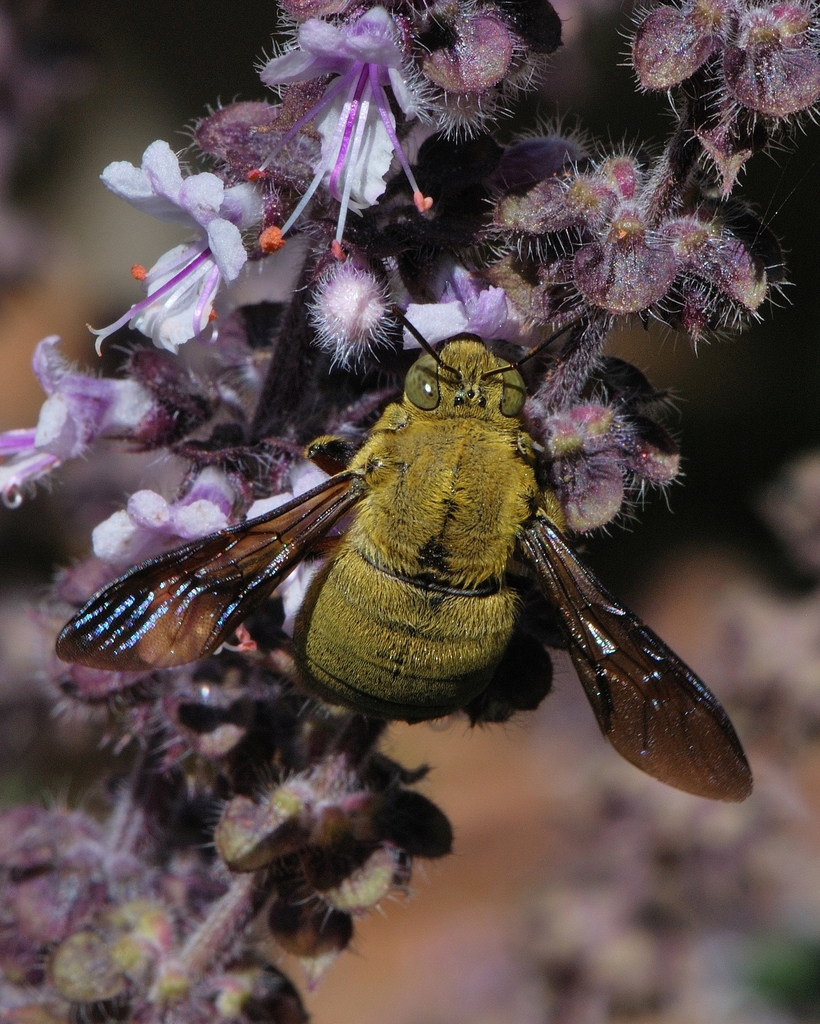
Pubescent Carpenter Bee
Xylocopa pubescens
Insectstrong against fungi, fish
Common
Swarm
While active with another insect in play, each of its attacks also hits the opposing bench for 10, without knocking them out (20 with two others).
39

40
Pubescent Carpenter Bee
Xylocopa pubescens
Insectstrong against fungi, fish
Common
While active with another insect in play, each of its attacks also hits the opposing bench for 10, without knocking them out (20 with two others).
Xylocopa pubescens
Photo: © Gidip (original photo) · CC BY 4.0 (licence text) · cropped
Strong against: it deals 20% more damage to them. Weak against: these types deal 20% more damage to it.
Xylocopa pubescens is a species of large carpenter bee. Females form nests by excavation with their mandibles, often in dead or soft wood. X. pubescens is commonly found in areas extending from India to Northeast and West Africa. It must reside in these warm climates because it requires a minimum ambient temperature of 18 °C (64 °F) in order to forage.
A common area of study in X. pubescens is its dominance hierarchy and guarding behavior. Colonies start and end with female takeover, either by daughters of the dominant female or by foreign intruders. There is only one reproductively active female in a colony at a time who suppresses the reproduction of other females in the nest. Males hold individual territories which females enter to mate. When an intruder enters another male's territory, the male responds aggressively.
X. pubescens is polylectic, so it forages on many species of plants. It forages on some plants for nectar when preparing bee bread during ontogenesis and forages on others for pollen to feed offspring. Pheromones from Dufour's gland are vital to mark flowers previously visited and also to mark nests so that the foraging bees know where to return. X. pubescens is known to be an effective pollinator, often more effective than honeybees, but it is not commonly used in today's agricultural settings.
Excerpt from the Wikipedia article Xylocopa pubescens, by its authors, under the CC BY-SA 4.0 licence.
No global status on the IUCN Red List: that’s what makes this card Common.
Every Common card has 100 points, shared between HP, ATK and DEF:
How they’re shared out:

 DEF 40