 …
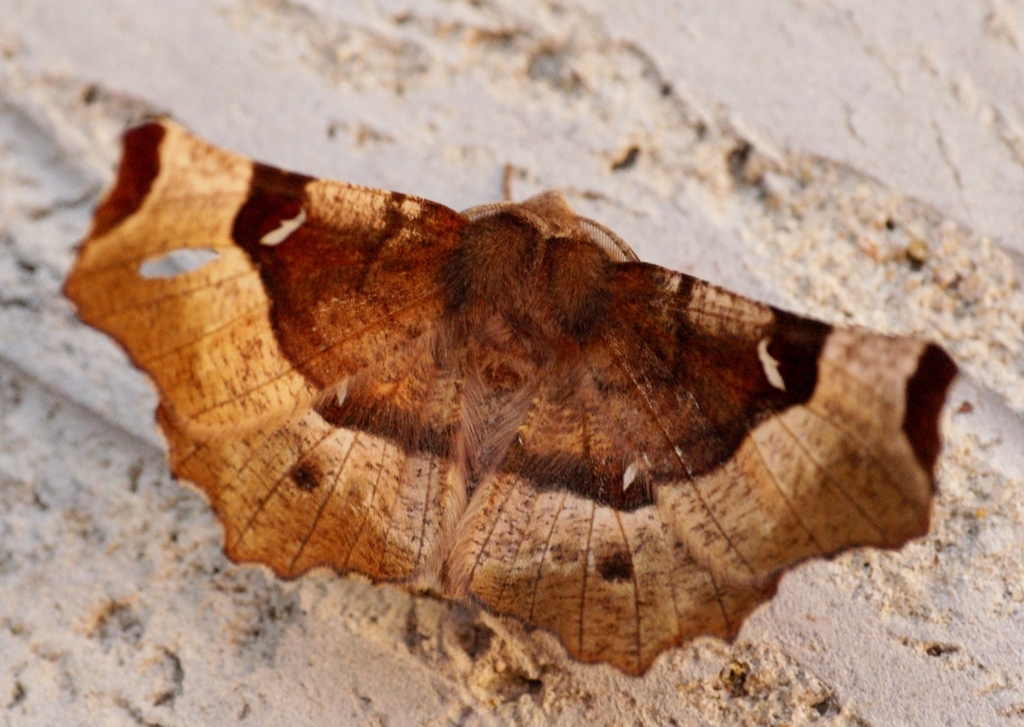
Purple Thorn
Selenia tetralunaria
Insectstrong against fungi, fish
Common
Swarm
While active with another insect in play, each of its attacks also hits the opposing bench for 10, without knocking them out (20 with two others).
39

39
Purple Thorn
Selenia tetralunaria
Insectstrong against fungi, fish
Common
While active with another insect in play, each of its attacks also hits the opposing bench for 10, without knocking them out (20 with two others).
Selenia tetralunaria
Photo: © Ben Sale (original photo) · CC BY 4.0 (licence text) · cropped
Strong against: it deals 20% more damage to them. Weak against: these types deal 20% more damage to it.
The purple thorn (Selenia tetralunaria) is a moth of the family Geometridae. The species was first described by Johann Siegfried Hufnagel in 1767. It is a species of both Northern Europe and Central Europe. It has a scattered distribution in Britain but is absent from Ireland.
This species is dark purplish brown, paler towards the termen, with a dark spot at the apex of the forewing. Both wings are marked with a comma-shaped white mark. The margins of the wings are angular, giving the species a distinctive shape. Two broods are produced each year and they differ considerably in size and colour. Adults of the spring brood, which fly in April and May, have a wingspan of 46–52 mm. Moths of the summer brood, flying in July and August, are smaller (wingspan 44–46 mm) and darker. The caterpillar is reddish brown, mottled with darker brown, and with pale greyish.
The species flies at night and is attracted to light.
The caterpillar feeds on a variety of trees and shrubs (see list below). The species overwinters as a pupa.
Excerpt from the Wikipedia article Purple thorn, by its authors, under the CC BY-SA 4.0 licence.
No global status on the IUCN Red List: that’s what makes this card Common.
Every Common card has 100 points, shared between HP, ATK and DEF:
How they’re shared out:

 DEF 39