 …
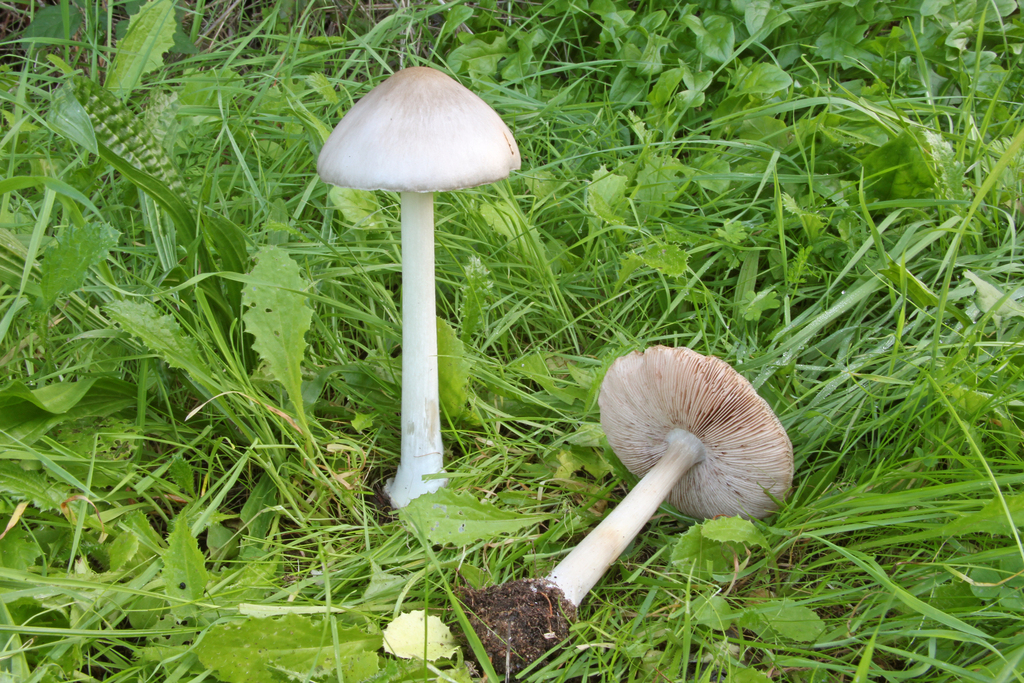
Stubble Rosegill
Volvopluteus gloiocephalus
Fungusstrong against amphibians, reptiles
Common
Mycelium
While active with another fungus in play, it regains 5 HP at the start of your turn (8 with two others).
42

28
Stubble Rosegill
Volvopluteus gloiocephalus
Fungusstrong against amphibians, reptiles
Common
While active with another fungus in play, it regains 5 HP at the start of your turn (8 with two others).
Volvopluteus gloiocephalus
Photo: © Davide Puddu (original photo) · CC BY 4.0 (licence text) · cropped
Strong against: it deals 20% more damage to them. Weak against: these types deal 20% more damage to it.
Volvopluteus gloiocephalus, commonly known as the big sheath mushroom, rose-gilled grisette, or stubble rosegill, is a species of mushroom in the family Pluteaceae. For most of the 20th century it has been known under the names Volvariella gloiocephala or V. speciosa, but recent molecular studies have placed it as the type species of the genus Volvopluteus, newly created in 2011.
The cap of the mushroom is about 5–15 cm (2–6 in) in diameter, varies from white to grey or grey-brown, and is markedly sticky when fresh. The gills start out as white but they soon turn pink. The stipe is white and has a sack-like volva at the base. Microscopical features and DNA sequence data are of great importance for separating V. gloiocephalus from related species. V. gloiocephalus is a saprotrophic fungus that grows on grassy fields and accumulations of organic matter like compost or woodchip piles. It has been reported from all continents except Antarctica.
Excerpt from the Wikipedia article Volvopluteus gloiocephalus, by its authors, under the CC BY-SA 4.0 licence.
No global status on the IUCN Red List: that’s what makes this card Common.
Every Common card has 100 points, shared between HP, ATK and DEF:
How they’re shared out:

 DEF 28