 …
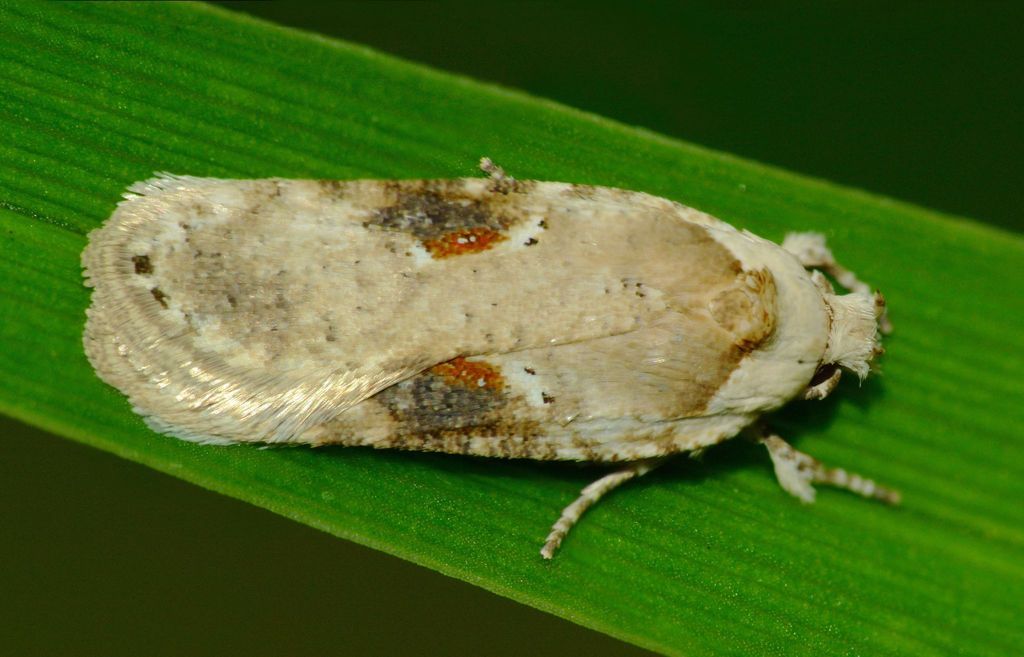
Poison hemlock moth
Agonopterix alstroemeriana
Insectstrong against fungi, fish
Common
Swarm
While active with another insect in play, each of its attacks also hits the opposing bench for 10, without knocking them out (20 with two others).
39

39
Poison hemlock moth
Agonopterix alstroemeriana
Insectstrong against fungi, fish
Common
While active with another insect in play, each of its attacks also hits the opposing bench for 10, without knocking them out (20 with two others).
Agonopterix alstroemeriana
Photo: © Steve Kerr (original photo) · CC BY 4.0 (licence text) · cropped
Strong against: it deals 20% more damage to them. Weak against: these types deal 20% more damage to it.
The hemlock moth (Agonopterix alstroemeriana), also known as the defoliating hemlock moth or poison hemlock moth, is a nocturnal moth species of the family Depressariidae. Of Palaearctic origin, it was first found in North America in 1973 when it was accidentally introduced. The moth is widespread throughout the northern half of the United States, southern Canada, northern Europe, and, more recently, New Zealand and Australia. The larval form grows to around 10 mm, while the adults wingspan is between 17 mm and 19 mm.
It is best known for its use in biological control of the lethal poison hemlock (Conium maculatum), which is eaten by its caterpillars (larvae). The toxicity of its host plant may actually benefit the caterpillar because it helps females recognize locations for oviposition. This species also uses the leaves of its host plant (C. maculatum) to form protective tubes around the caterpillar.
Excerpt from the Wikipedia article Agonopterix alstroemeriana, by its authors, under the CC BY-SA 4.0 licence.
No global status on the IUCN Red List: that’s what makes this card Common.
Every Common card has 100 points, shared between HP, ATK and DEF:
How they’re shared out:

 DEF 39