 …
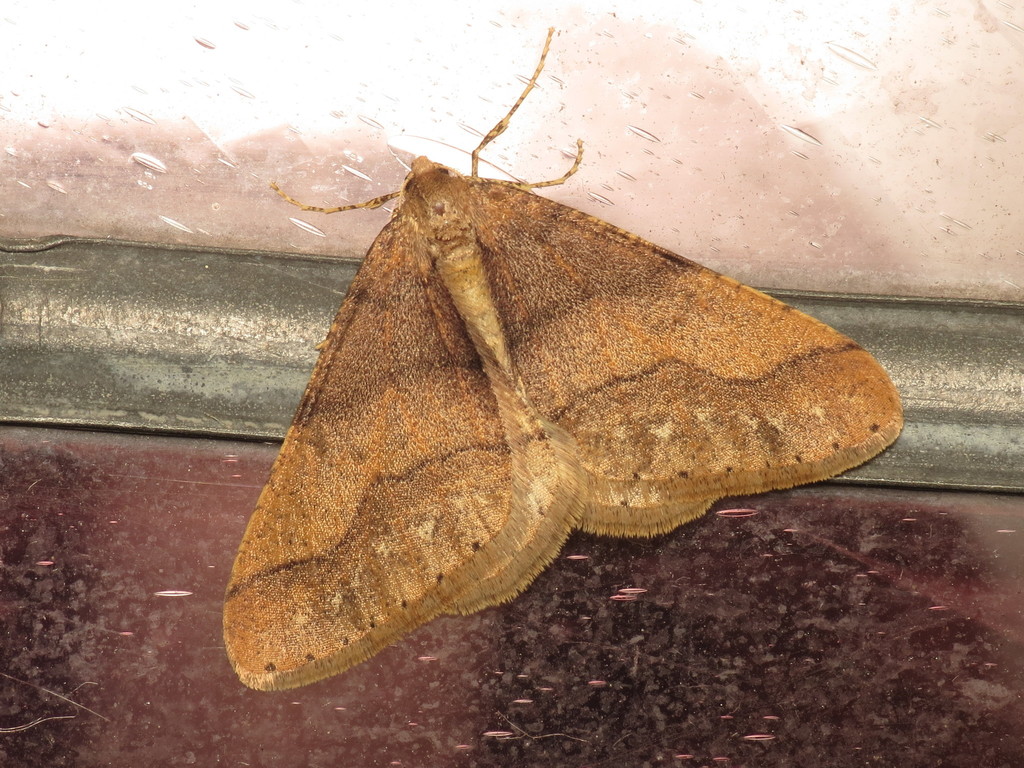
Dotted Border Moth
Agriopis marginaria
Insectstrong against fungi, fish
Common
Swarm
While active with another insect in play, each of its attacks also hits the opposing bench for 10, without knocking them out (20 with two others).
41

38
Dotted Border Moth
Agriopis marginaria
Insectstrong against fungi, fish
Common
While active with another insect in play, each of its attacks also hits the opposing bench for 10, without knocking them out (20 with two others).
Agriopis marginaria
Photo: © Donald Hobern (original photo) · CC BY 4.0 (licence text) · cropped
Strong against: it deals 20% more damage to them. Weak against: these types deal 20% more damage to it.
The dotted border (Agriopis marginaria) is a moth of the family Geometridae. The species was first described by Johan Christian Fabricius in 1776. It is found throughout Europe (except the far north), and the Near East.
The female of this species has only vestigial wings and is totally flightless. It is usually found resting on the trunks and branches of the larval food plants. The male has orange-brown forewings ( less orange than in aurantiaria with a paler yellowish band and a row of dots along the termen which gives it its common name. The hindwings are whitish with faint fascia. Melanic forms are frequently seen. The wingspan is 36–42 mm.
The adults are active from February to April, the male sometimes coming to light but not strongly attracted.
The egg is ovate, greenish, becoming reddish on the upper side.
The very variable larva is usually greenish-brown with dark cross-shaped markings along the back and feeds on a range of trees and shrubs (see list below). The species overwinters as a pupa.
^ The flight season refers to the British Isles. This may vary in other parts of the range.
Excerpt from the Wikipedia article Dotted border, by its authors, under the CC BY-SA 4.0 licence.
No global status on the IUCN Red List: that’s what makes this card Common.
Every Common card has 100 points, shared between HP, ATK and DEF:
How they’re shared out:

 DEF 38