 …
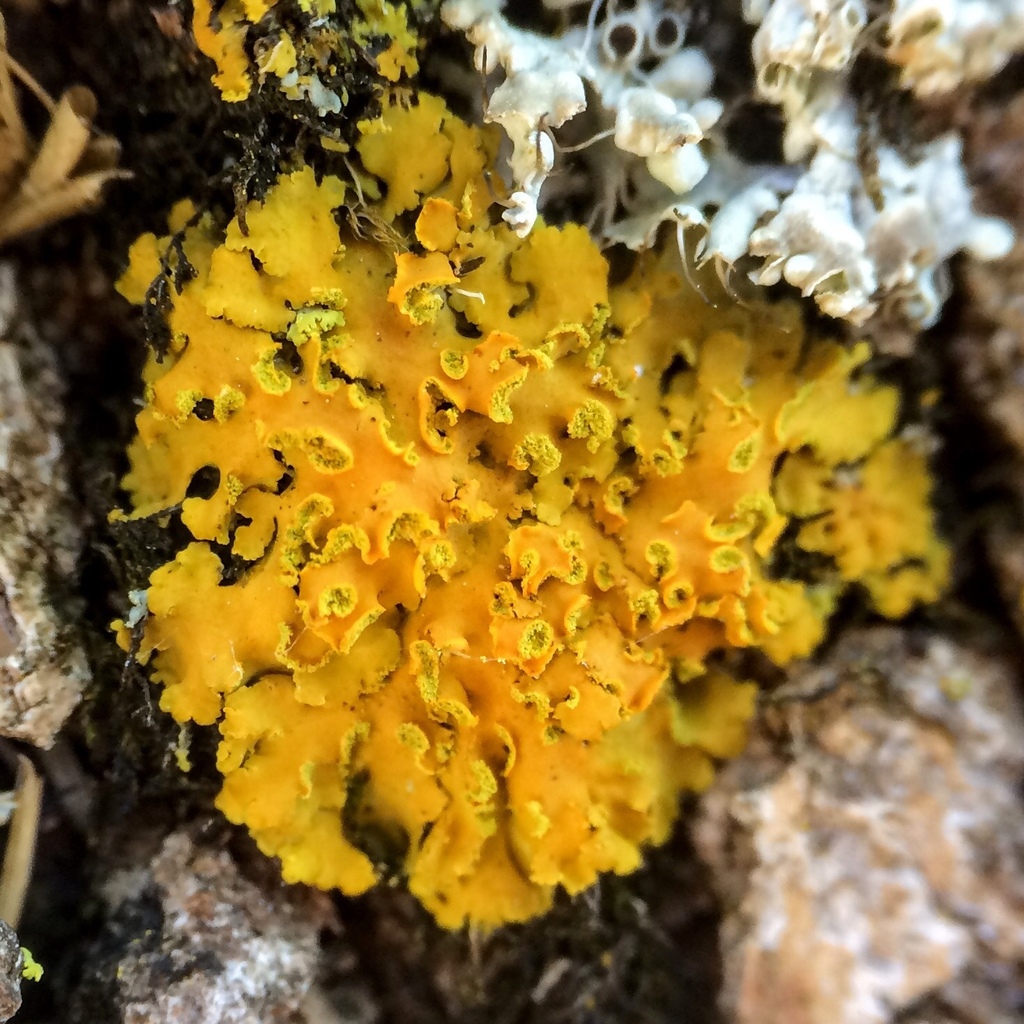
Hooded Sunburst Lichen
Xanthomendoza fallax
Fungusstrong against amphibians, reptiles
Common
Mycelium
While active with another fungus in play, it regains 5 HP at the start of your turn (8 with two others).
42

28
Hooded Sunburst Lichen
Xanthomendoza fallax
Fungusstrong against amphibians, reptiles
Common
While active with another fungus in play, it regains 5 HP at the start of your turn (8 with two others).
Xanthomendoza fallax
Photo: © Nova Patch (original photo) · CC BY-SA 4.0 (licence text) · cropped
Strong against: it deals 20% more damage to them. Weak against: these types deal 20% more damage to it.
Oxneria fallax, also known as the hooded sunburst lichen, is a small yellow-orange to red-orange foliose lichen that grows on bark or rarely on rock or bone. It is found all over the world except very dry areas. In Nepal, O. fallax has been reported from 3,200 to 3,400 m elevation in a compilation of published records.
The non-fruiting body (thallus) grows in rosettes to 3 cm in diameter. The rosettes sometimes coalesce with each other. The lobes may appear divided at the tips. It is sometimes tightly appressed to the substrate (adnate), and sometimes not. The fruiting bodies (apothecia) are lecanorine, meaning that they are disc-like with a ring or rim of tissue around the disc that is made of tissue similar to the thallus. The tips of the lobes form hood shaped soralia that produce powdery greenish yellow soredia. It prefers growing on elm or oak bark, but can also be found on rocks, bone, or other wood types. In Norway, it has been recorded growing on the bark of various sun-exposed broadleaved trees, including Acer, Betula, Fagus, Fraxinus, Populus, Tilia, and Ulmus. Lichen spot tests on the surface are K+ (purple), C−, KC−, and P−.
Excerpt from the Wikipedia article Oxneria fallax, by its authors, under the CC BY-SA 4.0 licence.
No global status on the IUCN Red List: that’s what makes this card Common.
Every Common card has 100 points, shared between HP, ATK and DEF:
How they’re shared out:

 DEF 28