 …
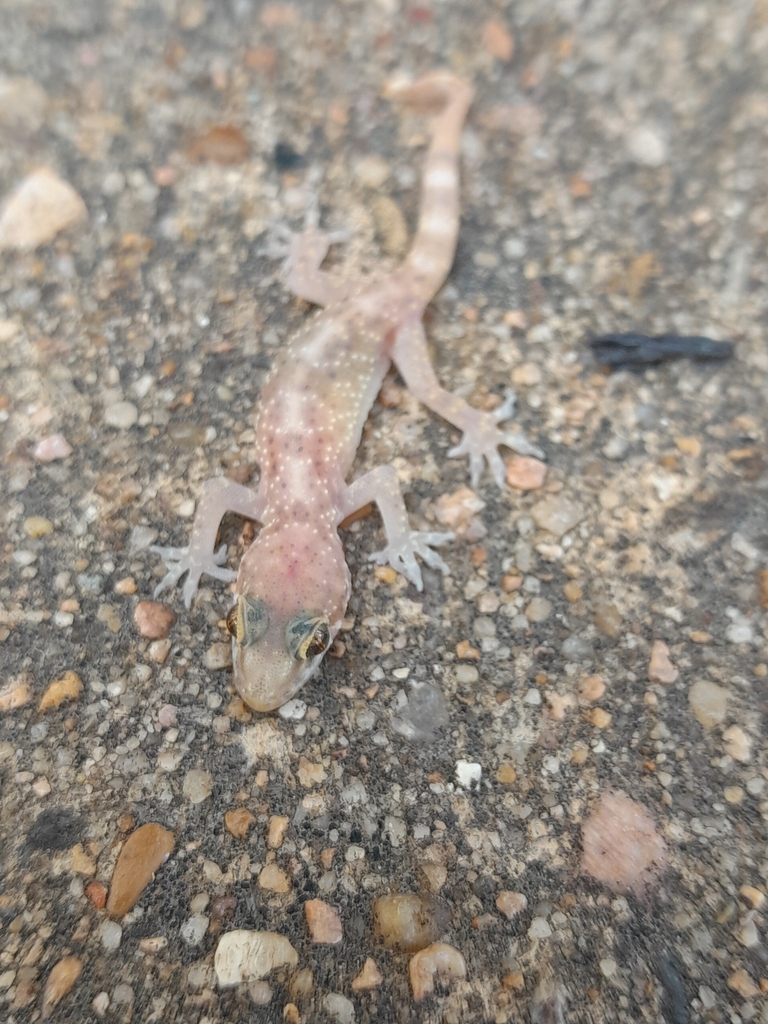
Mediterranean House Gecko
Hemidactylus turcicus
Reptilestrong against amphibians, mammals
Common
Scales
While active with another reptile in play, it takes 3 less damage (6 with two others).
34

40
Mediterranean House Gecko
Hemidactylus turcicus
Reptilestrong against amphibians, mammals
Common
While active with another reptile in play, it takes 3 less damage (6 with two others).
Hemidactylus turcicus
Photo: © Texas Bird Family (original photo) · CC BY 4.0 (licence text) · cropped
Strong against: it deals 20% more damage to them. Weak against: these types deal 20% more damage to it.
The Mediterranean house gecko (Hemidactylus turcicus) is a species of house gecko native to the Mediterranean region, from which it has spread to many parts of the world including parts of East Africa, South America, the Caribbean, and the Southern and Southeastern United States. It is commonly referred to as the Turkish gecko as represented in its Latin name and also as the moon lizard because it tends to emerge in the evening.
A study in Portugal found H. turcicus to be totally nocturnal, with its highest activity around 02:00. It is insectivorous, rarely exceeds 15 cm (5.9 in) in length, has large, lidless eyes with elliptical pupils, and purple or tan-colored skin with black spots, often with stripes on the tail. Its belly or undersides are somewhat translucent. What impact this gecko has on native wildlife in the regions to which it has been introduced is unknown.
Abridged excerpt from the Wikipedia article Mediterranean house gecko, by its authors, under the CC BY-SA 4.0 licence.
Least Concern on the IUCN Red List: that’s what makes this card Common.
Every Common card has 100 points, shared between HP, ATK and DEF:
How they’re shared out:

 DEF 40