 …
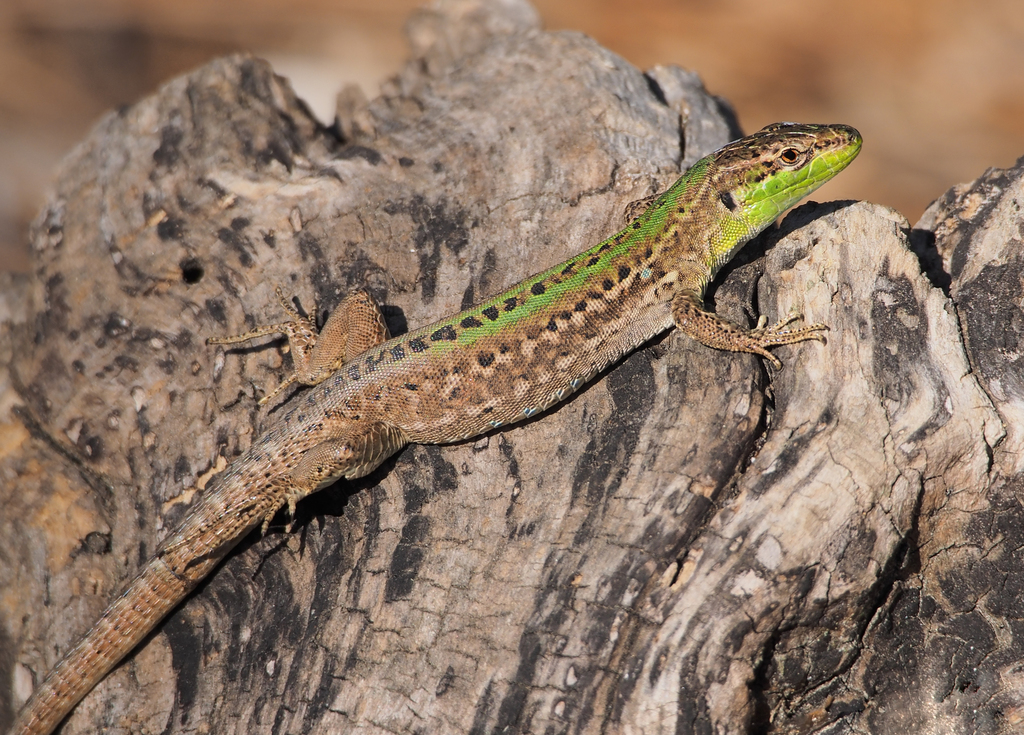
Italian Wall Lizard
Podarcis siculus
Reptilestrong against amphibians, mammals
Common
Scales
While active with another reptile in play, it takes 3 less damage (6 with two others).
36

36
Italian Wall Lizard
Podarcis siculus
Reptilestrong against amphibians, mammals
Common
While active with another reptile in play, it takes 3 less damage (6 with two others).
Podarcis siculus
Photo: © Petar Milošević (original photo) · CC BY-SA 4.0 (licence text) · cropped
Strong against: it deals 20% more damage to them. Weak against: these types deal 20% more damage to it.
The Italian wall lizard or ruin lizard (Podarcis siculus, from the Greek meaning foot and agile), is a species of lizard in the family Lacertidae. P. siculus is native to southern and southeastern Europe, but has also been introduced elsewhere in the continent, as well as North America, where it is a possible invasive species. P. siculus is a habitat generalist and can thrive in natural and human-modified environments. Similarly, P. siculus has a generalized diet as well, allowing it to have its large range.
P. siculus is notable for having many subspecies within its large range. Studies evidence how rapidly P. siculus subspecies can become distinguishable from larger populations given geographic isolation. A 2008 study detailed distinct morphological and behavioral changes in a P. siculus population indicative of "rapid evolution".
P. siculus is a sexually dimorphic lizard species whose physical description varies across its subspecies, but it generally has a green or brown back and white or green belly. It is also oviparous, meaning females lay eggs, and they lay 3 or 4 clutches per year.
Excerpt from the Wikipedia article Italian wall lizard, by its authors, under the CC BY-SA 4.0 licence.
Least Concern on the IUCN Red List: that’s what makes this card Common.
Every Common card has 100 points, shared between HP, ATK and DEF:
How they’re shared out:

 DEF 36