 …
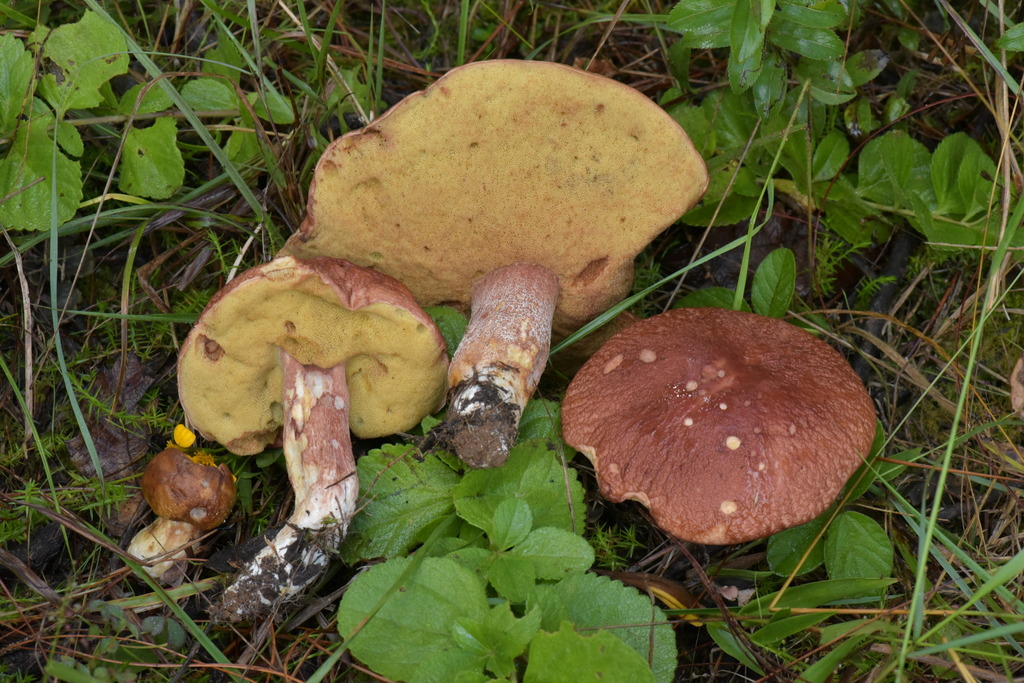
Pine Bolete
Boletus pinophilus
Fungusstrong against amphibians, reptiles
Common
Mycelium
While active with another fungus in play, it regains 5 HP at the start of your turn (8 with two others).
40

27
Pine Bolete
Boletus pinophilus
Fungusstrong against amphibians, reptiles
Common
While active with another fungus in play, it regains 5 HP at the start of your turn (8 with two others).
Boletus pinophilus
Photo: © Alan Rockefeller (original photo) · CC BY 4.0 (licence text) · cropped
Strong against: it deals 20% more damage to them. Weak against: these types deal 20% more damage to it.
Boletus pinophilus, commonly known as the pine bolete or pinewood king bolete, is a basidiomycete fungus of the genus Boletus. Described by Italian naturalist Carlo Vittadini in 1835, B. pinophilus was for many years considered a subspecies or form of the porcini mushroom B. edulis before genetic studies confirmed its distinct status. In 2008, B. pinophilus in western North America were reclassified as a new species, B. rex-veris.
The fungus produces spore-bearing fruit bodies (i.e. mushrooms) above ground under pine trees in summer and autumn. It has a red-brown to maroon-coloured cap and a large and bulbous stipe, covered with coarse orange-red reticulation. As with other boletes, the size of the fruiting body is variable.
The fungus is found throughout Europe and western Asia. It grows predominantly in coniferous forests on sandy soil, forming ectomycorrhizal associations in symbiosis with living trees by enveloping the tree's underground roots with sheaths of fungal tissue. Host trees include various species of pine, the European silver fir and European spruce, as well as deciduous trees such as chestnut trees, oak and beech. B. pinophilus is edible, and may be preserved and cooked.
Excerpt from the Wikipedia article Boletus pinophilus, by its authors, under the CC BY-SA 4.0 licence.
Least Concern on the IUCN Red List: that’s what makes this card Common.
Every Common card has 100 points, shared between HP, ATK and DEF:
How they’re shared out:

 DEF 27