 …
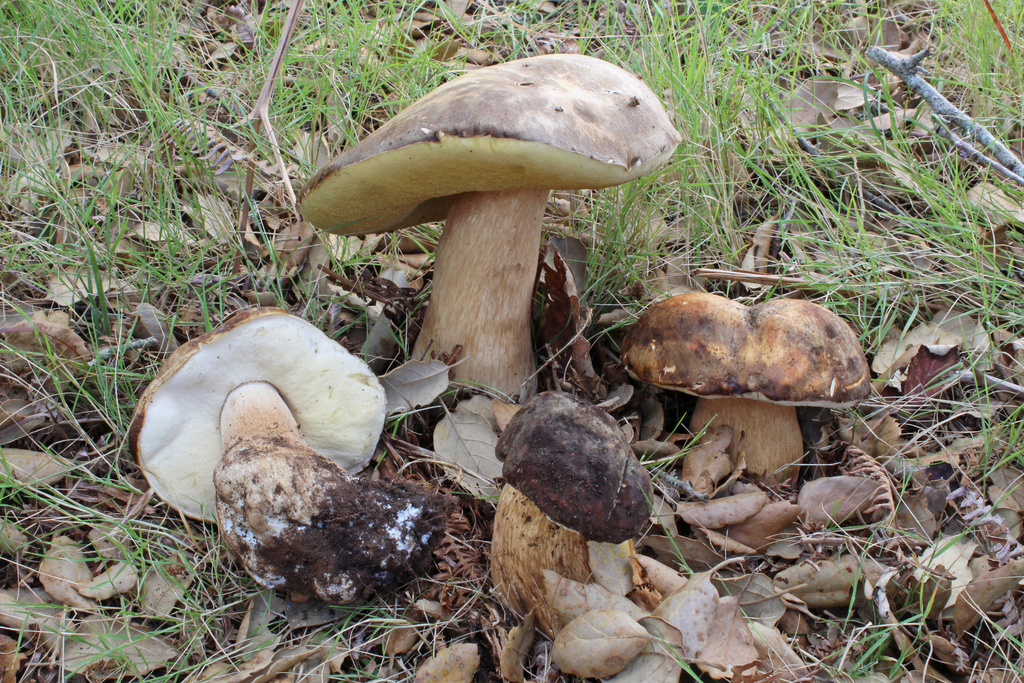
Bronze Bolete
Boletus aereus
Fungusstrong against amphibians, reptiles
Common
Mycelium
While active with another fungus in play, it regains 5 HP at the start of your turn (8 with two others).
38

29
Bronze Bolete
Boletus aereus
Fungusstrong against amphibians, reptiles
Common
While active with another fungus in play, it regains 5 HP at the start of your turn (8 with two others).
Boletus aereus
Photo: © Davide Puddu (original photo) · CC BY 4.0 (licence text) · cropped
Strong against: it deals 20% more damage to them. Weak against: these types deal 20% more damage to it.
Boletus aereus, commonly known as the queen bolete, dark cep, or bronze bolete, is a species of fungus in the family Boletaceae. Described in 1789 by French mycologist Pierre Bulliard, it is closely related to several other European boletes, including B. reticulatus, B. pinophilus, and the popular B. edulis. Some populations in North Africa have in the past been classified as a separate species, B. mamorensis, which has been shown to be phylogenically conspecific to B. aereus and is now regarded as a synonym.
The fungus produces spore-bearing fruit bodies above ground in summer and autumn. The fruit body has a large dark brown cap, which can reach 30 cm (12 in) in diameter. Like other boletes, B. aereus has tubes extending downward from the underside of the cap, rather than gills. The spores escape at maturity through the tube openings, or pores. The pore surface of the fruit body is whitish when young, but ages to a greenish-yellow. The squat brown stipe, or stem, is up to 15 cm (6 in) tall and 10 cm (4 in) thick and partially covered with a raised network pattern, or reticulation.
The fungus predominantly grows in habitats with broad-leaved trees and shrubs, forming symbiotic ectomycorrhizal associations in which the underground roots of these plants are enveloped with sheaths of fungal tissue (hyphae). The cork oak (Quercus suber) is a key host. A highly prized and sought-after edible mushroom, B. aereus is widely consumed throughout the Mediterranean.
Excerpt from the Wikipedia article Boletus aereus, by its authors, under the CC BY-SA 4.0 licence.
No global status on the IUCN Red List: that’s what makes this card Common.
Every Common card has 100 points, shared between HP, ATK and DEF:
How they’re shared out:

 DEF 29