 …
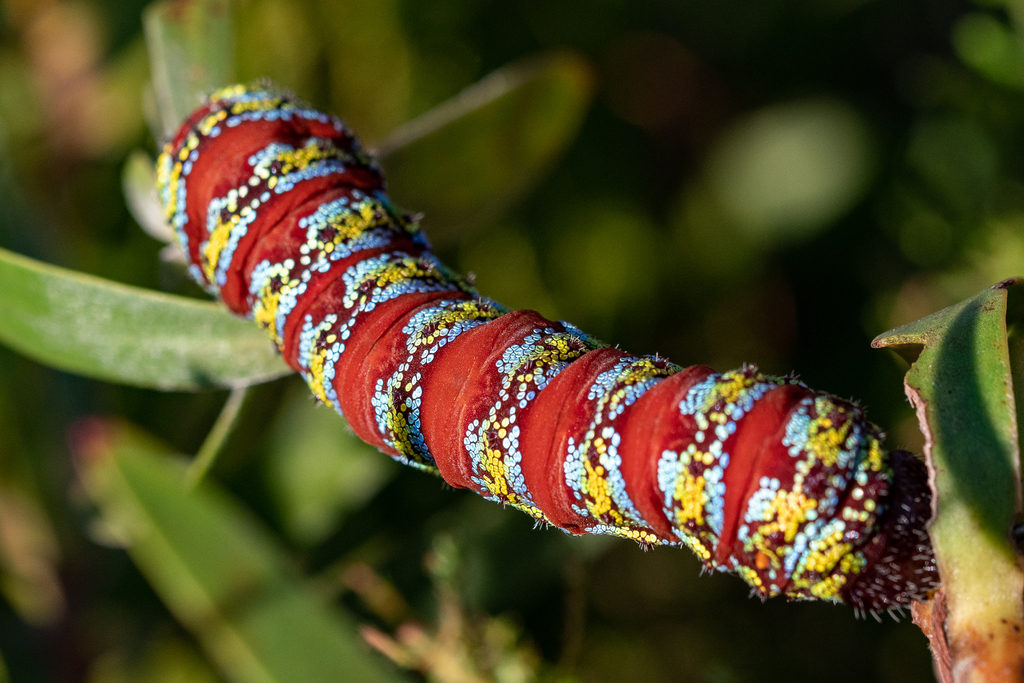
Pine Emperor
Nudaurelia cytherea
Insectstrong against fungi, fish
Common
Swarm
While active with another insect in play, each of its attacks also hits the opposing bench for 10, without knocking them out (20 with two others).
40

36
Pine Emperor
Nudaurelia cytherea
Insectstrong against fungi, fish
Common
While active with another insect in play, each of its attacks also hits the opposing bench for 10, without knocking them out (20 with two others).
Nudaurelia cytherea
Photo: © magriet b (original photo) · CC BY-SA 4.0 (licence text) · cropped
Strong against: it deals 20% more damage to them. Weak against: these types deal 20% more damage to it.
Nudaurelia cytherea, also called the pine tree emperor moth or Christmas caterpillar due to its festive colouration, is a southern African member of the family Saturniidae. The family has large edible caterpillars which are an important source of protein for the Bantu peoples of southern Africa. The genus Nudaurelia is closely related to Gonimbrasia and Imbrasia. The species was first described by Johan Christian Fabricius in 1775.
The larva has a wide-ranging taste in food plants, and readily added the needles of introduced pines to its diet, causing widespread defoliation in South African plantations in the 1930s, especially in the Lebanon and Franschhoek plantations of the Western Cape. The pines included Pinus canariensis, P. halepensis, P. radiata, P. longifolia, P. muricata and P. pinaster. Other exotic species included Acacia mollissima, Cupressus macrocarpa, Eucalyptus cladocalyx, E. diversicolor, E. globulus, E. ovata, E. paniculata, E. pilularis, Liriodendron tulipifera, apple, guava and quince. Its food plants before the introduction of exotic species had included Euclea species, Rapanea melanophloeos, Protea repens, Rhus angustifolia, Watsonia species and Myrica cordifolia - Pinus radiata and Rhus angustifolia being most sought after, with feeding migrations to other species being only incidental.
Abridged excerpt from the Wikipedia article Nudaurelia cytherea, by its authors, under the CC BY-SA 4.0 licence.
No global status on the IUCN Red List: that’s what makes this card Common.
Every Common card has 100 points, shared between HP, ATK and DEF:
How they’re shared out:

 DEF 36