 …
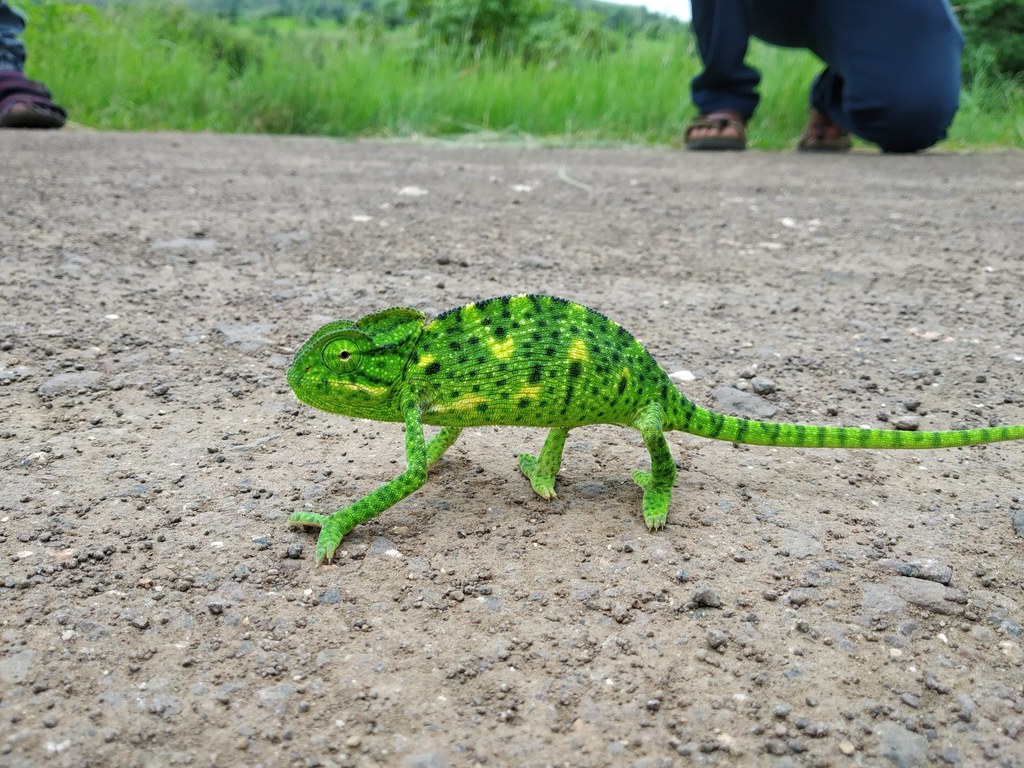
Indian Chameleon
Chamaeleo zeylanicus
Reptilestrong against amphibians, mammals
Common
Scales
While active with another reptile in play, it takes 3 less damage (6 with two others).
32

38
Indian Chameleon
Chamaeleo zeylanicus
Reptilestrong against amphibians, mammals
Common
While active with another reptile in play, it takes 3 less damage (6 with two others).
Chamaeleo zeylanicus
Photo: S.MORE (original photo) · CC0 (licence text) · cropped
Strong against: it deals 20% more damage to them. Weak against: these types deal 20% more damage to it.
The Indian chameleon (Chamaeleo zeylanicus) is a species of chameleon found in Sri Lanka, India, Pakistan and select other parts of South Asia. Like other chameleons, this species moves slowly with a bobbing or swaying movement (attempting to mimic swaying branches) and are usually arboreal. They have an extremely long and sticky tongue, which they use to catch insects from several feet away. Also like other chameleons, C. zeylanicus has bifurcated feet with a tongs-like shape, a prehensile tail, independent eye movement, and the ability to rapidly change skin colouring and patterns. Despite common misconceptions, they do not change their visual appearance based on their surroundings or background, or even for camouflage, and may not even be able to perceive colour differences; rather, it is primarily for communication with others of their species, including to signify the receptiveness of a female (brighter patterns tend to show a willingness to mate) or submissiveness in general disputes (in territorial or male-female disputes, darker hues are often associated with submission, anger or desiring solitude). Additionally, colouring can change for controlling body temperature, changing to darker colours to absorb heat, or lighter to cool themselves.
Excerpt from the Wikipedia article Indian chameleon, by its authors, under the CC BY-SA 4.0 licence.
Least Concern on the IUCN Red List: that’s what makes this card Common.
Every Common card has 100 points, shared between HP, ATK and DEF:
How they’re shared out:

 DEF 38