 …
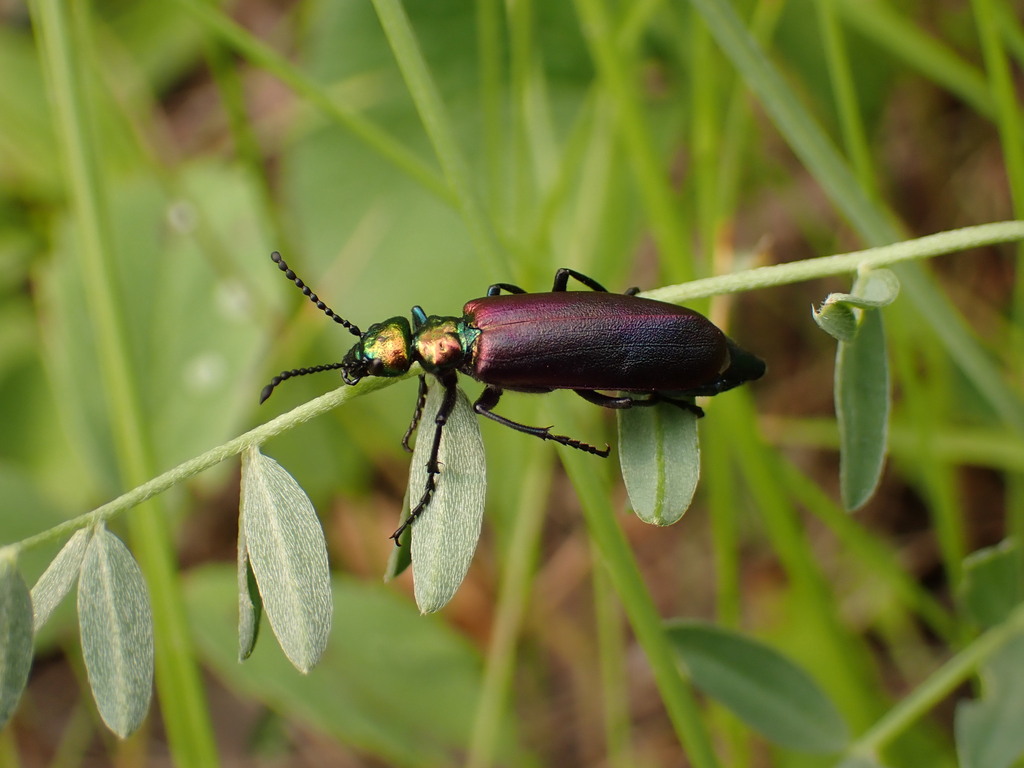
Nuttall's blister beetle
Lytta nuttalli
Insectstrong against fungi, fish
Common
Swarm
While active with another insect in play, each of its attacks also hits the opposing bench for 10, without knocking them out (20 with two others).
39

38
Nuttall's blister beetle
Lytta nuttalli
Insectstrong against fungi, fish
Common
While active with another insect in play, each of its attacks also hits the opposing bench for 10, without knocking them out (20 with two others).
Lytta nuttalli
Photo: iNaturalist (original photo) · CC0 (licence text) · cropped
Strong against: it deals 20% more damage to them. Weak against: these types deal 20% more damage to it.
Lytta nuttalli, or Nuttall's blister beetle, is a species of North American beetle first described in 1824 by Thomas Say. The genus Lytta is from a Latin word suggesting madness The specific nuttallii recognizes the contributions of Thomas Nuttall, a contemporary of Say.
The brilliant purple and green iridescent exoskeleton of Nuttall's blister beetles are a sharp contrast to the prairie plants of their native habitat. This species is found in Canada (Alberta to Manitoba) and the United States (Idaho south to Arizona, east to Minnesota and New Mexico). A disjunct population exists in eastern California restricted to higher altitudes.
This species is one of over 3,000 species included in the family Meloidae or 'blister beetles'. Adult beetles of species in this family are able to synthesize an irritating chemical 'cantharidin' that is used to deter predators.
The larvae of blister beetles in the genus Lytta feed in the nests of solitary bees in the family Apidae on the bee larvae and the food stored by the bee for its own larvae.
Abridged excerpt from the Wikipedia article Lytta nuttalli, by its authors, under the CC BY-SA 4.0 licence.
No global status on the IUCN Red List: that’s what makes this card Common.
Every Common card has 100 points, shared between HP, ATK and DEF:
How they’re shared out:

 DEF 38