 …
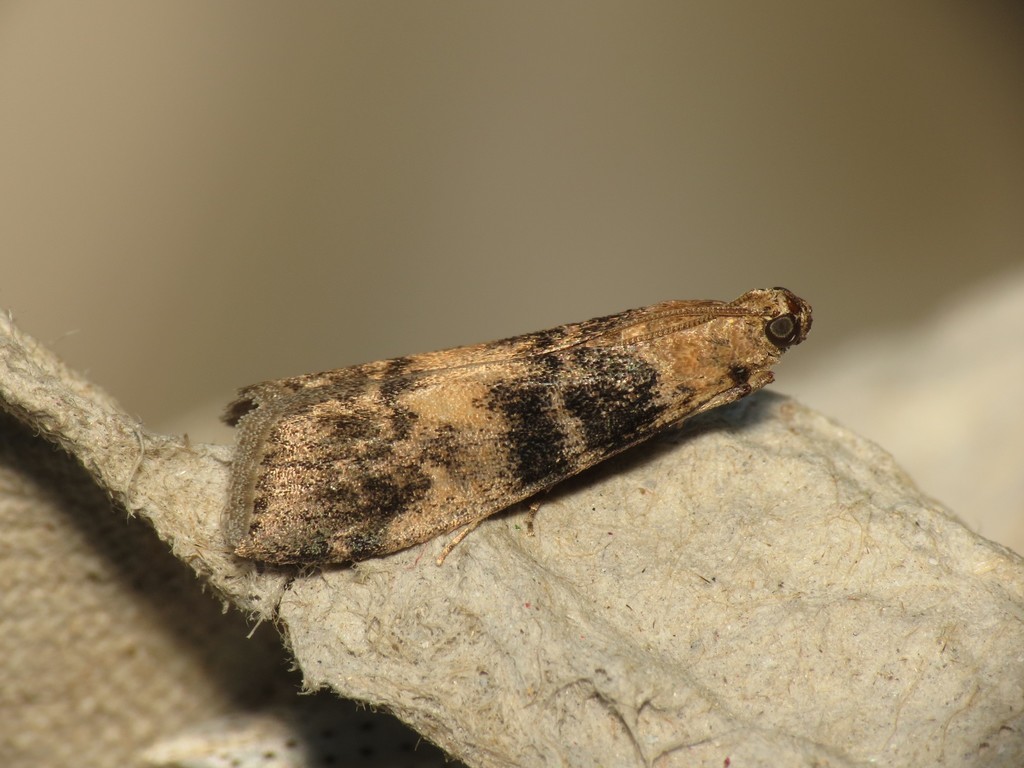
Ash-bark Knot-horn
Euzophera pinguis
Insectstrong against fungi, fish
Common
Swarm
While active with another insect in play, each of its attacks also hits the opposing bench for 10, without knocking them out (20 with two others).
38

39
Ash-bark Knot-horn
Euzophera pinguis
Insectstrong against fungi, fish
Common
While active with another insect in play, each of its attacks also hits the opposing bench for 10, without knocking them out (20 with two others).
Euzophera pinguis
Photo: © Donald Hobern (original photo) · CC BY 4.0 (licence text) · cropped
Strong against: it deals 20% more damage to them. Weak against: these types deal 20% more damage to it.
Euzophera pinguis, the tabby knot-horn, is a moth of the family Pyralidae. It was described by Adrian Hardy Haworth in 1811 and is found in Europe.
The wingspan is 23–28 mm. The forewings are light brownish-ochreous, somewhat reddish-tinged, pale sprinkled, with a few blackish scales; lines hardly paler, first
rather curved, edged anteriorly by a broad blackish band, posteriorly by a thick blackish suffusion, second angulated in middle, strongly edged with dark fuscous; terminal area more infuscated. Hindwings light fuscous. The larva is pinkish ochreous; dorsal line darker, interrupted; a lateral spot on 3 and 12 ringed with reddish-brown; head and plate of 2 reddish-brown, blackish-marked: in bark of ash; 9–6, perhaps sometimes living two years.
The moths are on wing from July to August depending on the location.
The larvae feed on Fraxinus excelsior.
Excerpt from the Wikipedia article Euzophera pinguis, by its authors, under the CC BY-SA 4.0 licence.
No global status on the IUCN Red List: that’s what makes this card Common.
Every Common card has 100 points, shared between HP, ATK and DEF:
How they’re shared out:

 DEF 39