 …
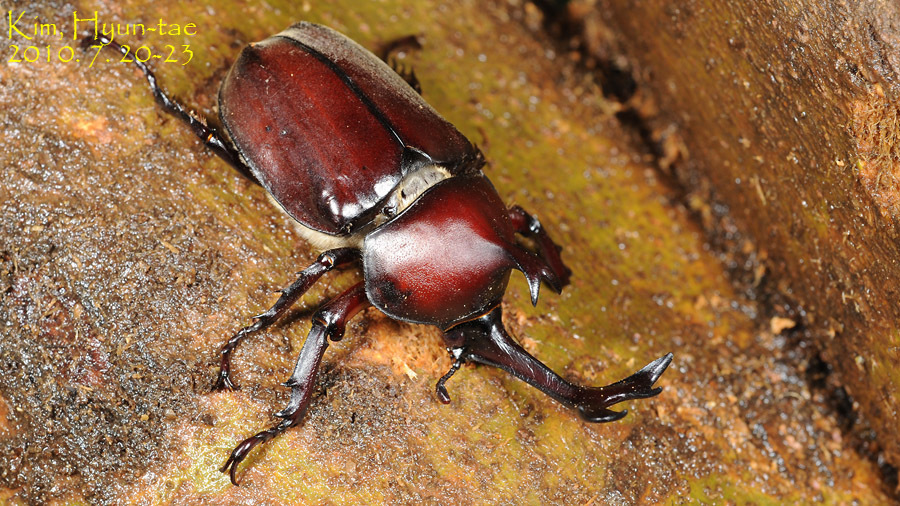
Japanese Rhinoceros Beetle
Trypoxylus dichotomus
Insectstrong against fungi, fish
Common
Swarm
While active with another insect in play, each of its attacks also hits the opposing bench for 10, without knocking them out (20 with two others).
41

36
Japanese Rhinoceros Beetle
Trypoxylus dichotomus
Insectstrong against fungi, fish
Common
While active with another insect in play, each of its attacks also hits the opposing bench for 10, without knocking them out (20 with two others).
Trypoxylus dichotomus
Photo: © Kim, Hyun-tae (original photo) · CC BY 4.0 (licence text) · cropped
Strong against: it deals 20% more damage to them. Weak against: these types deal 20% more damage to it.
The Japanese rhinoceros beetle (Trypoxylus dichotomus), also known as the Japanese rhino beetle, the Japanese horned beetle, or by its Japanese name kabutomushi (兜虫, 甲虫 or カブトムシ), is a species of rhinoceros beetle. They are commonly found in continental Asia in countries such as China, the Korean peninsula, Japan, Vietnam, Burma, Thailand, and Taiwan. In these areas, this species of beetle is often found in broad-leaved forests with tropical or sub-tropical climates. This beetle is well known for the prominent cephalic horn found on males. Male Japanese rhinoceros beetles will use this horn to fight other males for territory and access to female mating partners. Upon contact, males will attempt to flip each other onto their backs or off of their feeding tree. In response to selective pressures, smaller male T. dichotomus have adapted a "sneak-like behavior". These smaller beetles will attempt to avoid physical confrontation with larger males and try to mate with females.
Excerpt from the Wikipedia article Japanese rhinoceros beetle, by its authors, under the CC BY-SA 4.0 licence.
No global status on the IUCN Red List: that’s what makes this card Common.
Every Common card has 100 points, shared between HP, ATK and DEF:
How they’re shared out:

 DEF 36