 …
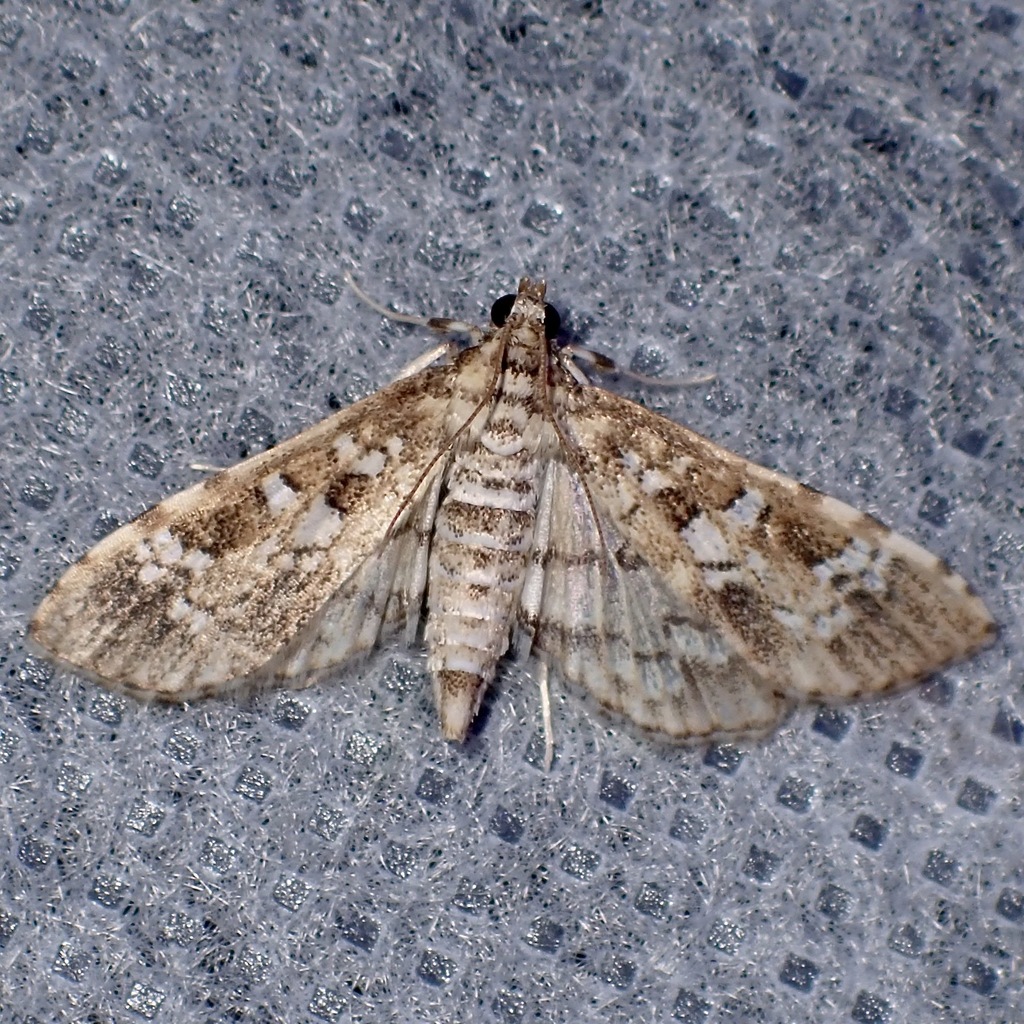
Salvinia Stem Borer Moth
Samea multiplicalis
Insectstrong against fungi, fish
Common
Swarm
While active with another insect in play, each of its attacks also hits the opposing bench for 10, without knocking them out (20 with two others).
29

39
Salvinia Stem Borer Moth
Samea multiplicalis
Insectstrong against fungi, fish
Common
While active with another insect in play, each of its attacks also hits the opposing bench for 10, without knocking them out (20 with two others).
Samea multiplicalis
Photo: © Sue Carnahan (original photo) · CC BY 4.0 (licence text) · cropped
Strong against: it deals 20% more damage to them. Weak against: these types deal 20% more damage to it.
Samea multiplicalis, the salvinia stem-borer moth, is an aquatic moth commonly found in freshwater habitats from the southern United States to Argentina, as well as in Australia where it was introduced in 1981. Salvinia stem-borer moths lay their eggs on water plants like Azolla caroliniana (water velvet), Pistia stratiotes (water lettuce), and Salvinia rotundifolia (water fern). Larval feeding on host plants causes plant death, which makes S. multiplicalis a good candidate for biological control of weedy water plants like Salvinia molesta, an invasive water fern in Australia. However, high rates of parasitism in the moth compromise its ability to effectively control water weeds. S. multiplicalis larvae are a pale yellow to green color, and adults develop tan coloration with darker patterning. The lifespan, from egg to the end of adulthood is typically three to four weeks. The species was first described by Achille Guenée in 1854.
Excerpt from the Wikipedia article Samea multiplicalis, by its authors, under the CC BY-SA 4.0 licence.
No global status on the IUCN Red List: that’s what makes this card Common.
Every Common card has 100 points, shared between HP, ATK and DEF:
How they’re shared out:

 DEF 39