 …
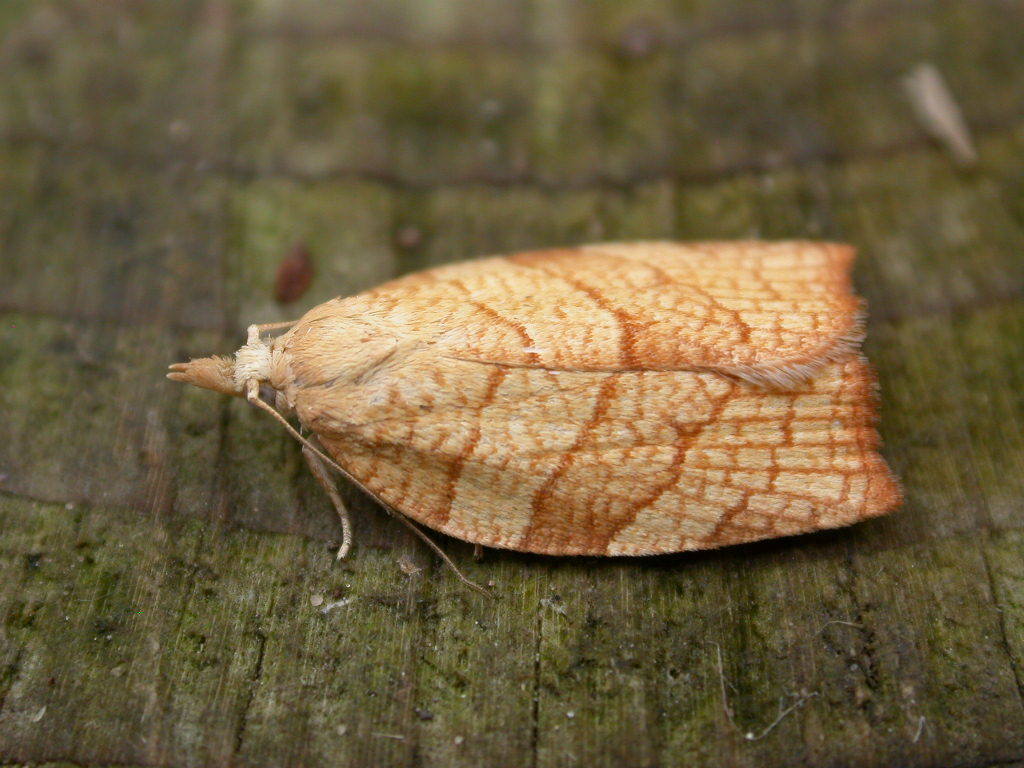
Chequered Fruit-tree Tortrix
Pandemis corylana
Insectstrong against fungi, fish
Common
Swarm
While active with another insect in play, each of its attacks also hits the opposing bench for 10, without knocking them out (20 with two others).
39

39
Chequered Fruit-tree Tortrix
Pandemis corylana
Insectstrong against fungi, fish
Common
While active with another insect in play, each of its attacks also hits the opposing bench for 10, without knocking them out (20 with two others).
Pandemis corylana
Photo: © Donald Hobern (original photo) · CC BY 4.0 (licence text) · cropped
Strong against: it deals 20% more damage to them. Weak against: these types deal 20% more damage to it.
Pandemis corylana, the chequered fruit-tree tortrix, hazel tortrix moth, filbert tortricid or barred fruit tree moth, is a moth of the family Tortricidae. It is found from northern and central Europe to Siberia, Korea and Japan.
The wingspan is 18–24 mm. It is similar to other Pandemis and Choristoneura species, but it is much paler in colour and the forewing markings are barely darker than the rest of the wing. The head and thorax are pale yellowish brown. The base colour of the forewing is pale yellowish brown with a marked brown mesh pattern. The wings, as in the related species, have marked basal blotches, an oblique cross-band in the middle and a triangular spot at the tip. These marks are barely darker than the surrounding parts, but are marked by brown edges. The hindwings are light grey and relatively narrow.
Adults are on wing from July to August in western Europe. In Korea, adults are on wing from early June to the end of September.
The larvae feed on the leaves of various deciduous trees and shrubs, including Corylus, Fraxinus, Prunus, Quercus, Rubus, Swida sanguinea, Betula, Fagus, Larix, Pinus, Rhamnus frangula, Thelycrania sanguinea and Vaccinium. Larvae can be found from May to July. Pupation occurs in the larval habitation.
It is an occasional pest of cultivated nut and fruit trees.
Excerpt from the Wikipedia article Pandemis corylana, by its authors, under the CC BY-SA 4.0 licence.
No global status on the IUCN Red List: that’s what makes this card Common.
Every Common card has 100 points, shared between HP, ATK and DEF:
How they’re shared out:

 DEF 39