 …
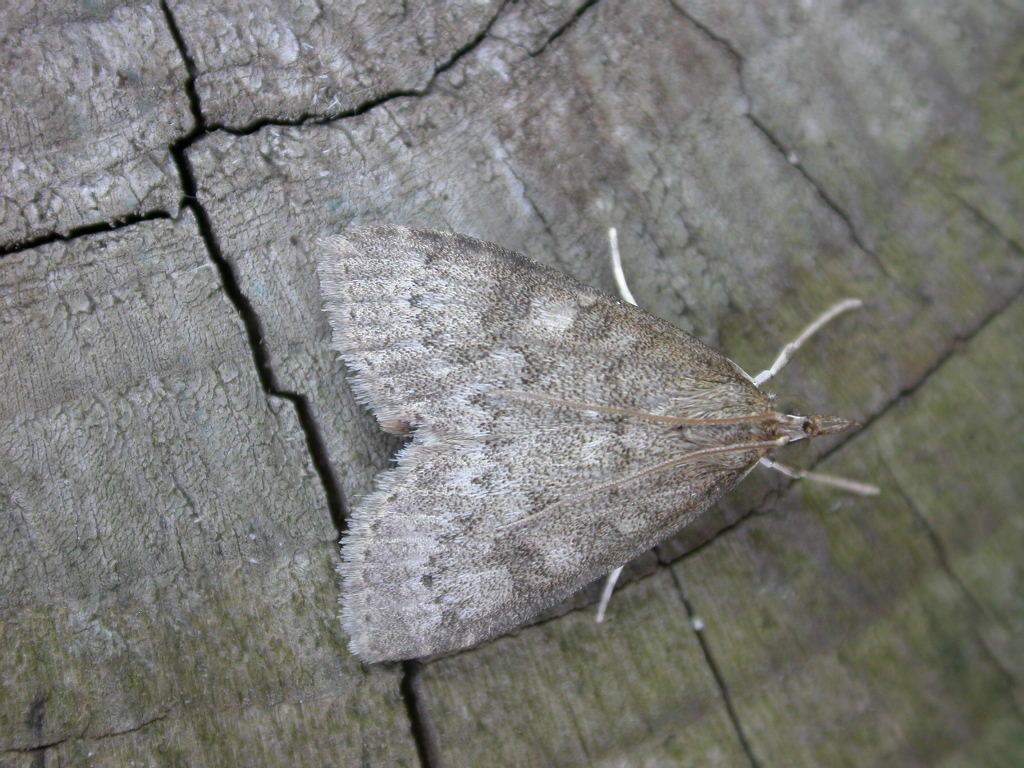
Dusky Pearl
Udea prunalis
Insectstrong against fungi, fish
Common
Swarm
While active with another insect in play, each of its attacks also hits the opposing bench for 10, without knocking them out (20 with two others).
40

39
Dusky Pearl
Udea prunalis
Insectstrong against fungi, fish
Common
While active with another insect in play, each of its attacks also hits the opposing bench for 10, without knocking them out (20 with two others).
Udea prunalis
Photo: © Donald Hobern (original photo) · CC BY 4.0 (licence text) · cropped
Strong against: it deals 20% more damage to them. Weak against: these types deal 20% more damage to it.
Udea prunalis is a moth of the family Crambidae. It is found in Europe and China (Gansu, Heilongjiang, Ningxia, Shanxi, Sichuan, Xinjiang). The species was first described by Matthew Denis and Ignaz Schiffermüller in 1775. In the Butterfly Conservation's Microlepidoptera Report 2011 this species was classified as common in the UK.
The wingspan is 23–26 mm. The forewings are fuscous-grey with a brownish base. The first line is indistinct, and the second is serrate, blackish, and curved, with a narrow deep sinuation inwards below middle, on dorsum whitish-edged posteriorly. The orbicular and 8-shaped discal spots are darker grey, and the costa posteriorly is spotted darker and sometimes whitish. The hindwings are fuscous-grey, apex darker with two dark fuscous discal dots and a faint second line. The larva is bright deep green with a subdorsal line shining white and a grey-whitish head.
The moth flies from June to August depending on location.
The larvae feed on various herbaceous plants, shrubs and deciduous trees.
Excerpt from the Wikipedia article Udea prunalis, by its authors, under the CC BY-SA 4.0 licence.
No global status on the IUCN Red List: that’s what makes this card Common.
Every Common card has 100 points, shared between HP, ATK and DEF:
How they’re shared out:

 DEF 39