 …
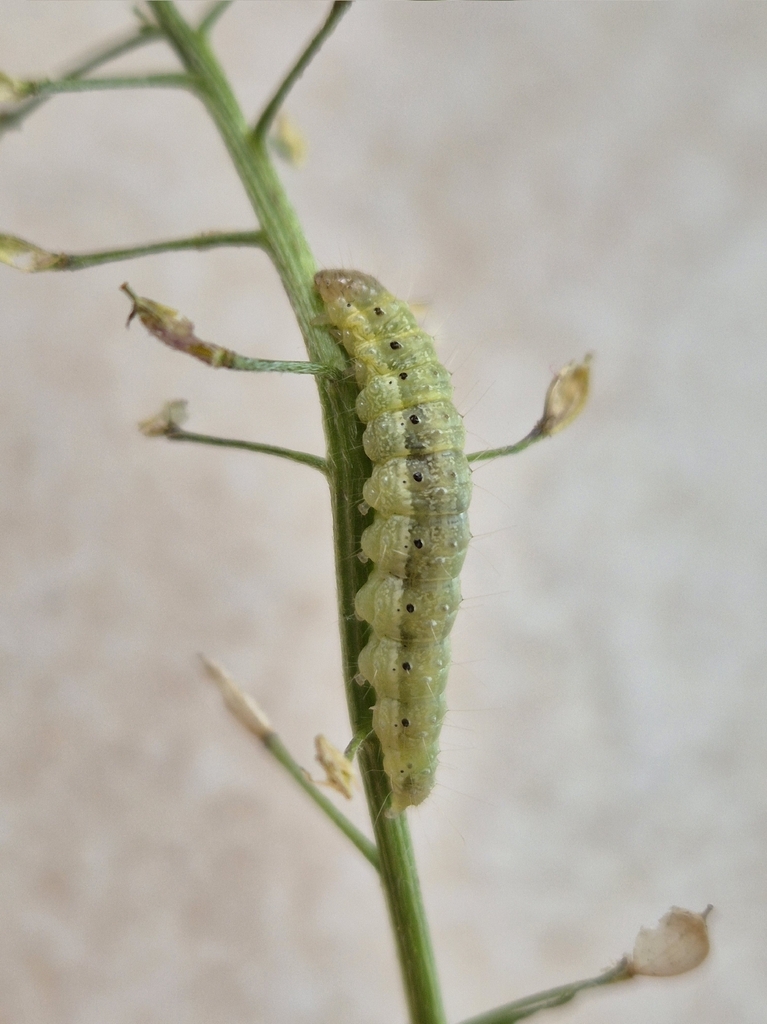
Garden Pebble
Evergestis forficalis
Insectstrong against fungi, fish
Common
Swarm
While active with another insect in play, each of its attacks also hits the opposing bench for 10, without knocking them out (20 with two others).
29

40
Garden Pebble
Evergestis forficalis
Insectstrong against fungi, fish
Common
While active with another insect in play, each of its attacks also hits the opposing bench for 10, without knocking them out (20 with two others).
Evergestis forficalis
Photo: © Céline (original photo) · CC BY 4.0 (licence text) · cropped
Strong against: it deals 20% more damage to them. Weak against: these types deal 20% more damage to it.
Evergestis forficalis, the garden pebble, is a species of moth of the family Crambidae. It is found in Europe, the Palearctic and North America. The species was described by Carl Linnaeus in his 1758 10th edition of Systema Naturae
The species closely resembles Rivula sericealis.
The wingspan is 25–28 mm. The forewings are whitish-ochreous, disc and apex sometimes tinged with yellowish-brown; lines fine, dark brown, very obliquely curved, indented beneath costa, first very indistinct towards costa; two small transversely placed discal spots outlined with dark fuscous, lower larger; a dark fuscous oblique apical streak; margins of subterminal line obscurely brownish. The hindwings are ochreous- whitish with a grey posterior line.
The larva is yellowish-green; dorsal and lateral lines darker green; head yellowish
The length of the forewings 12–14 mm. The moth flies from May to September depending on the location.
The larvae feed on Brassicaceae species, such as Brussels sprout and kale.
Excerpt from the Wikipedia article Evergestis forficalis, by its authors, under the CC BY-SA 4.0 licence.
No global status on the IUCN Red List: that’s what makes this card Common.
Every Common card has 100 points, shared between HP, ATK and DEF:
How they’re shared out:

 DEF 40