 …
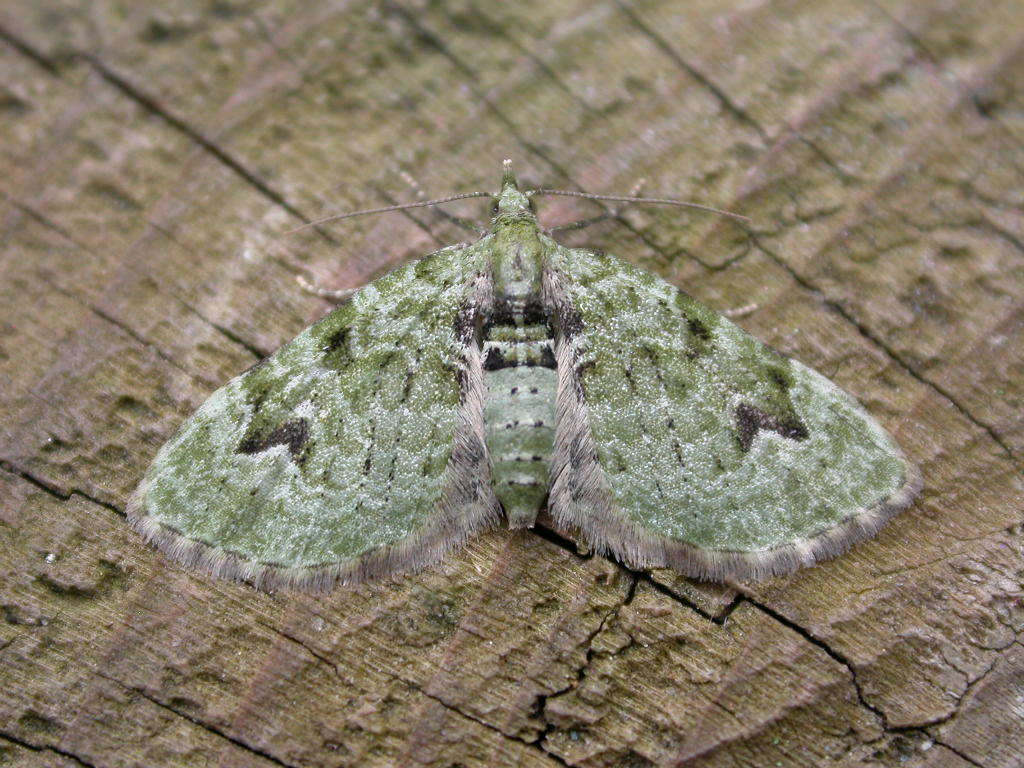
V-Pug
Chloroclystis v-ata
Insectstrong against fungi, fish
Common
Swarm
While active with another insect in play, each of its attacks also hits the opposing bench for 10, without knocking them out (20 with two others).
40

39
V-Pug
Chloroclystis v-ata
Insectstrong against fungi, fish
Common
While active with another insect in play, each of its attacks also hits the opposing bench for 10, without knocking them out (20 with two others).
Chloroclystis v-ata
Photo: © Donald Hobern (original photo) · CC BY 4.0 (licence text) · cropped
Strong against: it deals 20% more damage to them. Weak against: these types deal 20% more damage to it.
The v-pug (Chloroclystis v-ata) is a moth of the family Geometridae. It is found throughout the Palearctic region, the Near East and North Africa. It is well distributed in the British Isles except for the north of Scotland. The species was first described by Adrian Hardy Haworth in 1809.
The forewings of newly emerged adults are green with a characteristic V-shaped black mark which is part of a crossline. The green colouring fades over time but the markings, small size (14–19 mm (0.55–0.75 in)) and triangular resting posture make this an easy species to identify. The hindwings are greyish white.
Either one or two broods are produced each year and adults can be seen at any time between May and August. The species flies at night and is attracted to light.
The green larva, usually with three reddish stripes, feeds on the flowers of a wide range of plants (see list below). The species overwinters as a pupa.
Excerpt from the Wikipedia article V-pug, by its authors, under the CC BY-SA 4.0 licence.
No global status on the IUCN Red List: that’s what makes this card Common.
Every Common card has 100 points, shared between HP, ATK and DEF:
How they’re shared out:

 DEF 39