 …
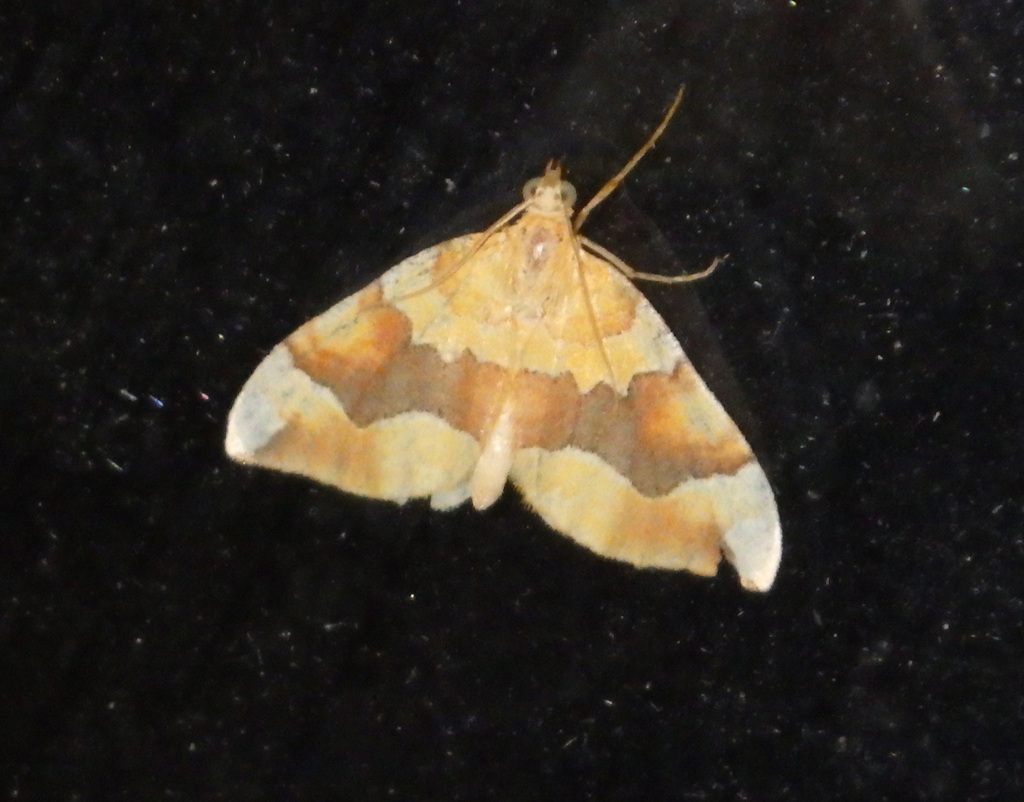
Barred Yellow
Cidaria fulvata
Insectstrong against fungi, fish
Common
Swarm
While active with another insect in play, each of its attacks also hits the opposing bench for 10, without knocking them out (20 with two others).
38

40
Barred Yellow
Cidaria fulvata
Insectstrong against fungi, fish
Common
While active with another insect in play, each of its attacks also hits the opposing bench for 10, without knocking them out (20 with two others).
Cidaria fulvata
Photo: iNaturalist (original photo) · CC0 (licence text) · cropped
Strong against: it deals 20% more damage to them. Weak against: these types deal 20% more damage to it.
Cidaria fulvata, the barred yellow, is a moth of the family Geometridae. The species is widespread in the Palearctic, in the west from Spain and France to the British Isles, in the east to the Central Asian mountains, to the Amur and to Kamchatka, in the south of Italy via the Balkan countries, Asia Minor, the Caucasus, the Caspian region as far as the Pamir Mountains and northern India as well as in the north as far as Fennoscandia. The habitats include rocky slopes, heaths and wasteland as well as gardens and parks.
The wingspan is 20–25 mm. The forewing have yellow or ochre ground colour. There is a wide rust cross band which is traversed by violet-gray. This is jagged towards the margin and has thin cream line edges, connected along the costa to a triangular cream stain at the apex. The hindwings are plain whitish yellow. The larva is rather long and slender with 2 well developed anal points, bluer green dorsally, yellower green ventrally, with yellow lateral line. The head is rather small and the prothorax slightly swollen. The pupa spun by a few threads among leaves is bright yellow green, wings more grass-green. The dorsal line is scarcely darkened and there is a whitish subdorsal. The cremaster is reddish.
The moths fly from June to July. The species prefers woodland, chalk downland and scrubland.
The larvae feed on dog rose.
Excerpt from the Wikipedia article Cidaria fulvata, by its authors, under the CC BY-SA 4.0 licence.
No global status on the IUCN Red List: that’s what makes this card Common.
Every Common card has 100 points, shared between HP, ATK and DEF:
How they’re shared out:

 DEF 40