 …
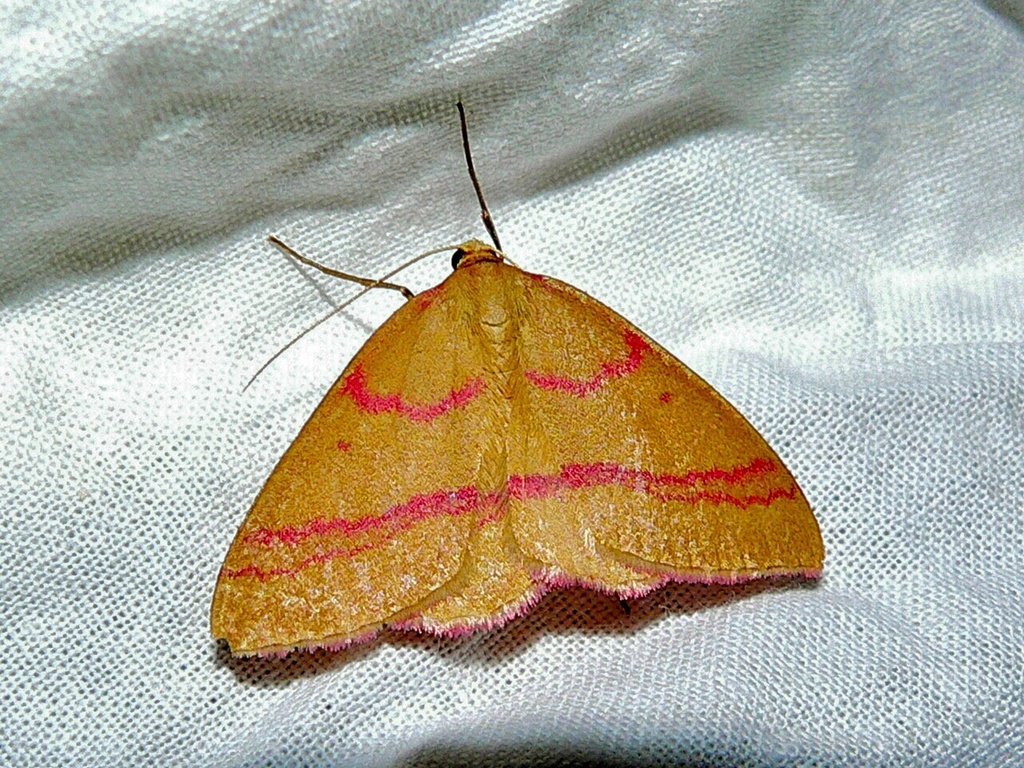
Rhodostrophia calabra
Rhodostrophia calabra
Insectstrong against fungi, fish
Common
Swarm
While active with another insect in play, each of its attacks also hits the opposing bench for 10, without knocking them out (20 with two others).
40

38
Rhodostrophia calabra
Rhodostrophia calabra
Insectstrong against fungi, fish
Common
While active with another insect in play, each of its attacks also hits the opposing bench for 10, without knocking them out (20 with two others).
Rhodostrophia calabra
Photo: © Bernard DUPONT (original photo) · CC BY-SA 4.0 (licence text) · cropped
Strong against: it deals 20% more damage to them. Weak against: these types deal 20% more damage to it.
Rhodostrophia calabra is a moth of the family Geometridae first described by Vincenzo Petagna in 1786. It is found from the Iberian Peninsula and a small isolated population in Morocco, through southern France, the western and southern Alps, Italy, the eastern coast of the Adriatic Sea to the southern parts of the Balkan Peninsula. In central Europe it is only found as an isolated population in central France and Rheinland-Pfalz. It is not found on the islands in the Mediterranean Sea (Corsica, Sardinia, the Balearic Islands, Sicily and Crete). In the Balkans there is an isolated population in the border region of northern Bulgaria and Serbia. Furthermore, it is present on the eastern shores of the Black Sea in Turkey and in the Caucasus.
The wingspan is 28–33 mm for males and 28–35 mm for females. The moths fly in one generation from May to June.
The larvae feed on various Fabaceae species, including Cytisus scoparius, Genista (mainly Genista tinctoria), Dorycnium, Scabiosa, Rumex, Polygonum, Thymus and Asperula.
Excerpt from the Wikipedia article Rhodostrophia calabra, by its authors, under the CC BY-SA 4.0 licence.
No global status on the IUCN Red List: that’s what makes this card Common.
Every Common card has 100 points, shared between HP, ATK and DEF:
How they’re shared out:

 DEF 38