 …
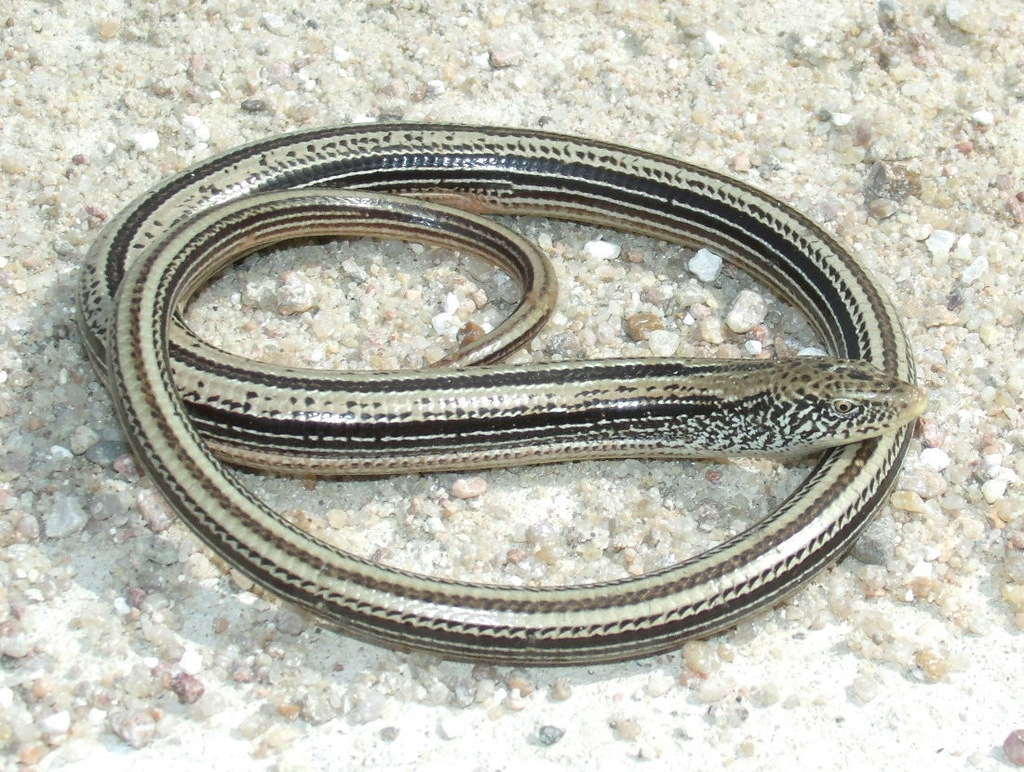
Slender Glass Lizard
Ophisaurus attenuatus
Reptilestrong against amphibians, mammals
Common
Scales
While active with another reptile in play, it takes 3 less damage (6 with two others).
33

36
Slender Glass Lizard
Ophisaurus attenuatus
Reptilestrong against amphibians, mammals
Common
While active with another reptile in play, it takes 3 less damage (6 with two others).
Ophisaurus attenuatus
Photo: © John G. Phillips (original photo) · CC BY 4.0 (licence text) · cropped
Strong against: it deals 20% more damage to them. Weak against: these types deal 20% more damage to it.
The slender glass lizard (Ophisaurus attenuatus) is a legless lizard in the glass lizard subfamily (Anguinae). The species is endemic to the United States. Two subspecies are recognized. The lizard was originally believed to be a subspecies of the eastern glass lizard (Ophisaurus ventralis). Their name comes from their easily broken tail which they can break off themselves without ever being touched. It is difficult to find a specimen with an undamaged tail. The lizard eats a variety of insects and small animals, including smaller lizards. Snakes and other animals are known to prey on the species. Humans have a part in destroying their environment and killing their food supply with insecticides. The lizard is considered to be a least-concern species according to the International Union for Conservation of Nature (IUCN), though it is vulnerable in Iowa and endangered in Wisconsin. The streamlined, legless species is often confused with snakes. Glass Lizards, however, differ from snakes as they possess a moveable eyelid, which is absent in snakes. Another way to distinguish glass lizards from snakes is the presence of an external ear opening, which are absent in snakes.
Excerpt from the Wikipedia article Slender glass lizard, by its authors, under the CC BY-SA 4.0 licence.
Least Concern on the IUCN Red List: that’s what makes this card Common.
Every Common card has 100 points, shared between HP, ATK and DEF:
How they’re shared out:

 DEF 36