 …
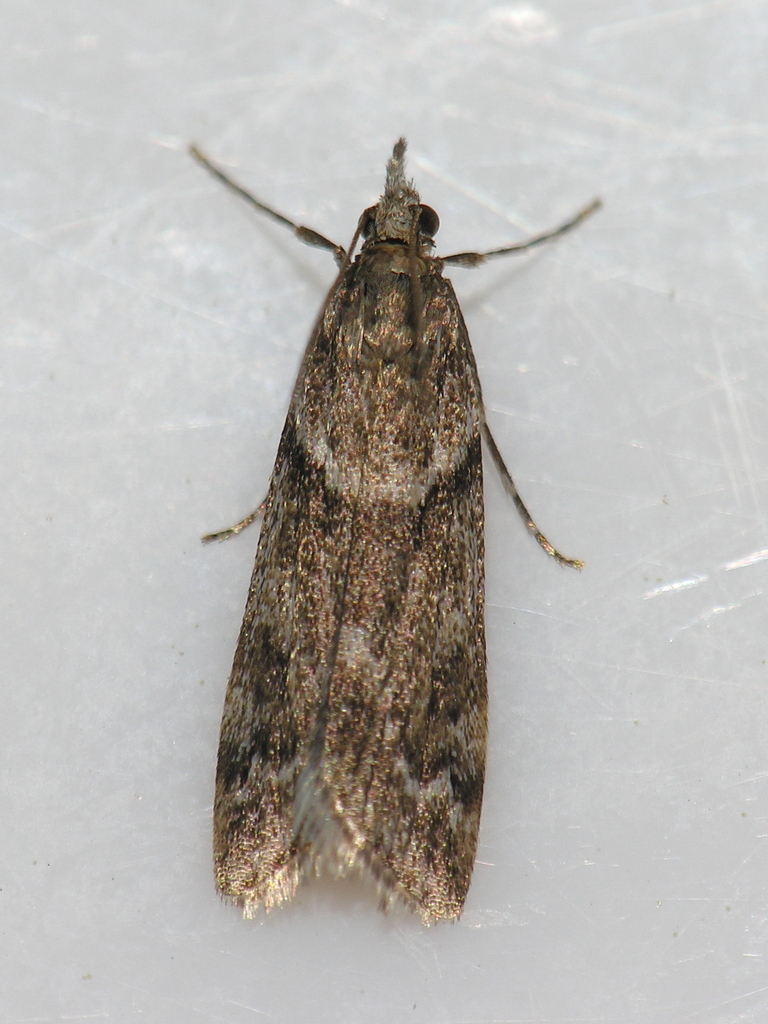
Narrow-winged Grey
Eudonia angustea
Insectstrong against fungi, fish
Common
Swarm
While active with another insect in play, each of its attacks also hits the opposing bench for 10, without knocking them out (20 with two others).
41

38
Narrow-winged Grey
Eudonia angustea
Insectstrong against fungi, fish
Common
While active with another insect in play, each of its attacks also hits the opposing bench for 10, without knocking them out (20 with two others).
Eudonia angustea
Photo: © IES MANUEL GARCÍA BARROS A ESTRADA - PONTEVEDRA (original photo) · CC BY-SA 4.0 (licence text) · cropped
Strong against: it deals 20% more damage to them. Weak against: these types deal 20% more damage to it.
Eudonia angustea is a moth of the family Crambidae described by John Curtis in 1827. It is found in southern and western Europe, the Canary Islands, Madeira and Turkey.
The wingspan is 17–22 mm (0.67–0.87 in). The forewings are narrow, whitish, mixed with brownish and sprinkled with black; base darker; lines whitish, dark-edged, first oblique, second sinuate; orbicular outlined with black; claviform black, touching first line; a black X-shaped discal mark, upper half filled with light brownish; subterminal line cloudy, whitish, hardly touching second. Hindwings are whitish-grey, terminally obscurely darker. The larva is blackish-grey, slightly greenish-tinged; spots darker or almost black; head pale brown; plate of 2 dark brown or almost black.
Adults are on wing from July to late autumn.
The larvae feed on mosses on walls and in sand dunes.
Excerpt from the Wikipedia article Eudonia angustea, by its authors, under the CC BY-SA 4.0 licence.
No global status on the IUCN Red List: that’s what makes this card Common.
Every Common card has 100 points, shared between HP, ATK and DEF:
How they’re shared out:

 DEF 38