 …
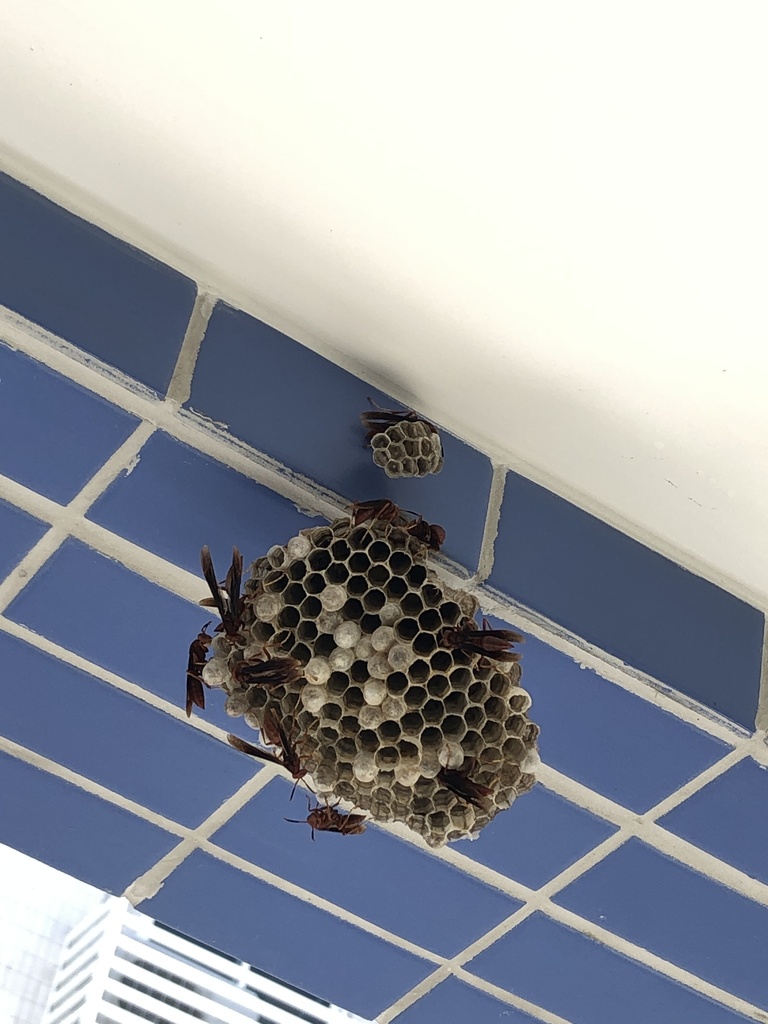
Neotropical Red Paper Wasp
Polistes canadensis
Insectstrong against fungi, fish
Common
Swarm
While active with another insect in play, each of its attacks also hits the opposing bench for 10, without knocking them out (20 with two others).
31

38
Neotropical Red Paper Wasp
Polistes canadensis
Insectstrong against fungi, fish
Common
While active with another insect in play, each of its attacks also hits the opposing bench for 10, without knocking them out (20 with two others).
Polistes canadensis
Photo: © Thomaz de Carvalho Callado (original photo) · CC BY 4.0 (licence text) · cropped
Strong against: it deals 20% more damage to them. Weak against: these types deal 20% more damage to it.
Polistes canadensis is a species of red paper wasp found in the Neotropical realm. It is a primitively eusocial wasp as a member of the subfamily Polistinae. A largely predatory species, it hunts for caterpillar meat to supply its colony, often supplementing its developing larvae with nectar. The most widely distributed American species of the genus Polistes, it colonizes multiple combs, which it rears year-round.
Emerging from hibernation in the spring, the females found nests built from plant material such as dry grass and dead wood. These nests are not covered with an envelope and feature hexagonal cells in which eggs are laid and larvae develop. The Polistes canadensis colony divides its colony among several combs and does not reuse these combs as a defense mechanism against parasites such as the tineid moth. On average, a single female queen with 9.1 foundresses usually initiates the construction of new combs and cells to form nests. The more foundresses in a colony, the more combs produced. On average, combs grow for 15.4 days and achieve a size of 30.8 cells. One female queen exercises absolute dominance over all other females, often using lateral abdominal vibrations and stroking to suppress the aggressive behavior of her nestmates.
Abridged excerpt from the Wikipedia article Polistes canadensis, by its authors, under the CC BY-SA 4.0 licence.
No global status on the IUCN Red List: that’s what makes this card Common.
Every Common card has 100 points, shared between HP, ATK and DEF:
How they’re shared out:

 DEF 38