 …
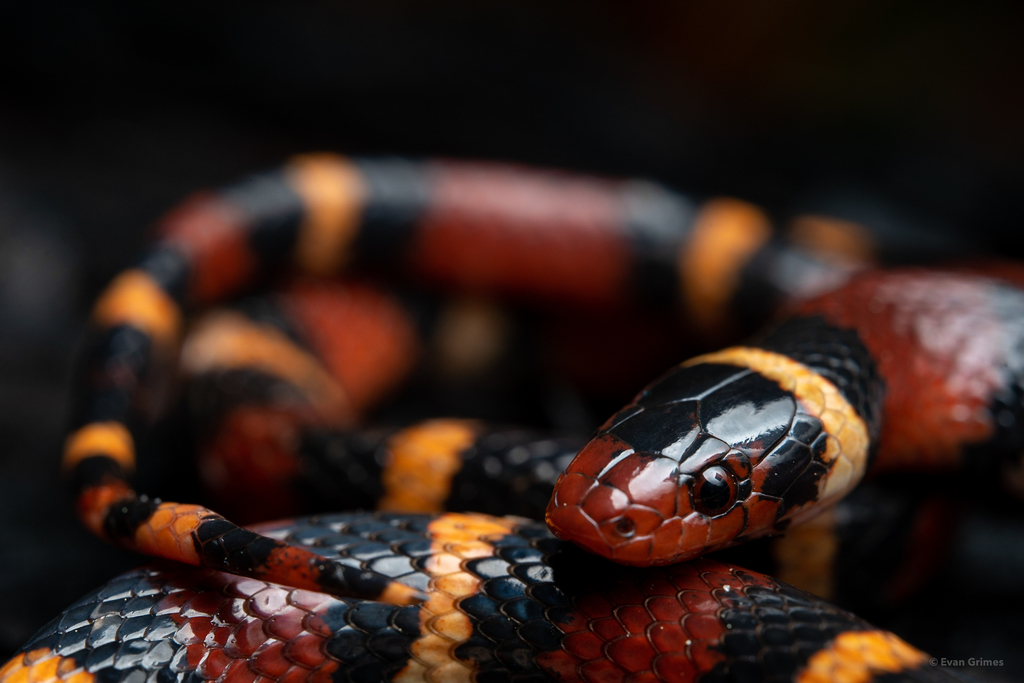
Scarlet Kingsnake
Lampropeltis elapsoides
Reptilestrong against amphibians, mammals
Common
Scales
While active with another reptile in play, it takes 3 less damage (6 with two others).
31

35
Scarlet Kingsnake
Lampropeltis elapsoides
Reptilestrong against amphibians, mammals
Common
While active with another reptile in play, it takes 3 less damage (6 with two others).
Lampropeltis elapsoides
Photo: © evangrimes (original photo) · CC BY 4.0 (licence text) · cropped
Strong against: it deals 20% more damage to them. Weak against: these types deal 20% more damage to it.
The scarlet kingsnake (Lampropeltis elapsoides) is a species of kingsnake found in the southeastern and eastern portions of the United States. Like all kingsnakes, they are nonvenomous. They are found in pine flatwoods, hydric hammocks, pine savannas, mesic pine-oak forests, prairies, cultivated fields, and a variety of suburban habitats; not unusually, people find scarlet kingsnakes in their swimming pools, especially during the spring.
Until recently, and for much of the 20th century, scarlet kingsnakes were considered a subspecies of the milk snake; however, Pyron and Bubrink demonstrated the phylogenetic distinction of this species and its closer relationship to the mountain kingsnakes of the southwestern United States.
These largely fossorial snakes are the smallest of all the species within the genus Lampropeltis, usually ranging from 40 to 50 cm (16 to 20 in) at maturity. The maximum recorded length is in Jonesboro, AR 76.2 cm (30.0 in). Hatchlings range in size from 8 to 18 cm (3.1 to 7.1 in).
Excerpt from the Wikipedia article Scarlet kingsnake, by its authors, under the CC BY-SA 4.0 licence.
Least Concern on the IUCN Red List: that’s what makes this card Common.
Every Common card has 100 points, shared between HP, ATK and DEF:
How they’re shared out:

 DEF 35