
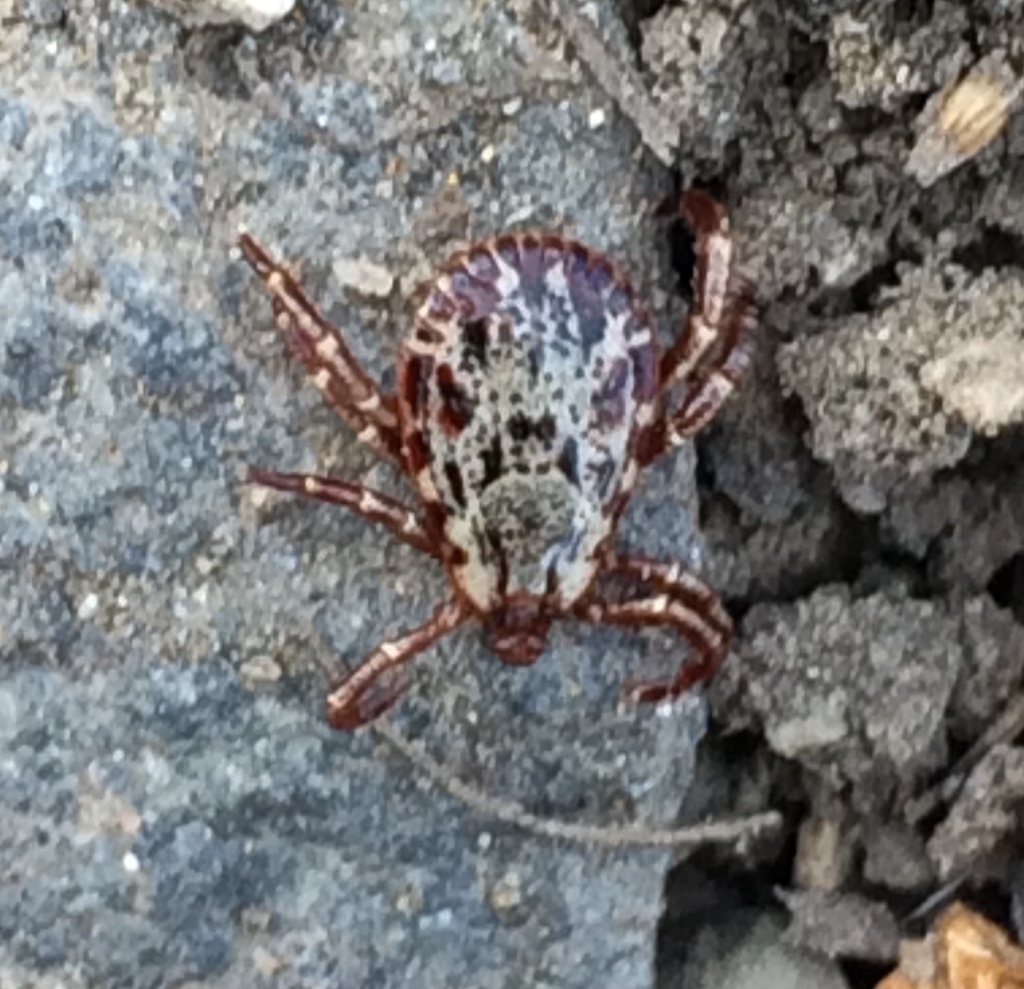
Rocky Mountain Wood Tick
Dermacentor andersoni
Arachnidstrong against insects, birds
Common
While active with another arachnid in play, its target loses 4 HP at the start of each of its turns, as long as it stays active (7 with two others).

Rocky Mountain Wood Tick
Dermacentor andersoni
Arachnidstrong against insects, birds
Common
While active with another arachnid in play, its target loses 4 HP at the start of each of its turns, as long as it stays active (7 with two others).
Dermacentor andersoni
Photo: © B. Phalan (original photo) · CC BY 4.0 (licence text) · cropped
Strong against: it deals 20% more damage to them. Weak against: these types deal 20% more damage to it.
Dermacentor andersoni, commonly known as the Rocky Mountain wood tick, is a hard tick, or member of the Ixodidae family, with three life stages including larvae, nymph, and finally adult, or, more entomologically, imago. This tick is generally located in the northwest United States and southwest Canada along the Rocky Mountains. This tick is generally a vector for Colorado tick fever, but can also be a vector for Rocky Mountain spotted fever and tularemia. During the larval and nymphal stages, the tick does not feed on humans, but during the adult stage, it will. Prevention of infections associated with these ticks is based on control of exposure to the vector, including wearing proper clothing when in woods/wet areas, and checking oneself thoroughly after returning home. Adult female ticks can feed for 5 to 15 days, thus removing a tick if present is very important.
Excerpt from the Wikipedia article Dermacentor andersoni, by its authors, under the CC BY-SA 4.0 licence.
No global status on the IUCN Red List: that’s what makes this card Common.
Every Common card has 100 points, shared between HP, ATK and DEF:
How they’re shared out:

