 …
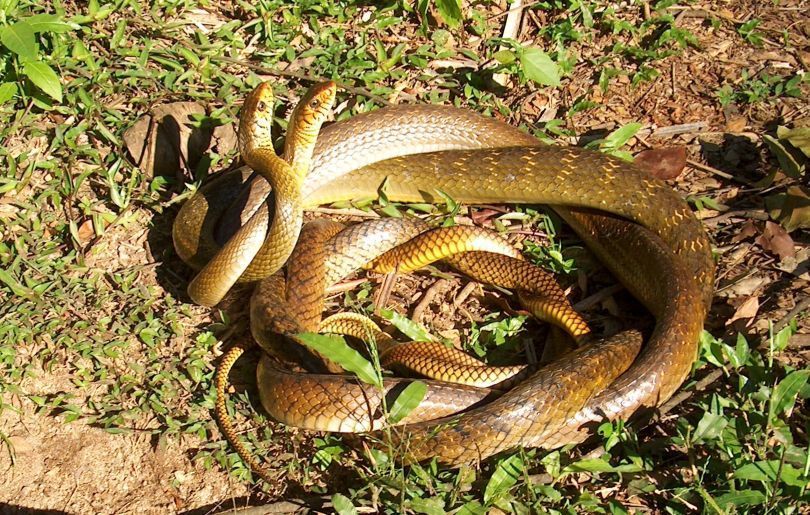
Oriental Rat Snake
Ptyas mucosa
Reptilestrong against amphibians, mammals
Common
Scales
While active with another reptile in play, it takes 3 less damage (6 with two others).
31

30
Oriental Rat Snake
Ptyas mucosa
Reptilestrong against amphibians, mammals
Common
While active with another reptile in play, it takes 3 less damage (6 with two others).
Ptyas mucosa
Photo: © Pieter Prins (original photo) · CC BY-SA 4.0 (licence text) · cropped
Strong against: it deals 20% more damage to them. Weak against: these types deal 20% more damage to it.
Ptyas mucosa, commonly known as the Oriental rat snake, or Indian rat snake, is a common non-venomous species of colubrid snake found in parts of South and Southeast Asia. These are large snakes. Typical mature total length is around 1.5 to 1.95 m (4 ft 11 in to 6 ft 5 in) though some exceed 2 m (6 ft 7 in). The record length for this species was 3.7 m (12 ft 2 in), second only to their cousin Ptyas carinata among living colubrid snakes. Despite their large size, oriental ratsnakes are usually quite slender with even a specimen of 2 m (6 ft 7 in) commonly measuring 4 to 6 cm (1.6 to 2.4 in) only around in diameter. Furthermore, the average weight of ratsnakes caught in Java was around 877 to 940 g (1.933 to 2.072 lb), though larger males of over 2.3 m (7 ft 7 in) (which average mildly larger of the two sexes in the species) may easily weigh over 2.5 kg (5.5 lb). Their color varies from pale browns in dry regions to nearly black in moist forest areas. Rat snakes are diurnal, semi-arboreal, non-venomous, and fast-moving. Rat snakes eat a variety of prey and are frequently found in urban areas where rodents thrive.
Excerpt from the Wikipedia article Oriental rat snake, by its authors, under the CC BY-SA 4.0 licence.
Least Concern on the IUCN Red List: that’s what makes this card Common.
Every Common card has 100 points, shared between HP, ATK and DEF:
How they’re shared out:

 DEF 30