 …
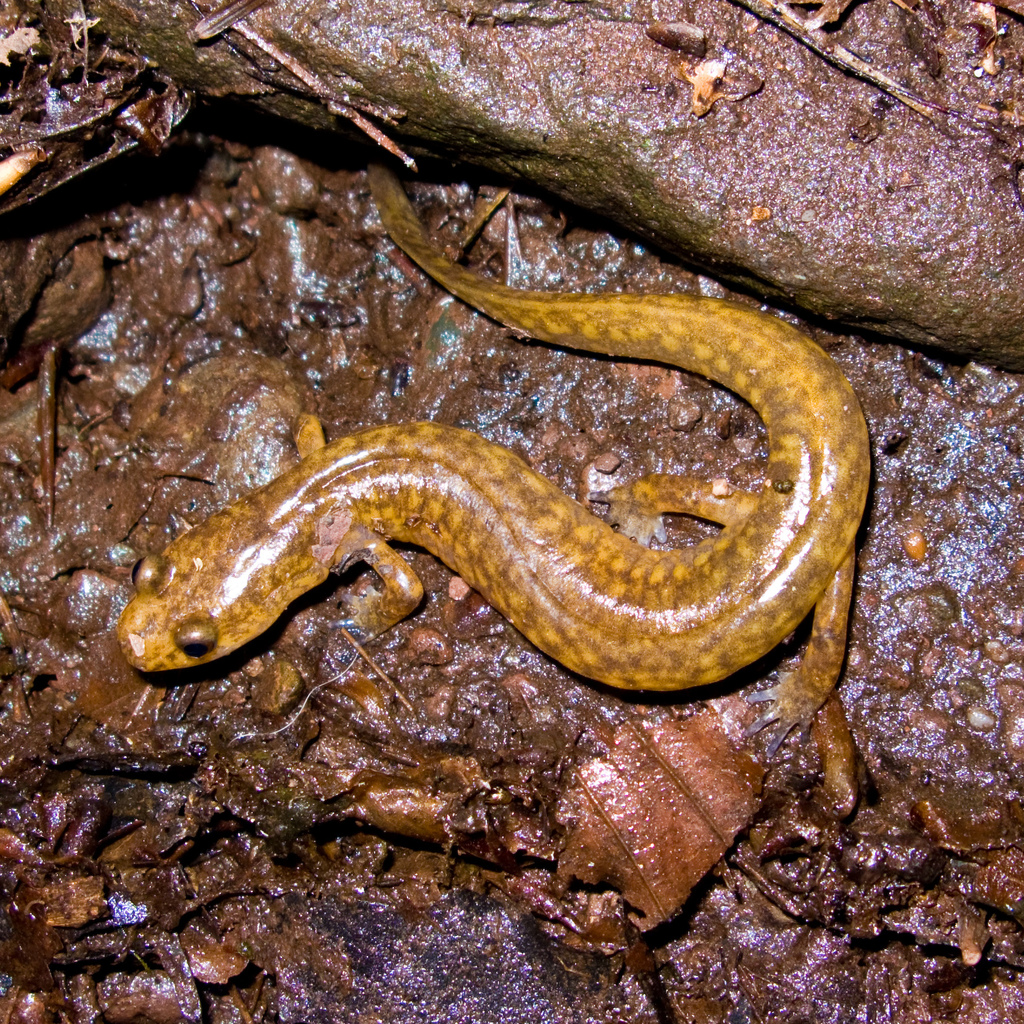
Spring Salamander
Gyrinophilus porphyriticus
Amphibianstrong against insects, arachnids
Common
Toxic skin
While active with another amphibian in play, any card that hits it loses 6 HP, without being knocked out (12 with two others).
33

36
Spring Salamander
Gyrinophilus porphyriticus
Amphibianstrong against insects, arachnids
Common
While active with another amphibian in play, any card that hits it loses 6 HP, without being knocked out (12 with two others).
Gyrinophilus porphyriticus
Photo: © Ken-ichi Ueda (original photo) · CC BY 4.0 (licence text) · cropped
Strong against: it deals 20% more damage to them. Weak against: these types deal 20% more damage to it.
The spring salamander (Gyrinophilus porphyriticus) is a species of salamander in the family Plethodontidae (lungless salamanders). It is found in Canada and the United States. The genus, Gyrinophilus, means "tadpole lover" and refers to the long period of time it spends as a gilled larva before maturing. The specific epithet, porphyriticus, is Latin from Greek, meaning the color of porphyry, a purple stone, and this salamander has also been called the purple salamander.
Its natural habitats are temperate forests, rivers, swamps, freshwater marshes, freshwater springs, inland karsts, and caves. In addition to insects, spiders, mites, millipedes, centipedes, slugs, snails, annelid worms, and other small invertebrates, the fairly large spring salamander may also consume smaller stream dwelling salamanders and their eggs, such as two-lined and dusky salamanders, as well as pygmy, ocoee, Jordan's, southern red-backed, southern Appalachian, and red salamanders. They are also known to be cannibalistic.
They are considered salamander specialists in some areas, such as the mountains of North Carolina, where between 40 and 50% of their adult diets may consist of other salamanders.
Although deforestation is a potential threat, the spring salamander occurs in many protected areas and is not listed as threatened in the IUCN Red List.
Excerpt from the Wikipedia article Spring salamander, by its authors, under the CC BY-SA 4.0 licence.
Least Concern on the IUCN Red List: that’s what makes this card Common.
Every Common card has 100 points, shared between HP, ATK and DEF:
How they’re shared out:

 DEF 36