 …
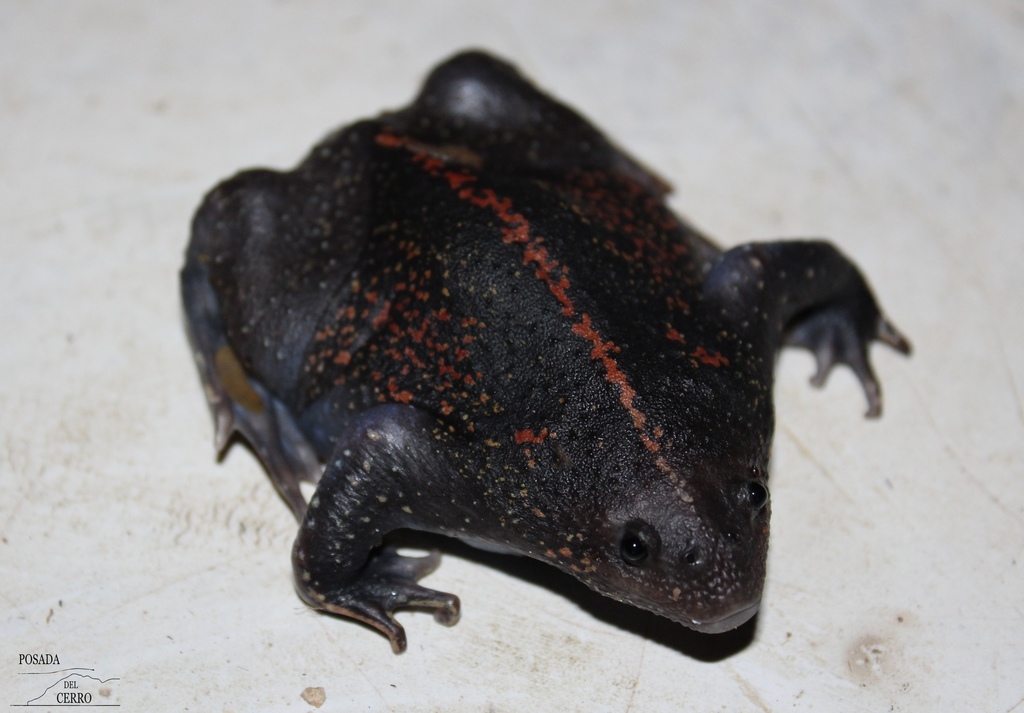
Mexican Burrowing Toad
Rhinophrynus dorsalis
Amphibianstrong against insects, arachnids
Common
Toxic skin
While active with another amphibian in play, any card that hits it loses 6 HP, without being knocked out (12 with two others).
32

36
Mexican Burrowing Toad
Rhinophrynus dorsalis
Amphibianstrong against insects, arachnids
Common
While active with another amphibian in play, any card that hits it loses 6 HP, without being knocked out (12 with two others).
Rhinophrynus dorsalis
Photo: © Ricard Busquets Reverte (original photo) · CC BY 4.0 (licence text) · cropped
Strong against: it deals 20% more damage to them. Weak against: these types deal 20% more damage to it.
The Mexican burrowing toad (Rhinophrynus dorsalis) is the single living representative of the family Rhinophrynidae. It is a unique species in its taxonomy and morphology, with special adaptations to assist them in digging burrows where they spend most of their time. These adaptations include a small pointed snout and face, keratinized structures and a lack of webbing on front limbs, and specialized tongue morphology to assist in feeding on ants and termites underground. The body is nearly equal in width and length. It is a dark brown to black color with a red-orange stripe on its back along with splotches of color on its body. The generic name Rhinophrynus means 'nose-toad', from rhino- (ῥῑνο-), the combining form of the Ancient Greek rhis (ῥίς, 'nose') and phrunē (φρύνη, 'toad').
The Mexican burrowing toad diverged from other amphibians over 190 million years ago and has been evolving independently for a longer period of time than the evolutionary differences between mammals like humans, fruit bats, polar bears and killer whales. Its closest sister group is Pipidae, or the aquatic clawed frogs.
Excerpt from the Wikipedia article Mexican burrowing toad, by its authors, under the CC BY-SA 4.0 licence.
Least Concern on the IUCN Red List: that’s what makes this card Common.
Every Common card has 100 points, shared between HP, ATK and DEF:
How they’re shared out:

 DEF 36