 …
Citrus Leafminer
Phyllocnistis citrella
Insectstrong against fungi, fish
Common
Swarm
While active with another insect in play, each of its attacks also hits the opposing bench for 10, without knocking them out (20 with two others).
40

38
Citrus Leafminer
Phyllocnistis citrella
Insectstrong against fungi, fish
Common
While active with another insect in play, each of its attacks also hits the opposing bench for 10, without knocking them out (20 with two others).
Phyllocnistis citrella
Photo: © lmarino (original photo) · CC BY 4.0 (licence text) · cropped
Strong against: it deals 20% more damage to them. Weak against: these types deal 20% more damage to it.
Phyllocnistis citrella, the citrus leafminer, is a moth of the family Gracillariidae. It is also known as CLM in agriculture. It was described by Henry Tibbats Stainton from India in 1856. It was first found in Florida, United States, in 1993, but is now found all over the world, including Argentina, Australia, Brazil, China, Corsica, Costa Rica, Cuba, India, Israel, Madeira, Malaysia, Mauritius, Mexico, the Philippines, South Africa, Spain, Sri Lanka and other parts of the United States.
The wingspan is about 5 millimetres (0.20 in).
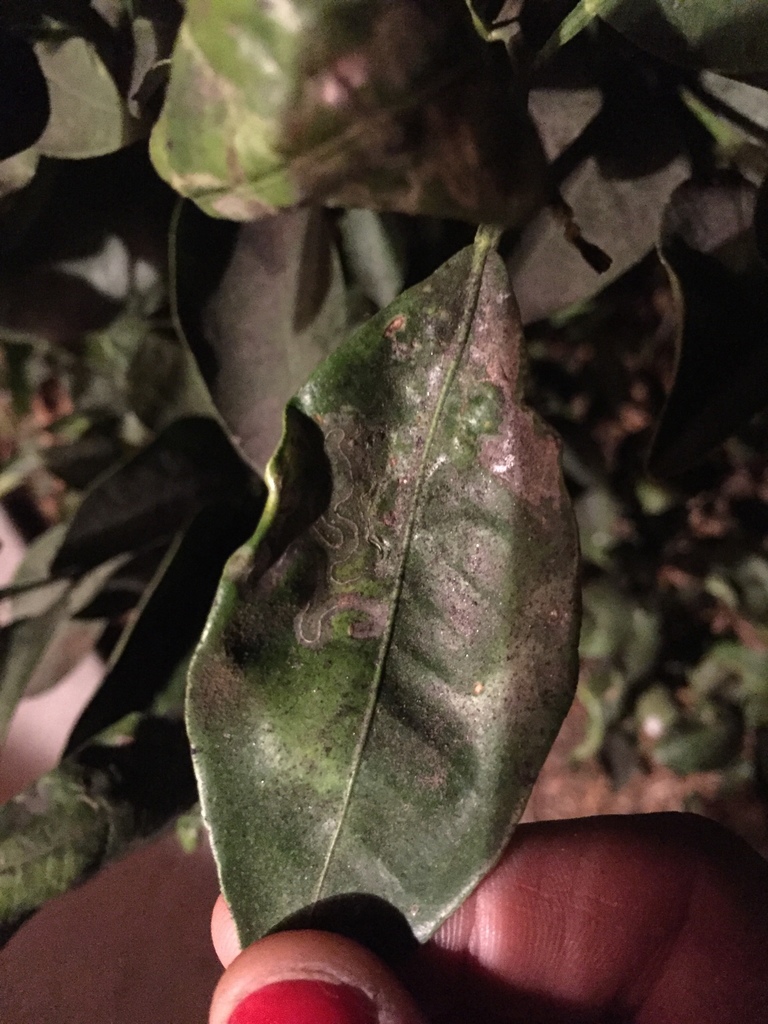
The larvae are considered a serious agricultural pest on Citrus species, such as Aegle marmelos, Atalantia, Citrofortunella microcarpa, Citrus limon, Citrus paradisi, Citrus maxima, Fortunella margarita, Murraya paniculata and Poncirus trifoliate. Larvae have also been recorded on Garcinia mangostana, Pongamia pinnata, Alseodaphne semecarpifolia, Loranthus and Jasminum sambac. They mine the leaves of their host plant. The mine consists of a long epidermal corridor with a well-marked central frass line. The mine is mostly lower-surface, but sometimes upper-surface, and rarely on the rind of the developing fruit. Citrus leaf miner larvae are thus protected from many topic insecticide treatments. Pupation takes place in a chamber at the end of the corridor, under an overturned part of the leaf margin.
Excerpt from the Wikipedia article Phyllocnistis citrella, by its authors, under the CC BY-SA 4.0 licence.
No global status on the IUCN Red List: that’s what makes this card Common.
Every Common card has 100 points, shared between HP, ATK and DEF:
How they’re shared out:

 DEF 38