 …
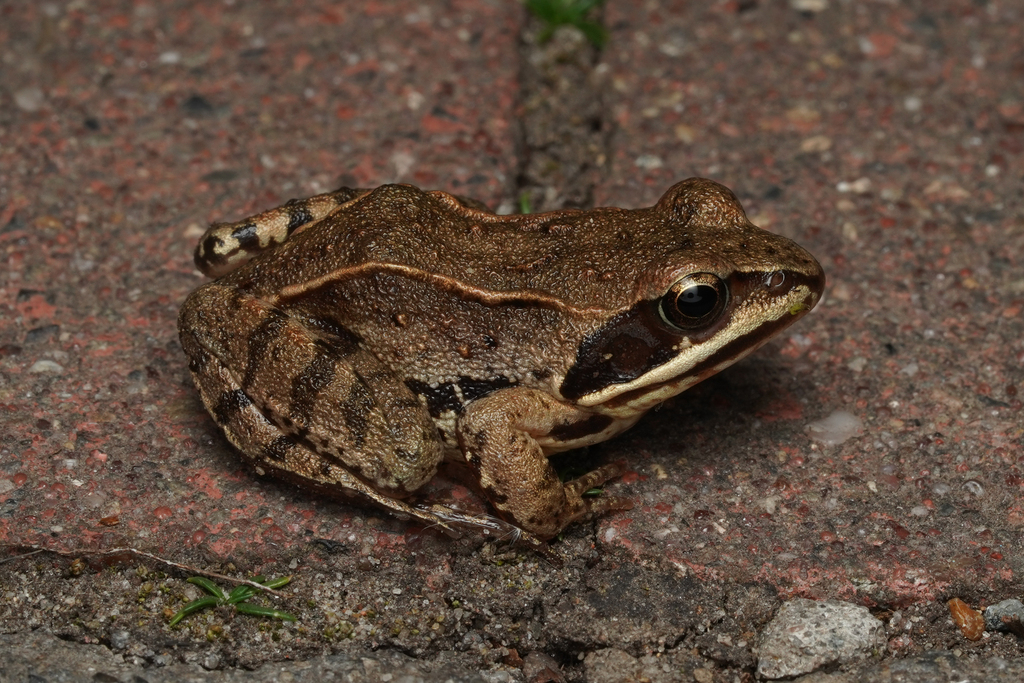
Moor Frog
Rana arvalis
Amphibianstrong against insects, arachnids
Common
Toxic skin
While active with another amphibian in play, any card that hits it loses 6 HP, without being knocked out (12 with two others).
34

37
Moor Frog
Rana arvalis
Amphibianstrong against insects, arachnids
Common
While active with another amphibian in play, any card that hits it loses 6 HP, without being knocked out (12 with two others).
Rana arvalis
Photo: © Dr. Sven Gippner (original photo) · CC BY 4.0 (licence text) · cropped
Strong against: it deals 20% more damage to them. Weak against: these types deal 20% more damage to it.
The moor frog (Rana arvalis) is a slim, reddish-brown, semiaquatic amphibian native to Europe and Asia. Moor frogs are known for their ability to freeze solid and survive thawing. The frog makes use of various cryoprotectants i.e. antifreeze that decrease its internal freezing temperature. The species is distributed over a large range, covering a significant portion of Eurasia. Male moor frogs are known to turn blue temporarily during the height of mating season. This coloration is assumed to signal a mate's fitness. Moor frogs typically mate through multimale amplexus, a form of polyandry.
The moor frog spawns its eggs in large batches in still bodies of acidic waters. Human-caused pollution is causing excessive acidification of habitat which harms egg health. The moor frog's habitat is also under destruction due to a variety of other anthropogenic means. The species has an IUCN listing of Least Concern. However, a majority of European states independently consider the conservation status of the moor frog to be unfavorable. The moor frog, like other members of Rana, is omnivorous and will consume anything that it can physically ingest.
Excerpt from the Wikipedia article Moor frog, by its authors, under the CC BY-SA 4.0 licence.
Least Concern on the IUCN Red List: that’s what makes this card Common.
Every Common card has 100 points, shared between HP, ATK and DEF:
How they’re shared out:

 DEF 37