 …
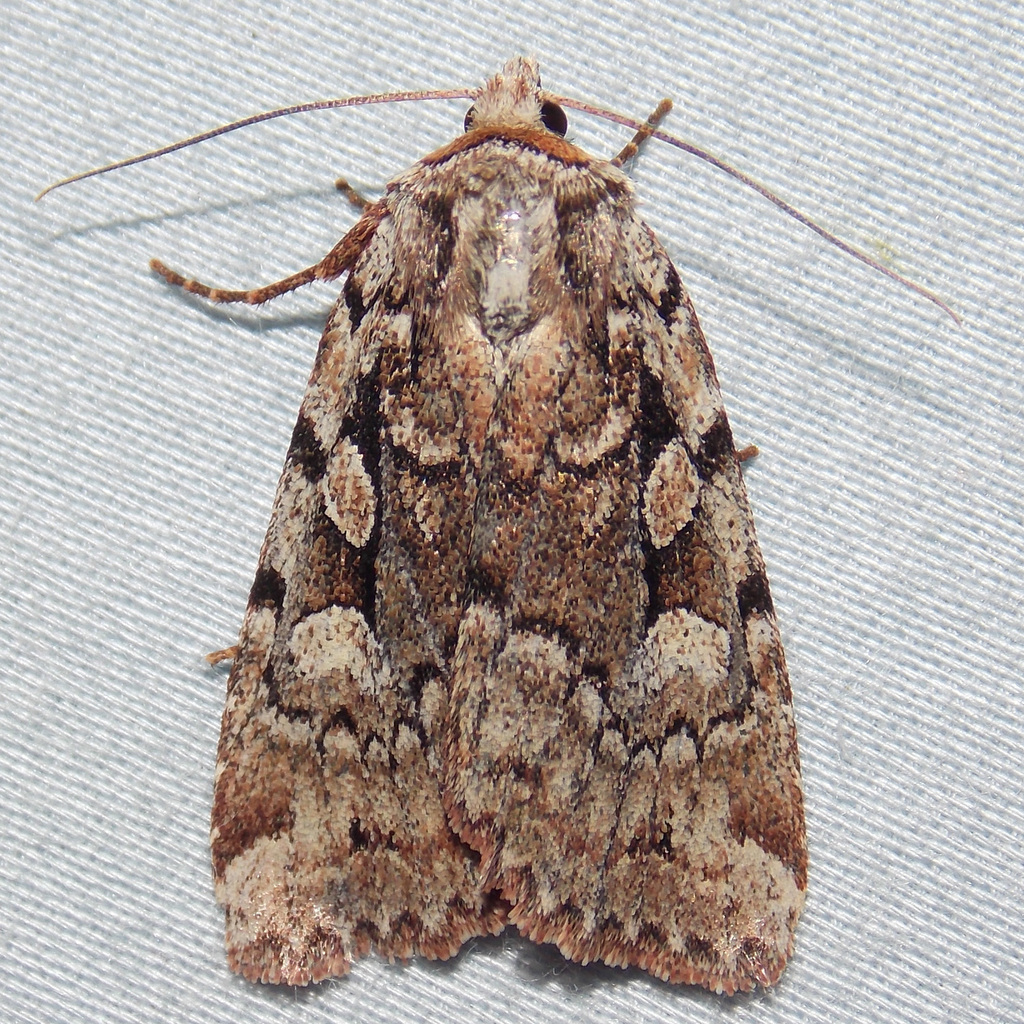
Northern Variable Dart
Xestia badicollis
Insectstrong against fungi, fish
Common
Swarm
While active with another insect in play, each of its attacks also hits the opposing bench for 10, without knocking them out (20 with two others).
40

38
Northern Variable Dart
Xestia badicollis
Insectstrong against fungi, fish
Common
While active with another insect in play, each of its attacks also hits the opposing bench for 10, without knocking them out (20 with two others).
Xestia badicollis
Photo: © Fyn Kynd (original photo) · CC BY-SA 4.0 (licence text) · cropped
Strong against: it deals 20% more damage to them. Weak against: these types deal 20% more damage to it.
Xestia badicollis, the northern variable dart, northern conifer dart or white pine cutworm when referring to the larval stage, is a moth of the family Noctuidae. The species was first described by Augustus Radcliffe Grote in 1873. It is found in North America from Nova Scotia to North Carolina, west to Missouri and Ontario.
It is part of the elimata species group. Three of the species in this group (Xestia praevia, Xestia elimata and Xestia badicollis) have no significant difference in genitals nor DNA, suggesting they may be a single species.
This wingspan is 32–45 mm. The moth flies from July to October depending on the location. There is one generation per year.
The larva feeds on eastern white pine and less frequently on balsam fir, eastern hemlock, eastern larch, white spruce and other conifers.
Excerpt from the Wikipedia article Xestia badicollis, by its authors, under the CC BY-SA 4.0 licence.
No global status on the IUCN Red List: that’s what makes this card Common.
Every Common card has 100 points, shared between HP, ATK and DEF:
How they’re shared out:

 DEF 38