 …
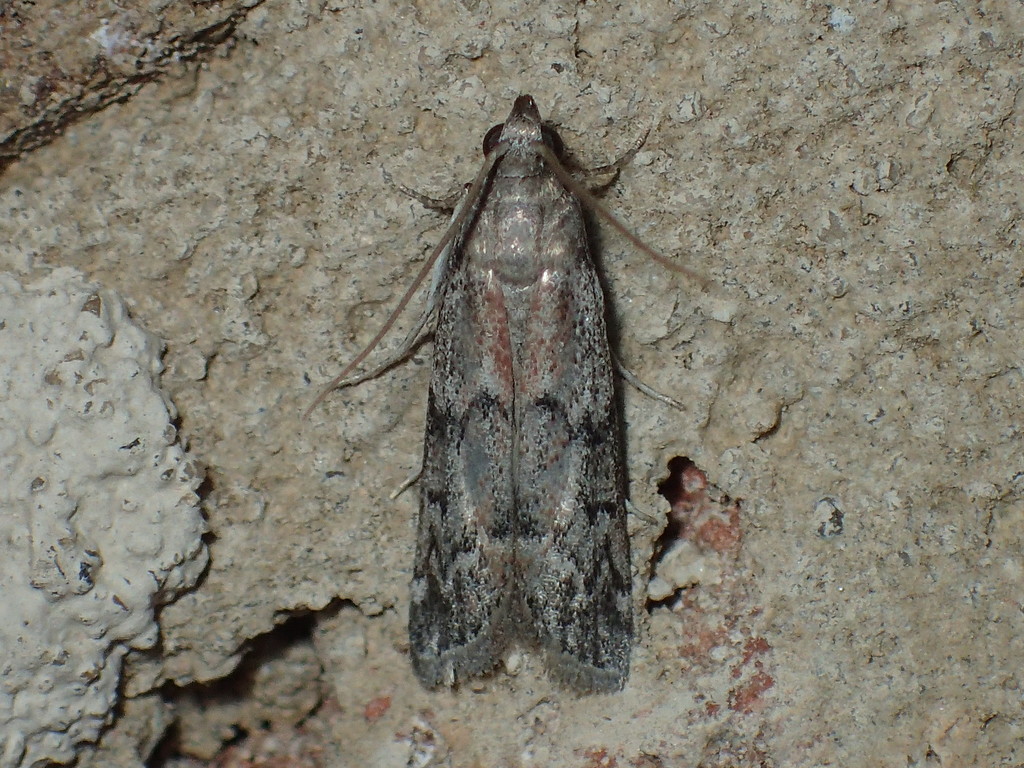
Dried Fruit Moth
Vitula edmandsii
Insectstrong against fungi, fish
Common
Swarm
While active with another insect in play, each of its attacks also hits the opposing bench for 10, without knocking them out (20 with two others).
29

41
Dried Fruit Moth
Vitula edmandsii
Insectstrong against fungi, fish
Common
While active with another insect in play, each of its attacks also hits the opposing bench for 10, without knocking them out (20 with two others).
Vitula edmandsii
Photo: © John P Friel (original photo) · CC BY 4.0 (licence text) · cropped
Strong against: it deals 20% more damage to them. Weak against: these types deal 20% more damage to it.
Vitula edmandsii, the American wax moth or dried fruit moth, is a species of snout moth in the genus Vitula. It is found in eastern North America. It was described by Packard in 1865 who mentions early records from the USA, specifically in Cambridge, Massachusetts and Bridgeport, Connecticut - the latter where the larvae were first found in bee's nests.
In the past, some taxonomists have referred to the beehive honey moth as part of the same group, those at times claimed to be a subspecies Vitula edmandsii serratilineella Packard, 1887. Those others are instead only found in western North America, but also are found Central Europe (e.g. Germany, Denmark and Fennoscandia, where older records may list it as Vitula edmandsii
When any are referred to by the common name dried fruit moth or dried-fruit moth, there may be further confusion with Cadra calidella, another "dried fruit moth".
The wingspan is 20–25 mm (after Packard, 1865). The species has brownish hindwings. It invades beehives but is not known to be a true pest of stored-products.
Excerpt from the Wikipedia article Vitula edmandsii, by its authors, under the CC BY-SA 4.0 licence.
No global status on the IUCN Red List: that’s what makes this card Common.
Every Common card has 100 points, shared between HP, ATK and DEF:
How they’re shared out:

 DEF 41