 …
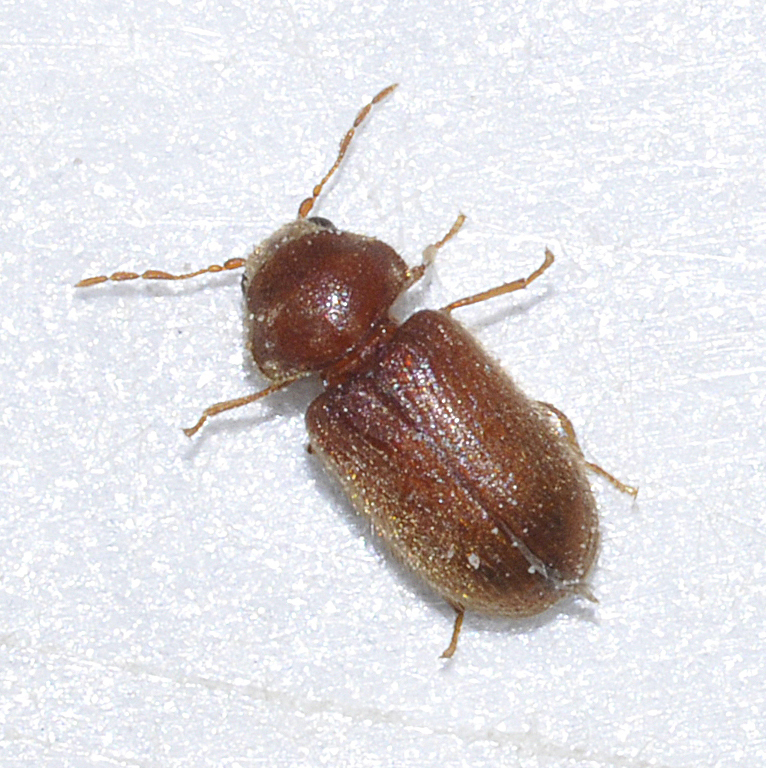
Drugstore Beetle
Stegobium paniceum
Insectstrong against fungi, fish
Common
Swarm
While active with another insect in play, each of its attacks also hits the opposing bench for 10, without knocking them out (20 with two others).
39

38
Drugstore Beetle
Stegobium paniceum
Insectstrong against fungi, fish
Common
While active with another insect in play, each of its attacks also hits the opposing bench for 10, without knocking them out (20 with two others).
Stegobium paniceum
Photo: Francisco Welter-Schultes (original photo) · public domain (licence text) · cropped
Strong against: it deals 20% more damage to them. Weak against: these types deal 20% more damage to it.
The drugstore beetle (Stegobium paniceum), also known as the bread beetle, biscuit beetle, and misnamed as the biscuit weevil (despite not being a weevil), is a small brown beetle that infests a wide variety of dried plant products, where it is among the most common non-weevils. It is the only living member of the genus Stegobium. It belongs to the family Ptinidae, which also includes the deathwatch beetle, furniture beetle and cigarette beetle. A notable characteristic of this species is the symbiotic relationship the beetles have with a yeast-like fungus which is transmitted from female to larvae through the oviduct.
The drugstore beetle is distributed worldwide with higher prevalence in warmer climates. It is commonly confused with the cigarette beetle, as they have a similar size and coloring. Adults possess antennae ending in 3-segmented clubs, while cigarette beetles have serrated (saw-like) antennae. Their bodies are lined with grooves running longitudinally along the elytra, whereas the cigarette beetle is smooth.
Excerpt from the Wikipedia article Drugstore beetle, by its authors, under the CC BY-SA 4.0 licence.
No global status on the IUCN Red List: that’s what makes this card Common.
Every Common card has 100 points, shared between HP, ATK and DEF:
How they’re shared out:

 DEF 38