 …
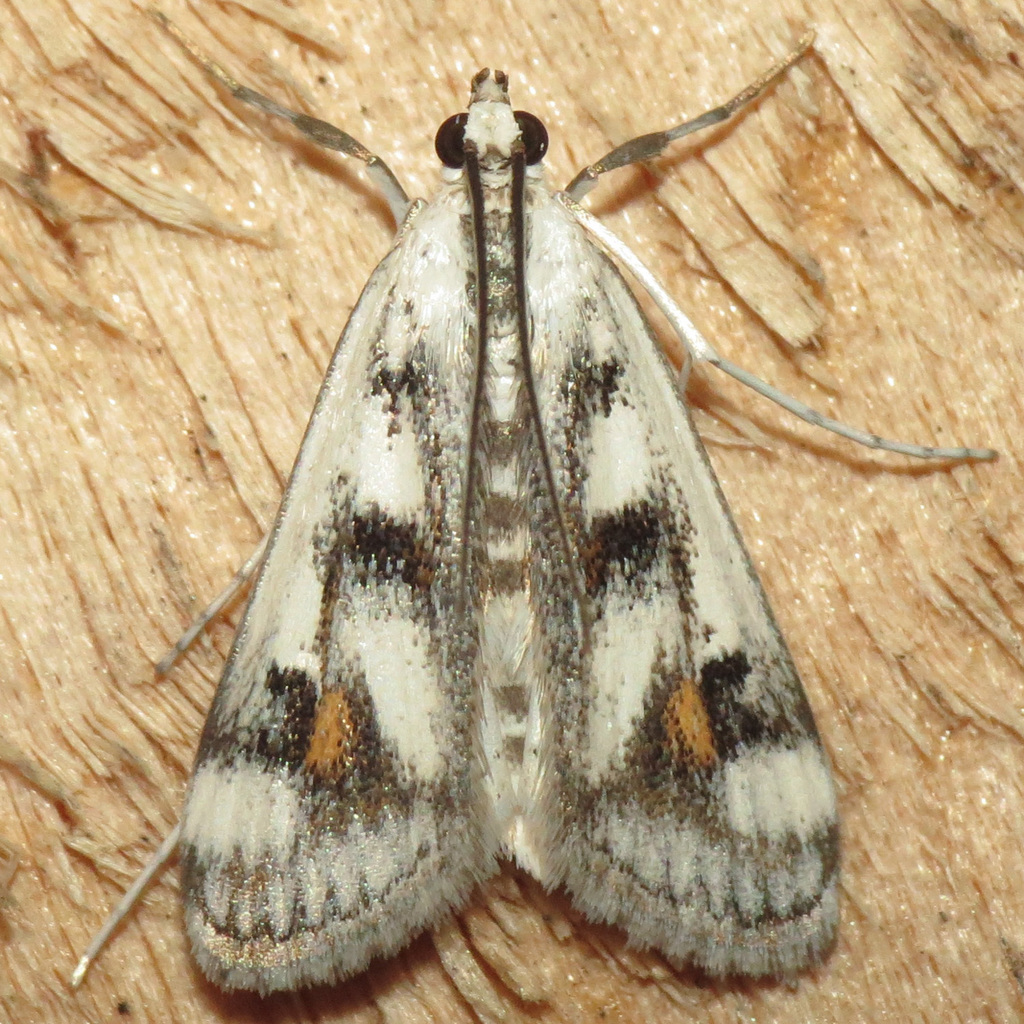
Polymorphic Pondweed Moth
Parapoynx maculalis
Insectstrong against fungi, fish
Common
Swarm
While active with another insect in play, each of its attacks also hits the opposing bench for 10, without knocking them out (20 with two others).
39

39
Polymorphic Pondweed Moth
Parapoynx maculalis
Insectstrong against fungi, fish
Common
While active with another insect in play, each of its attacks also hits the opposing bench for 10, without knocking them out (20 with two others).
Parapoynx maculalis
Photo: © Fyn Kynd (original photo) · CC BY-SA 4.0 (licence text) · cropped
Strong against: it deals 20% more damage to them. Weak against: these types deal 20% more damage to it.
Parapoynx maculalis, the polymorphic pondweed moth, is a moth in the family Crambidae. It was described by James Brackenridge Clemens in 1860. It is found in eastern North America, where it has been recorded from Alabama, Alberta, Florida, Georgia, Illinois, Indiana, Louisiana, Maine, Maryland, Massachusetts, Michigan, Minnesota, Mississippi, New Brunswick, New Hampshire, New Jersey, Newfoundland, North Carolina, North Dakota, Nova Scotia, Ontario, Pennsylvania, Quebec, South Carolina, Tennessee, Texas and Wisconsin. The habitat consists of ponds and streams.
The wingspan is 18–22 mm. The forewings are white, dusted with fuscous along the base and with a fuscous spot at the base of the fold. The hindwings are pure white.
The larvae feed on various aquatic plants. Young larvae are light yellowish brown with a dark yellowish-brown head.
Excerpt from the Wikipedia article Parapoynx maculalis, by its authors, under the CC BY-SA 4.0 licence.
No global status on the IUCN Red List: that’s what makes this card Common.
Every Common card has 100 points, shared between HP, ATK and DEF:
How they’re shared out:

 DEF 39