 …
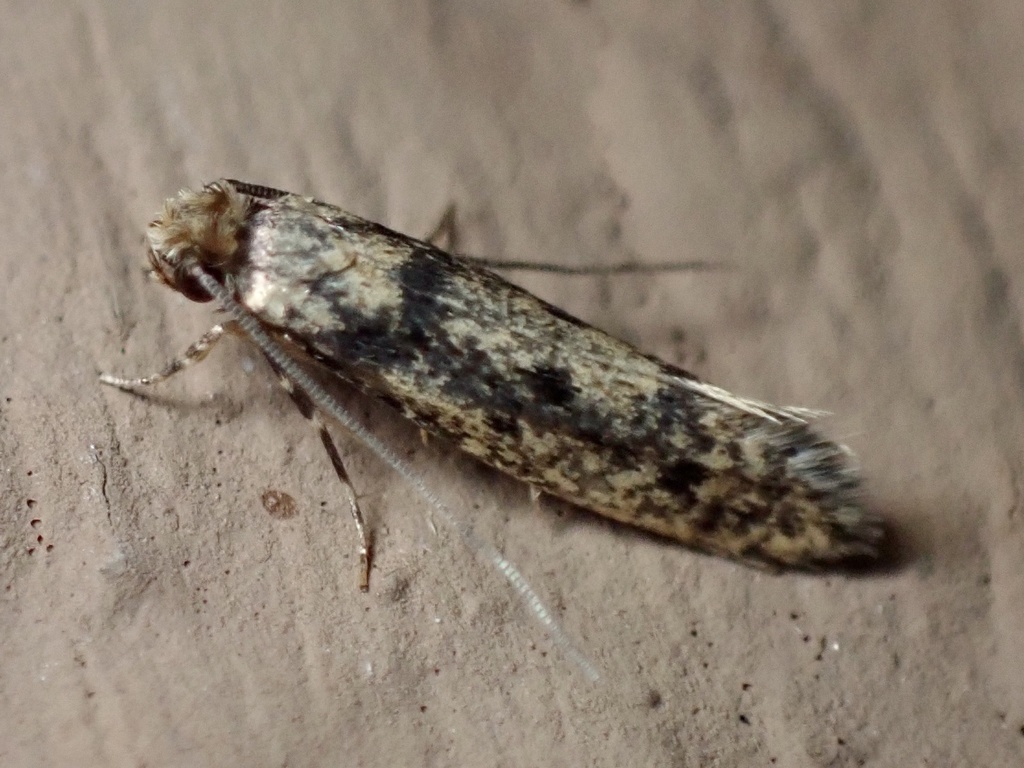
European House Moth
Niditinea fuscella
Insectstrong against fungi, fish
Common
Swarm
While active with another insect in play, each of its attacks also hits the opposing bench for 10, without knocking them out (20 with two others).
29

39
European House Moth
Niditinea fuscella
Insectstrong against fungi, fish
Common
While active with another insect in play, each of its attacks also hits the opposing bench for 10, without knocking them out (20 with two others).
Niditinea fuscella
Photo: © Julia Beach (original photo) · CC BY 4.0 (licence text) · cropped
Strong against: it deals 20% more damage to them. Weak against: these types deal 20% more damage to it.
The brown-dotted clothes moth (Niditinea fuscella) is a species of tineoid moth. It belongs to the fungus moth family (Tineidae), and therein to the nominate subfamily Tineinae. It is (under its junior synonym Tinea fuscipunctella) the type species of its genus Niditinea.
It is widespread and common in much of the western Palearctic (except for outlying islands, e.g. Iceland, and cold regions such as the far north of Scotland), but has also been introduced elsewhere (e.g. in Australia and New Zealand). The adult moths are on the wing around May to September, depending on the location; they are not fond of bright daylight and will only come out in the late afternoon.
Adults of this small moth have a wingspan of 14 mm. They are of a rather dull coloration, with brown-grey forewings that bear three large blackish-brown dots each. The hindwings are a silvery white; they are surrounded by a long-haired fringe, as usual for fungus moths and relatives. The body is dull brown, and the head bears a tuft of reddish-brown hair.
Abridged excerpt from the Wikipedia article Niditinea fuscella, by its authors, under the CC BY-SA 4.0 licence.
No global status on the IUCN Red List: that’s what makes this card Common.
Every Common card has 100 points, shared between HP, ATK and DEF:
How they’re shared out:

 DEF 39