 …
Wharf Borer
Nacerdes melanura
Insectstrong against fungi, fish
Common
Swarm
While active with another insect in play, each of its attacks also hits the opposing bench for 10, without knocking them out (20 with two others).
39

39
Wharf Borer
Nacerdes melanura
Insectstrong against fungi, fish
Common
While active with another insect in play, each of its attacks also hits the opposing bench for 10, without knocking them out (20 with two others).
Nacerdes melanura
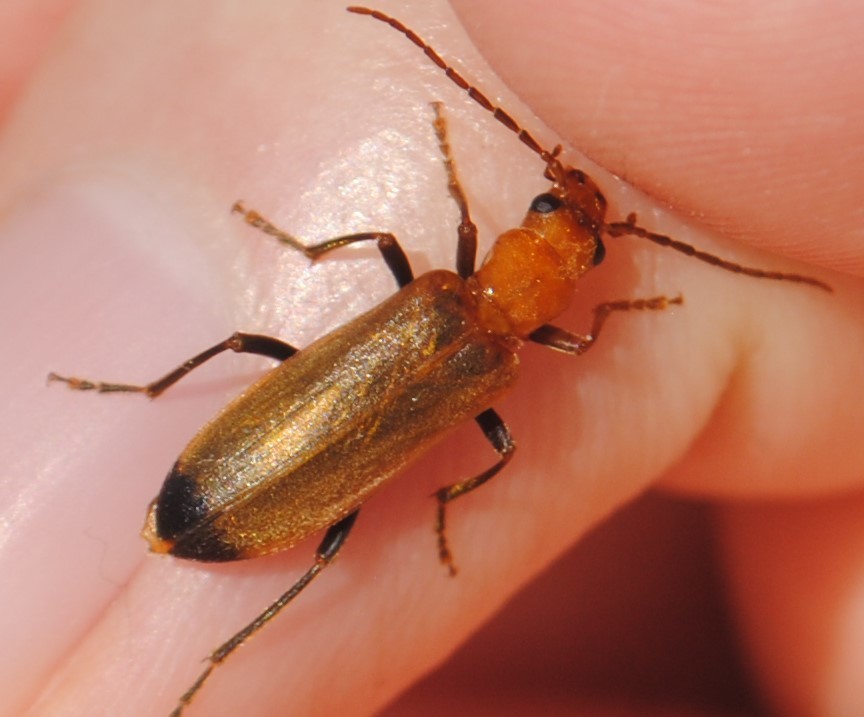
Photo: © Zihao Wang (original photo) · CC BY 4.0 (licence text) · cropped
Strong against: it deals 20% more damage to them. Weak against: these types deal 20% more damage to it.
The wharf borer, Nacerdes melanura, belongs to the insect order Coleoptera, the beetles. They belong to the family Oedemeridae, known as false blister beetles. Wharf borers are present in all the states of the USA except for Florida. It takes about a year to develop from an egg to an adult. The name 'wharf borer' comes from the larval stage of this insect, which often lingers on pilings and timbers of wharves, especially along coastal areas. The adult beetles are identifiable via a black band across the end of both elytra. In addition, wharf borers are distinct from other members of the family Oedemeridae due to the presence of a single spur on the tibia of the forelegs and the distance between both eyes (twice the length of one eye). The female beetle oviposits eggs on rotten wood, on which the larvae hatch, burrow, then feed. Adults do not eat and depend on stored energy reserves accumulated as a larva. They are considered a pest because they damage wood used in building infrastructures.
Excerpt from the Wikipedia article Wharf borer, by its authors, under the CC BY-SA 4.0 licence.
No global status on the IUCN Red List: that’s what makes this card Common.
Every Common card has 100 points, shared between HP, ATK and DEF:
How they’re shared out:

 DEF 39