 …
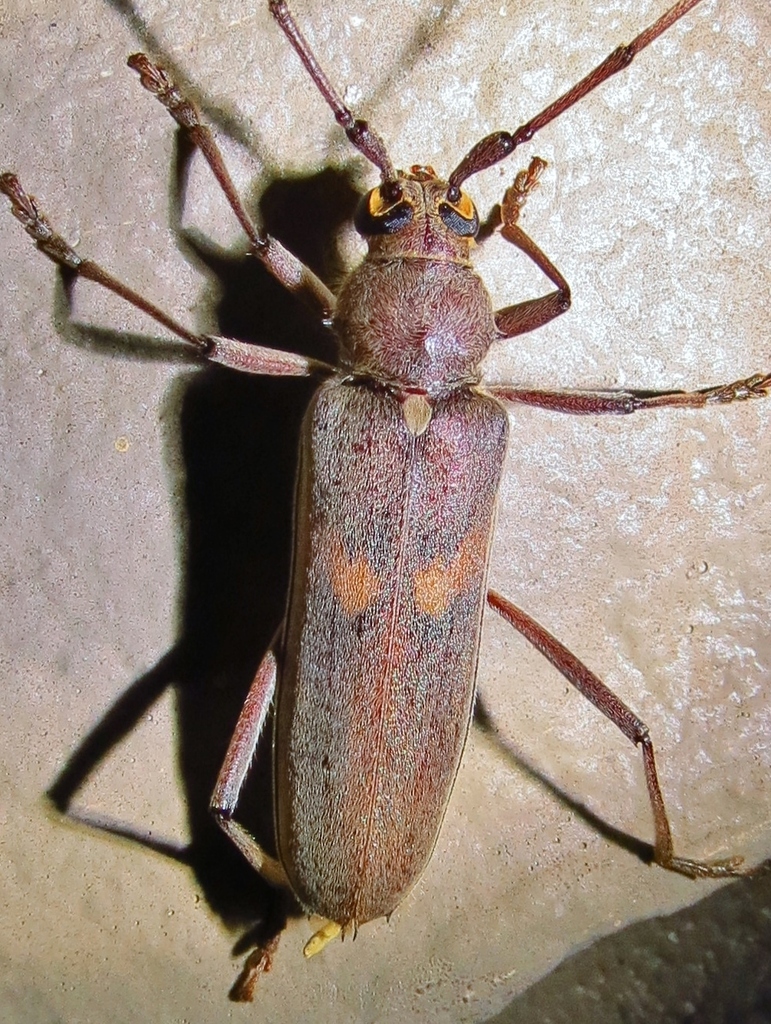
Banded Hickory Borer
Knulliana cincta
Insectstrong against fungi, fish
Common
Swarm
While active with another insect in play, each of its attacks also hits the opposing bench for 10, without knocking them out (20 with two others).
29

38
Banded Hickory Borer
Knulliana cincta
Insectstrong against fungi, fish
Common
While active with another insect in play, each of its attacks also hits the opposing bench for 10, without knocking them out (20 with two others).
Knulliana cincta
Photo: © Annika Lindqvist (original photo) · CC BY 4.0 (licence text) · cropped
Strong against: it deals 20% more damage to them. Weak against: these types deal 20% more damage to it.
Knulliana is a genus of longhorn beetles. It is monotypic, being represented by the single species Knulliana cincta, commonly known as the banded hickory borer. The species may be found throughout the eastern half of North America, including Mexico and the Bahamas, with one subspecies extending to the Sonoran Desert.
They are typically found on hickory and oak trees, where they lay eggs in crevices in the bark or directly into the wood. During their first season, the larvae feed beneath the bark, and later bore deeper into the wood. They sometimes cause significant damage to their host trees.
The banded hickory borer ranges in length from 15 to 35 mm (0.6 to 1.4 in). They have strong spines on the femora, pronotum, and on the tips of the elytra.
There are three described subspecies:
Knulliana c. cincta (Drury) – eastern North America, Texas
Knulliana cincta ochracea (Bates) – south-eastern United States, north-eastern Mexico, Bahamas
Knulliana cincta sonorensis (Schaeffer) – Texas to Arizona, adjacent regions in Mexico
Excerpt from the Wikipedia article Knulliana, by its authors, under the CC BY-SA 4.0 licence.
No global status on the IUCN Red List: that’s what makes this card Common.
Every Common card has 100 points, shared between HP, ATK and DEF:
How they’re shared out:

 DEF 38