 …
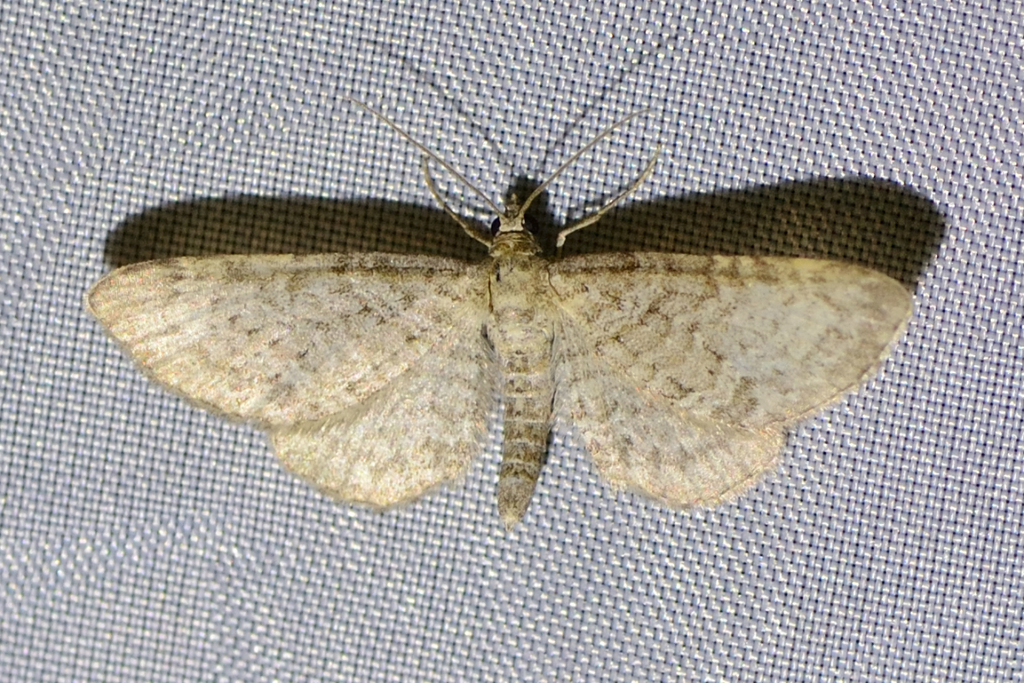
Satyr Pug Moth
Eupithecia satyrata
Insectstrong against fungi, fish
Common
Swarm
While active with another insect in play, each of its attacks also hits the opposing bench for 10, without knocking them out (20 with two others).
40

38
Satyr Pug Moth
Eupithecia satyrata
Insectstrong against fungi, fish
Common
While active with another insect in play, each of its attacks also hits the opposing bench for 10, without knocking them out (20 with two others).
Eupithecia satyrata
Photo: © Fyodor Pudovikov (original photo) · CC BY 4.0 (licence text) · cropped
Strong against: it deals 20% more damage to them. Weak against: these types deal 20% more damage to it.
Eupithecia satyrata, the satyr pug, is a species of moth of the family Geometridae. It was described by Jacob Hübner in 1813. It is found from Ireland, through northern and central Europe (from Scandinavia to the northern Mediterranean) east to all of Russia and central Asia and western Siberia to Tibet. It is also present in North Africa and North America.
The wingspan is 18–24 millimetres (0.71–0.94 in). Eupithecia satyrata is variable in pattern. The ground colour of the wings is ash, grey or brownish. The veins often have a black with white dusting. There are paler crosslines. On the forewings a very indistinct terminal fascia ends in a tiny tornal spot. There is a fine discal spot on the forewing. This is absent on the hindwing. Prout gives an account of the variations.
Adults are on wing from March to September. There is one generation per year.
The larvae feed on the flowers of a wide range of plants including Achillea, Scabiosa, Solidago, Senecio and Erica tetralix.
Excerpt from the Wikipedia article Eupithecia satyrata, by its authors, under the CC BY-SA 4.0 licence.
No global status on the IUCN Red List: that’s what makes this card Common.
Every Common card has 100 points, shared between HP, ATK and DEF:
How they’re shared out:

 DEF 38