 …
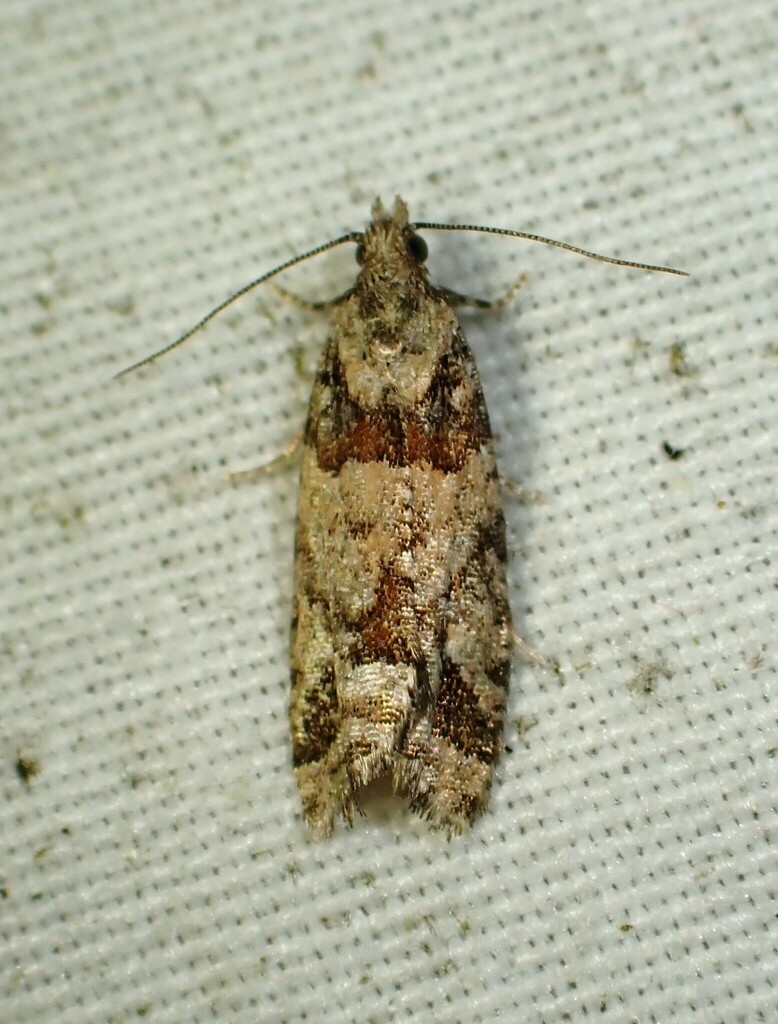
Red-striped Needleworm Moth
Epinotia radicana
Insectstrong against fungi, fish
Common
Swarm
While active with another insect in play, each of its attacks also hits the opposing bench for 10, without knocking them out (20 with two others).
40

38
Red-striped Needleworm Moth
Epinotia radicana
Insectstrong against fungi, fish
Common
While active with another insect in play, each of its attacks also hits the opposing bench for 10, without knocking them out (20 with two others).
Epinotia radicana
Photo: © Louis Imbeau (original photo) · CC BY 4.0 (licence text) · cropped
Strong against: it deals 20% more damage to them. Weak against: these types deal 20% more damage to it.
Epinotia radicana, the red-striped needleworm moth, is a species of moth of the family Tortricidae. It is found in western Canada, including British Columbia and Alberta.
The wingspan is 12–15 mm.
The red-striped needleworm moth occurs commonly in the spruce-fir forests of North America, but there are no records of serious outbreaks. White spruce is the preferred host tree. The eggs overwinter on the needles and the larvae feed on the new foliage from late May to late July. Full-grown larvae, about 9 mm long, drop to the ground and pupate in silken cocoons in the litter. The adults emerge in late summer and the fall, and the females lay their eggs singly at the base of the needles.
The larvae have been recorded on Abies balsamea, Abies concolor, Abies grandis, Abies lasiocarpa, Abies magnifica, Juniperus, Larix laricina, Larix lyallii, Larix occidentalis, Picea engelmanni, Picea glauca, Picea mariana, Picea pungens, Picea rubens, Picea sitchensis, Pinus contorta, Pseudotsuga menziesii, Thuja plicata and Tsuga heterophylla.
Excerpt from the Wikipedia article Epinotia radicana, by its authors, under the CC BY-SA 4.0 licence.
No global status on the IUCN Red List: that’s what makes this card Common.
Every Common card has 100 points, shared between HP, ATK and DEF:
How they’re shared out:

 DEF 38