 …
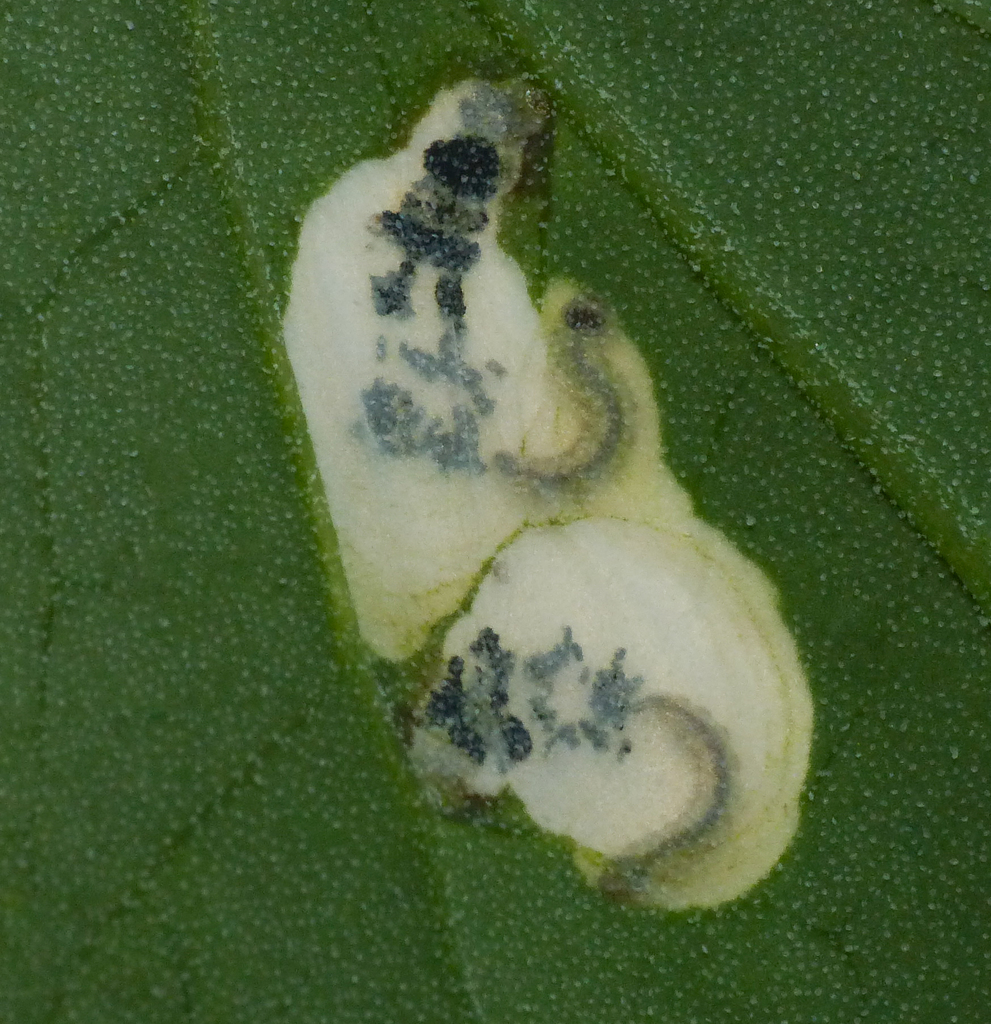
Orache Leafminer Moth
Chrysoesthia sexguttella
Insectstrong against fungi, fish
Common
Swarm
While active with another insect in play, each of its attacks also hits the opposing bench for 10, without knocking them out (20 with two others).
40

38
Orache Leafminer Moth
Chrysoesthia sexguttella
Insectstrong against fungi, fish
Common
While active with another insect in play, each of its attacks also hits the opposing bench for 10, without knocking them out (20 with two others).
Chrysoesthia sexguttella
Photo: © CatherineK (original photo) · CC BY-SA 4.0 (licence text) · cropped
Strong against: it deals 20% more damage to them. Weak against: these types deal 20% more damage to it.
Chrysoesthia sexguttella, the orache leafminer moth, is a moth in the family Gelechiidae. It is found in all of Europe, east to southern Siberia, as well as the north-eastern parts of North America, where it might be an introduced species.
The wingspan is 8–10 mm. The head is metallic brassy-grey. Forewings are dark purplish-grey, mixed with black, with some whitish scales; a yellow subdorsal spot in the middle, and a smaller one in disc posteriorly; an ill-defined ochreous-white tornal spot, and another on costa at 3/4. Hindwings are grey. The larva is yellow-whitish; dorsal line brownish; lateral line of orange -reddish spots; head pale brown; plate of 2 blackish.
Adults are on the wing from May to June, and again from August to September. There are two generations per year.
The larvae mine the leaves of Atriplex species (including Atriplex cakotheca, Atriplex hastata, Atriplex hortensis, Atriplex littoralis, Atriplex prostrata, Atriplex nitens, Atriplex patula and Atriplex sibirica), Chenopodium species (including Chenopodium album, Chenopodium bonus-henricus, Chenopodium giganteum, Chenopodium glaucum, Chenopodium hybridum, Chenopodium murale, Chenopodium opulifolium, Chenopodium polyspermum, Chenopodium quinoa, Chenopodium urbicum and Chenopodium vulvaria), Amaranthus blitum, Amaranthus caudatus, Bassia scoparia and Spinacia. They form a contorted gallery on the surface of the leaves.
Excerpt from the Wikipedia article Chrysoesthia sexguttella, by its authors, under the CC BY-SA 4.0 licence.
No global status on the IUCN Red List: that’s what makes this card Common.
Every Common card has 100 points, shared between HP, ATK and DEF:
How they’re shared out:

 DEF 38