 …
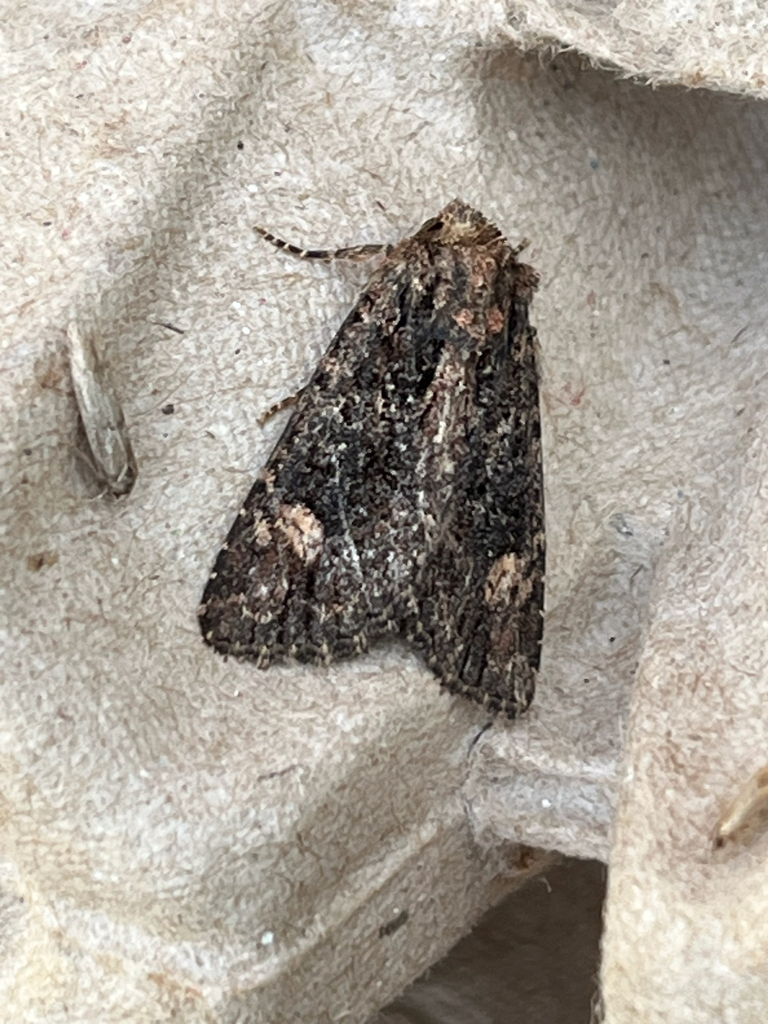
Rusty Shoulder Knot Moth
Aseptis binotata
Insectstrong against fungi, fish
Common
Swarm
While active with another insect in play, each of its attacks also hits the opposing bench for 10, without knocking them out (20 with two others).
38

39
Rusty Shoulder Knot Moth
Aseptis binotata
Insectstrong against fungi, fish
Common
While active with another insect in play, each of its attacks also hits the opposing bench for 10, without knocking them out (20 with two others).
Aseptis binotata
Photo: iNaturalist (original photo) · CC0 (licence text) · cropped
Strong against: it deals 20% more damage to them. Weak against: these types deal 20% more damage to it.
Aseptis binotata, the rusty shoulder knot moth, is a moth of the family Noctuidae. The species was first described by Francis Walker in 1865. It is found widespread in western North America, west of south-central Alberta, Wyoming, and Nebraska. Along the Pacific Coast it occurs from northern Mexico to south-central British Columbia. It can be found from sea level to altitudes over 2000 meters in a variety of habitats from dense forest to shrub desert.
The wingspan is 29.5–35 mm. It is the most variable species in the genus Aseptis with respect to forewing color and pattern strength. It may be brownish, warm dark brown, pale to medium gray brown, yellowish light brown, or reddish brown depending on locality. The most noticeable marking in dark specimens is the large pale yellowish postreniform patch, which is bisected by the dark postmedial line. The antemedial line is strongly convex laterally and is filled with light tan. Black forewing markings include a series of wedges near the outer margin below the apex, the outlines of the three forewing spots, and in most specimens a short black basal dash. Pale specimens can be washed out or have contrasting dark markings. In the south the flight begins in March at low elevations and in April to July in the mountains. In the north the flight begins later and lasts into August.
Abridged excerpt from the Wikipedia article Aseptis binotata, by its authors, under the CC BY-SA 4.0 licence.
No global status on the IUCN Red List: that’s what makes this card Common.
Every Common card has 100 points, shared between HP, ATK and DEF:
How they’re shared out:

 DEF 39