 …
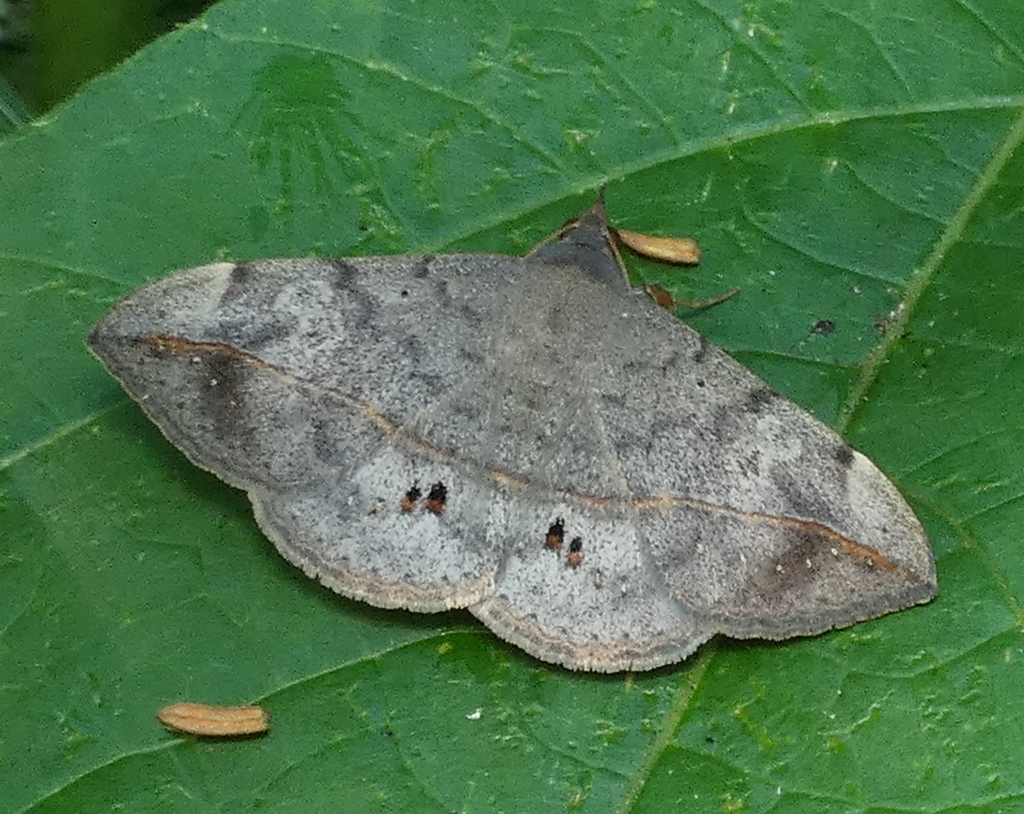
Velvetbean Caterpillar Moth
Anticarsia gemmatalis
Insectstrong against fungi, fish
Common
Swarm
While active with another insect in play, each of its attacks also hits the opposing bench for 10, without knocking them out (20 with two others).
39

39
Velvetbean Caterpillar Moth
Anticarsia gemmatalis
Insectstrong against fungi, fish
Common
While active with another insect in play, each of its attacks also hits the opposing bench for 10, without knocking them out (20 with two others).
Anticarsia gemmatalis
Photo: © Helio Lourencini (original photo) · CC BY 4.0 (licence text) · cropped
Strong against: it deals 20% more damage to them. Weak against: these types deal 20% more damage to it.
Anticarsia gemmatalis is a tropical species of caterpillar and moth that migrates north each season. The species can commonly be found in the Gulf states, north as far as Wisconsin. The adults have wings that are grayish brown, crossed with brown or black zigzag lines. The caterpillars are black or green, with narrow lighter stripes on the back and sides. They spit out a brownish substance, spring into the air and wriggle a lot when they are disturbed. The species eats velvet beans, peanut, soybeans, cotton, kudzu, alfalfa, cowpeas, horse beans, snap beans, lima beans, and coffeeweeds. Its common name is velvetbean caterpillar and velvetbean moth.
Egg viability was highest at 25 °C (77 °F) and adaptation to higher temperatures did not occur over a three generation observation. This suggests global warming will reduce A. gemmatalis losses on soybeans in tropical areas that are already at 25 °C (77 °F) but increase predation on soybeans in areas currently below that temperature, thus in fact only shifting the affected area.
Excerpt from the Wikipedia article Anticarsia gemmatalis, by its authors, under the CC BY-SA 4.0 licence.
No global status on the IUCN Red List: that’s what makes this card Common.
Every Common card has 100 points, shared between HP, ATK and DEF:
How they’re shared out:

 DEF 39