 …
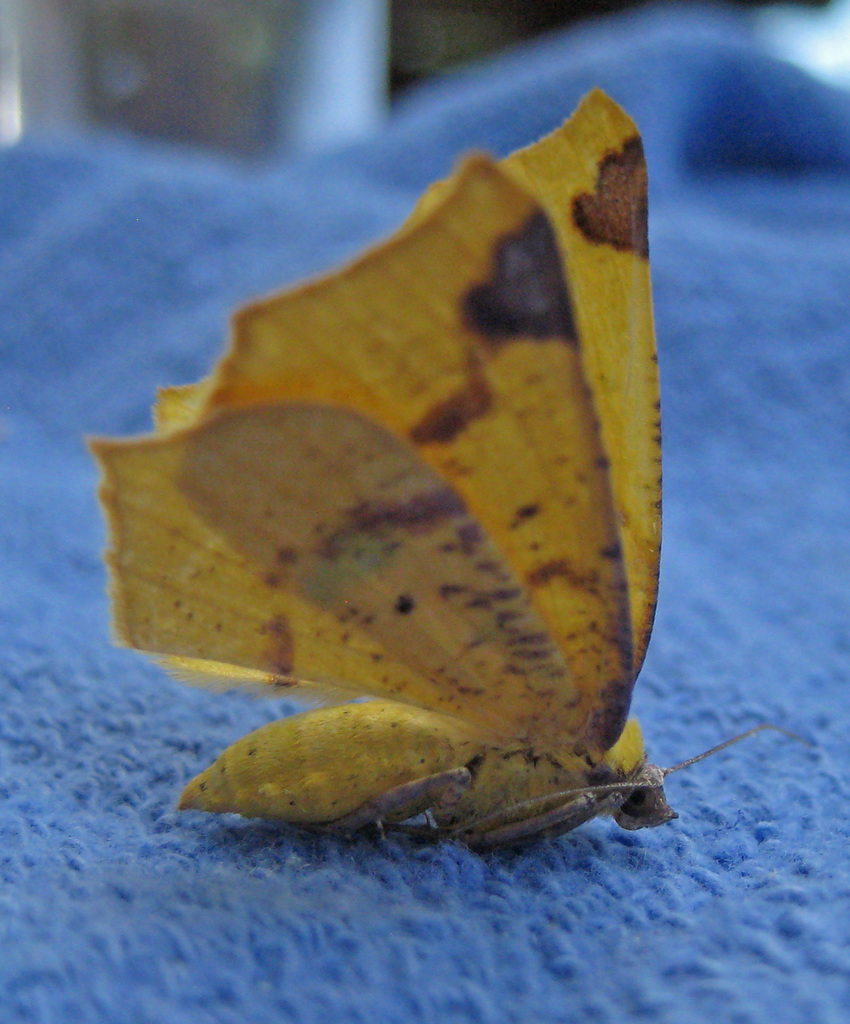
Variable Antepione Moth
Antepione thisoaria
Insectstrong against fungi, fish
Common
Swarm
While active with another insect in play, each of its attacks also hits the opposing bench for 10, without knocking them out (20 with two others).
40

38
Variable Antepione Moth
Antepione thisoaria
Insectstrong against fungi, fish
Common
While active with another insect in play, each of its attacks also hits the opposing bench for 10, without knocking them out (20 with two others).
Antepione thisoaria
Photo: © David Dodd (original photo) · CC BY 4.0 (licence text) · cropped
Strong against: it deals 20% more damage to them. Weak against: these types deal 20% more damage to it.
Antepione thisoaria, the variable antepione, is a moth of the family Geometridae. In Canada it is found from Nova Scotia to Manitoba, south into the United States south and west to the Gulf states (including Alabama, Arkansas, Connecticut, Georgia, Illinois, Indiana, Iowa, Kansas, Kentucky, Louisiana, Maryland, Massachusetts, Michigan, Minnesota, Mississippi, Missouri, Nebraska, New Jersey, New Hampshire, New York, North Carolina, Ohio, Oklahoma, Pennsylvania, Rhode Island, South Carolina, Tennessee, Virginia, West Virginia), as well as Michoacan in Mexico and further south to Costa Rica and Guatemala.
The wingspan is 27–40 mm. Adult seasonally and sexually dimorphic, but the middle of the outer margin of the hindwing and forewing are conspicuously pointed in all forms, and there is usually a dark triangular patch along the costa near the apex of the forewing (although this may be absent in females). The spring brood of both sexes has mottled light brown wings (form "furciferata"). The summer brood male is bright yellow with reddish-brown shading, while the female is all yellow. Adults are on wing from April to May with an occasional mid March and mid June record as well as from July to August with occasional September to mid October records. There is one generation in Canada, and at least two southward.
The larvae have been recorded on Aceraceae, Anacardiaceae, Betulaceae, Ebenaceae and Rosaceae species, including Alnus rugosa, Physocarpus opulifolius and Prunus serotina.
Excerpt from the Wikipedia article Antepione thisoaria, by its authors, under the CC BY-SA 4.0 licence.
No global status on the IUCN Red List: that’s what makes this card Common.
Every Common card has 100 points, shared between HP, ATK and DEF:
How they’re shared out:

 DEF 38